
Danantara Focuses on Resolving Three Main SOE Problems, Here's the Strategy
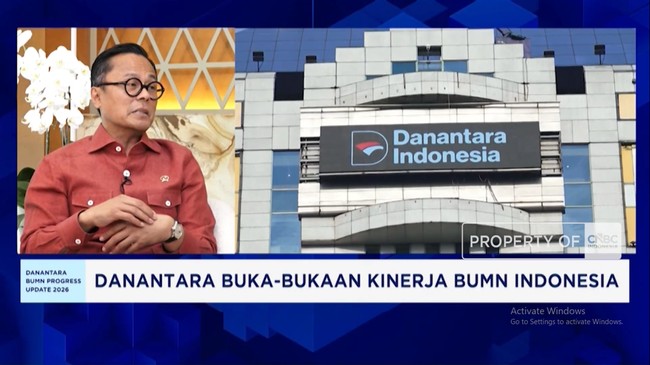
The Investment Management Agency (BPI) Danantara is currently focusing on resolving three main problems within State-Owned Enterprises (SOEs). These problems include excessive investment policies without calculating return on investment (ROI), financial engineering, and fraud. If left unaddressed, these issues would become a heavy burden on the performance of several SOEs. To that end, Danantara continues to pursue transformation to improve performance across all SOE companies.
Chief Operating Officer of BPI Danantara and Head of the SOE Regulatory Body, Dony Oskaria, explained that after one and a half years of mapping, his team has identified three major problems facing Danantara. The first problem is over-investment, or excessive investment made without thoroughly considering potential returns. The second problem is financial engineering. According to Dony, almost all troubled SOEs have their root problems originating from financial engineering. Danantara has therefore prohibited SOEs from engaging in financial engineering to create the impression of better performance.
“The third (problem) is indeed fraud. These three are what cause our companies to face the problems they have today, which we must resolve,” he stated on Squawk Box CNBC Indonesia, Monday (24/8/2026).
Apart from that, several SOE entities have been cited as examples of the improvement process through the transformation agenda. Dony mentioned PT Semen Indonesia Tbk, PT Pegadaian, PT Pupuk Indonesia, PT Pertamina, PT Krakatau Steel Tbk, and PT Kimia Farma Tbk as companies that have shown performance changes after undergoing transformation.
Danantara is even optimistic that SOEs can achieve better net profit performance compared to Temasek Holdings, the global investment company from Singapore. He projects Danantara’s net profit can reach Rp 360 trillion in 2026. If achieved, Danantara’s net profit would far surpass Temasek’s realised net profit performance, which is in the range of Rp 136 trillion.
“So in terms of net income size, we are already larger than Temasek. This year we expect Rp 360 trillion, almost double that of Temasek. From Rp 136 trillion to Rp 360 trillion,” he explained.
Dony considers Danantara’s achievement as an illustration that Indonesia actually has companies capable of competing on the international stage. This performance improvement is significantly influenced by the transformation process carried out by Danantara across several SOEs. In this regard, the transformation is carried out through addressing fundamental problems within SOEs. Before this transformation was intensified, Danantara actively monitored the business and financial conditions of each SOE.
Not only carrying out domestic transformation, Danantara is also actively encouraging SOEs to expand into global markets. For example, Danantara has established a strategic partnership with global protein producer JBS. In addition, Danantara has also acquired a hotel in Mecca and plans to invest in Medina, Saudi Arabia.
“I am also encouraging Pegadaian to start operating and acquiring, and trying to talk with companies in the Philippines,” he concluded.