
Danantara Could Inject State Budget Capital into SOEs, but Analyst Calls for Return Targets
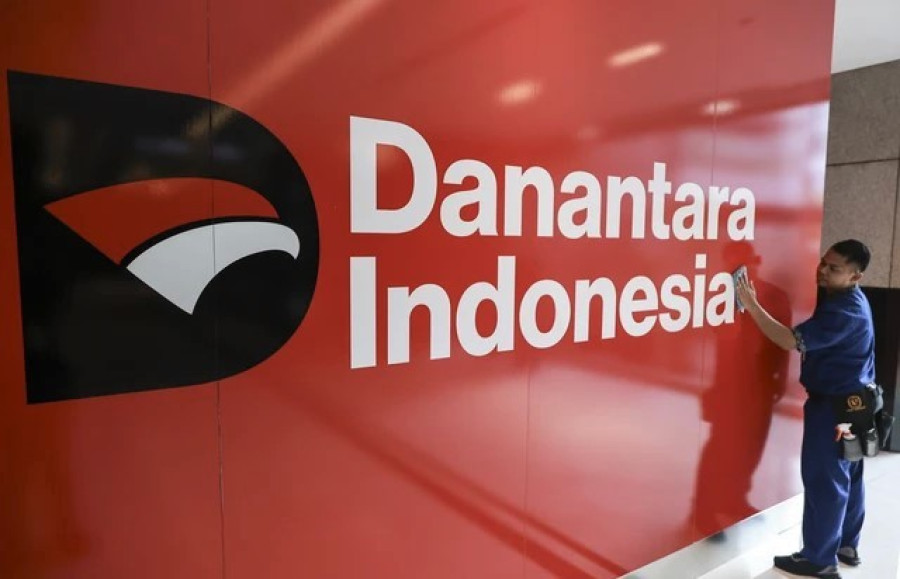
JAKARTA: Danantara’s access to state capital is becoming more open. However, injections of funds and assets from the State Budget (APBN) must produce tangible results: improving state-owned enterprises’ (SOEs) productivity, generating profits and attracting private and global investment. Without measurable performance targets, expanding its investment powers may do too little to create added value for the economy.
The opportunity emerged after the government issued Government Regulation No. 19 of 2026 on 8 April 2026, revising Government Regulation No. 10 of 2025 on the organisation and governance of the Daya Anagata Nusantara Investment Management Agency (Danantara). The regulation provides a legal basis for state capital contributions to Danantara’s investment holding in the form of cash, state-owned goods, state receivables and other state assets.
Toto Pranoto, an SOE analyst at the University of Indonesia (UI), said the regulatory change clarifies the division of roles between the SOE Regulatory Agency (BP BUMN), as regulator and supervisor, and Danantara, as the body responsible for managing SOEs and investments.
However, Danantara’s expanded authority needs to be accompanied by greater organisational agility. Toto said decision-making and business processes must not be held up by lengthy bureaucratic chains at the holding company level, which oversees businesses across a range of sectors.
“With Danantara’s authority growing, the key point is how it strengthens its organisational agility so that no business processes are obstructed at the level of a multi-business SOE holding company,” Toto said, quoted on Sunday (18 October 2026).
With access to state funding and assets opening up, Danantara’s challenge is not simply to raise or distribute capital, but to ensure every investment delivers measurable economic results. Investment performance should be reflected in higher productivity, profitability and competitiveness among state-owned companies.
That requirement also applies to the policy of retaining SOE dividends to strengthen companies’ capital. Toto said additional capital must be accompanied by improved business performance, enabling SOEs to increase profits and once again contribute to state revenue.
In other words, stronger capitalisation should not stop at improving balance sheets. Companies also need to demonstrate greater operational efficiency and an increased ability to generate profits, so that invested funds deliver sustainable benefits.
State capital injections should be more selective
Toto also stressed the importance of selectivity in allocating state capital injections (PMN). He said PMN could continue to support the government’s strategic projects, while SOEs could seek capital from Danantara for other needs.
This arrangement could increase Danantara’s role in setting financing priorities and allocating capital across SOEs. As a result, investment decisions should be based on business viability, profit potential and economic contribution, rather than solely on companies’ funding needs.
The change in funding patterns also makes transparency and accountability in the use of state capital increasingly important. Every investment decision should have clear performance targets, allowing the results of fund placements and the use of state assets to be assessed objectively.
Danantara’s success, therefore, cannot be measured only by the value of the assets it manages or the amount of capital it distributes. Its ability to generate returns, improve SOE performance and manage investment risks will be important in assessing how effectively it manages state capital.
In addition to strengthening SOEs’ internal performance, Danantara is expected to play a greater role in attracting foreign investment to Indonesia. Toto said one necessary step was to prepare competitive business proposals that appeal to global investors.
“What Danantara needs to do is prepare attractive business proposals in Indonesia that can draw the interest of global investors,” he said.
The entry of global investors could expand project financing, increase investment capacity and create a multiplier effect for the national economy. However, this will require projects that are commercially viable, credible governance, and clarity about potential returns and risks.
With its authority expanding, Danantara is strategically positioned to direct capital towards sectors and companies with growth prospects. The challenge is to ensure that state support does more than increase financing capacity: it must also drive productive investment and create economic value.