
Danantara clarifies DSI is not an export middleman
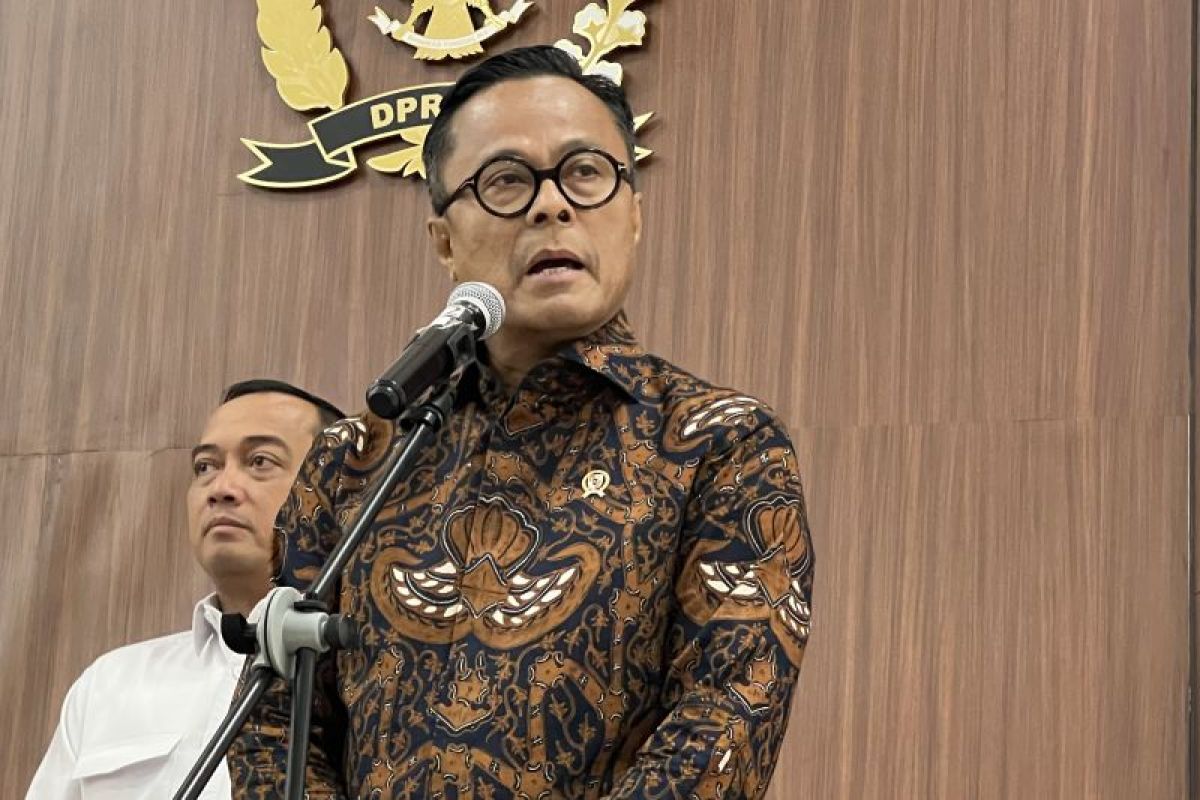
Jakarta (ANTARA) - The Head of the State-Owned Enterprise Regulatory Agency and Chief Operating Officer (COO) of Danantara, Dony Oskaria, has emphasised that PT Danantara Sumberdaya Indonesia (DSI) is not an export middleman.
“It is as if we are acting as middlemen to take a margin (on exports), but that is not the case,” said Dony when met following a press conference at the Parliament Complex in Senayan, Jakarta, on Monday.
This statement clarifies the provisions regarding DSI’s ability to take a margin as stipulated in Article 3, paragraph (4) of Government Regulation (PP) Number 24 of 2026 concerning the Export Governance of Strategic Natural Resource Commodities. The policy states, “Export SOEs, in the context of implementing the Export of Strategic Natural Resource Commodities as referred to in paragraph (1), may determine a margin at a reasonable level in accordance with the provisions of laws and regulations.”
Dony explained that DSI does not take profits from the export of natural resources (SDA), but will instead charge service fees to entrepreneurs. For instance, he continued, if the government requires funds to conduct export inspections, that verification process constitutes the service provided to businesses.
“The entrepreneurs will have legal standing. It ensures that what they are exporting has been verified, both in terms of price and quantity,” said Dony.
Therefore, he reiterated that DSI is not an export middleman and that the charges imposed are service fees. “It has never occurred to us to suddenly act as a middleman, taking a price of 5, adding another 5, and selling it for 10, because that wouldn’t sell. We now have international price benchmarks,” added Dony.
The Coordinating Minister for Economic Affairs, Airlangga Hartarto, stated that natural resource exporting companies will be required to report their export activities to PT Danantara Sumberdaya Indonesia (DSI) starting 1 June 2026. This reporting will be conducted through the Customs Excise Information System and Automation (CEISA) 4.0 platform, owned by the Directorate General of Customs and Excise under the Ministry of Finance.
Previously, exporting companies were only required to report to the Directorate General of Customs and Excise via the same platform. Airlangga noted that the implementation of this new reporting mechanism will initially involve three export commodities: coal, ferroalloy, and palm oil. The government will continue to evaluate the new mechanism during its first three months of implementation before it is fully implemented starting 1 January 2027. He expressed hope that entrepreneurs and exporters would have sufficient time to adjust during the six-month transition period for the new export reporting mechanism.