
Danantara Claims Investor Confidence Is Recovering
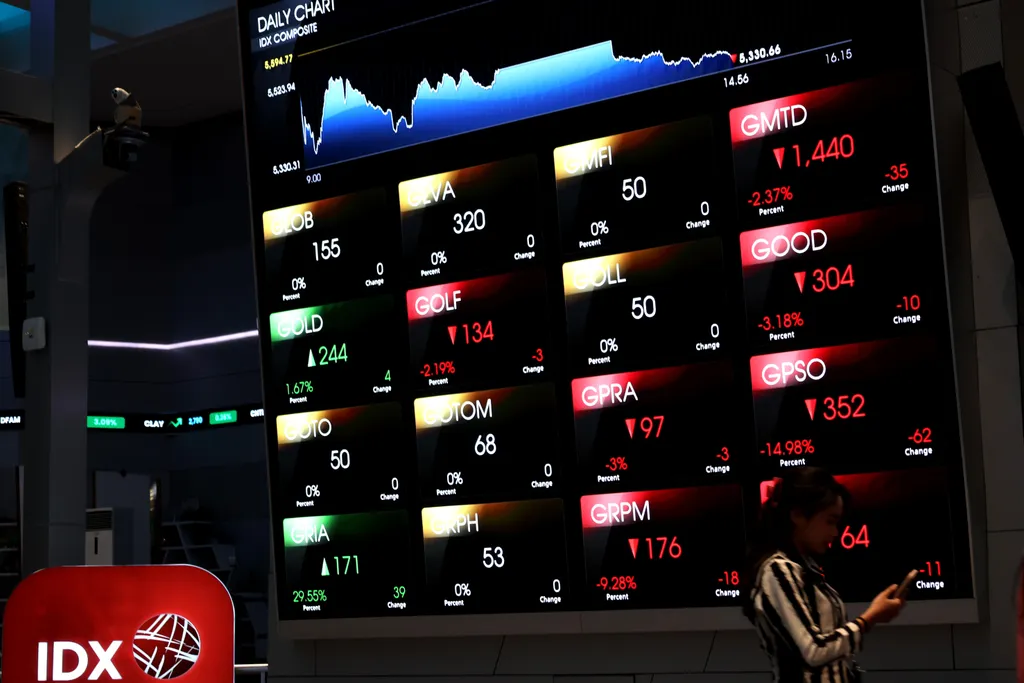
Danantara Indonesia claims that market confidence is beginning to recover. This signal is reflected in the strengthening of the stock market and the Rupiah exchange rate in recent times. Corporate actions, such as share buybacks, have also been undertaken to strengthen fundamentals.
This was stated by the Chief Operating Officer (COO) of Danantara Indonesia and Head of the State-Owned Enterprise Management Agency, Dony Oskaria, when met by journalists following the flag-off of the BTN Jakarta International Marathon 2026 in Jakarta on Sunday (14/06/2026).
He stated that the appreciation of the Jakarta Composite Index (IHSG) and the Rupiah exchange rate is evidence that investors are beginning to recognise the fundamental aspects of the Indonesian economy and its companies.
“We are certainly grateful to all investors who have shown confidence in our economic fundamentals as well as the fundamentals of Indonesian companies. This good performance has led to a significant strengthening of the IHSX, including the Rupiah, which has also shown appreciation,” he said.
In trading on Friday (12/06/2026), the IHSG closed at the 6,007.66 level. Over the past week, the IHSG recorded an appreciation of 665.52 points, or an increase of 12.45 per cent from its lowest point of 5,342.14 on Monday (08/06/2026).
The Rupiah exchange rate followed a similar trend. In the past week, the Rupiah appreciated by 250 points, or 1.37 per cent, from its lowest point of Rp 18,171 per US dollar on Monday to Rp 17,921 per US dollar on Friday.
Dony added that short-term market movements have been influenced by various sentiments. However, ultimately, investors will return to assessing national economic fundamentals and the performance of individual companies.
“Buybacks are actually a normal process. If we see our shares are too low, we will certainly take them. It would be a waste; rather than investing elsewhere, it is better to invest in our own shares,” he said.
He noted that national companies, particularly State-Owned Enterprises (SOEs), still possess strong fundamentals, such as the banking, mining, and infrastructure sectors. Therefore, corporate actions are being carried out as a natural business mechanism to strengthen those fundamental values.
On the same occasion, the President Director of PT Bank Tabungan Negara (Persio) Tbk, Nixon LP Napitupulu, expressed that BTN is optimistic about maintaining growth momentum by continuously driving public demand for housing through various financing innovations.
“We must be able to create demand, not just wait for the market. Therefore, BTN continues to push various strategies so that the housing sector remains active and the public maintains access to purchasing homes,” said Nixon.
He added that the company continues to maintain its growth targets with discipline amidst economic dynamics. On the other hand, credit expansion will continue with a growth target of 8-10 per cent while maintaining asset quality below 3 per cent.
Senior Deputy Governor of Bank Indonesia, Destry Damayanti, stated that the strengthening of the Rupiah exchange rate in the past week reflects the market’s positive response to the policy mix implemented by Bank Indonesia (BI).
These policies include raising the benchmark interest rate to 5.5 per cent, strengthening the interest rate structure of Bank Indonesia Rupiah Securities (SRBI), providing hedging swap incentives for investors, opening access to repurchase agreements (repo), and increasing monetary operations.
“Following the increase in the BI Rate, foreign capital inflows have shown positive developments, supported by the attractiveness of domestic financial instruments,” she said in a written statement on Friday.
High investor interest is reflected in the inflow of foreign capital into SRBI transactions and State Treasury Bills (SBN) on 10-11 June 2026, amounting to Rp 15.11 trillion and Rp 3.91 trillion, respectively. Additionally, foreign capital inflows were also recorded in Danantara’s international bonds at Rp 26.9 trillion.
Furthermore, external resilience is being strengthened through financial cooperation between BI, the People’s Bank of China, and the Hong Kong Monetary Authority. This cooperation includes strengthening regional financial stability, strengthening bilateral currency swap agreements (BCSA), and the use of local currencies in bilateral transactions (LCT).
Market sentiment remains somewhat cautious, influenced by foreign selling and volatility in both domestic and regional stock markets.
Destry added that BI will continue to be present in the market and optimise all policy instruments consistently and measurably. Additionally, BI will strengthen coordination with the government and stakeholders to maintain stability and strengthen external resilience.
“With the various developments above, it is believed that the Rupiah will continue to strengthen against the US dollar towards its fundamental level,” she said.
Nevertheless, Senior Economist at PT Samuel Sekuritas Indonesia, Fithra Faisal Hestiadai, warned that Rupiah stability will remain a primary market concern, especially if external pressures and demand for the US dollar continue.
Furthermore, the government’s ability to manage debt, diversify funding sources, and execute the 2027 growth strategy will also be crucial factors in maintaining investor confidence moving forward.
“Market sentiment tends to be cautious, influenced by foreign selling and volatility in domestic and regional stock markets,” he noted in an analysis on Friday.