
Danantara CEO: DSI Strengthens Natural Resource Export Governance, Not Adding Bureaucratic Layers
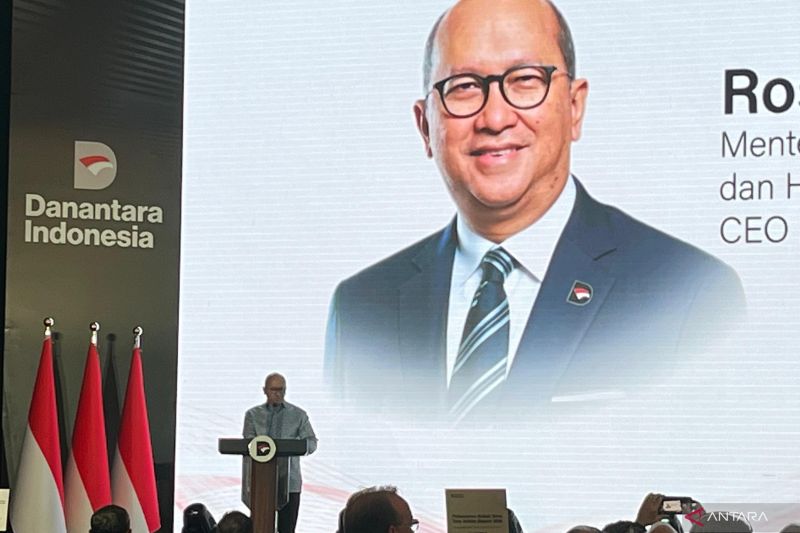
Chief Executive Officer (CEO) of Danantara Indonesia Rosan Roeslani has stated that PT Danantara Sumberdaya Indonesia (DSI) was established to strengthen the governance of natural resource exports through an integrated, transparent, and credible data and transaction verification system.
Rosan emphasised that DSI was not created to add layers of bureaucracy or to take over the authority of regulators. Licensing, regulatory, and supervisory functions remain with the ministries or agencies that hold the relevant authority.
“DSI’s purpose is not to add bureaucratic layers, nor is it to replace the role of regulators. This must be underlined: all licensing, regulatory, and supervisory functions remain with the authorised ministries and agencies,” Rosan said at the launch of the New Chapter in Natural Resource Export Governance in Jakarta.
Rosan, who also serves as Minister of Investment and Downstreaming/Head of the Investment Coordinating Board (BKPM), explained that DSI’s primary role is to establish a single verification point for export data flows and transactions. This verification covers quantity, quality, goods classification, pricing, payment settlement, and foreign exchange repatriation.
“DSI’s role is to build a stronger single verification point for export data flows and transactions. It covers quality, quantity, goods classification, pricing, payment settlement, and foreign exchange repatriation,” he said.
According to Rosan, Danantara Indonesia’s management of strategic assets is not solely oriented towards increasing transaction volumes. Every export activity must have a reasonable basis, be traceable, and provide benefits to the national economy.
Rosan said DSI’s implementation will be carried out in stages and in a measured manner, taking into account the readiness of all stakeholders. These stages are intended to ensure that the system’s implementation does not disrupt existing trade flows or commercial relationships.
DSI is also expected to provide business certainty through a professional and efficient process for exporters, buyers, banks, and relevant agencies.
Rosan stressed that the successful implementation of DSI requires cooperation from various ministries and agencies. He expressed appreciation for the support and data access provided by a number of parties to support the information integration process.
According to him, data integration can produce more accurate and transparent decision-making processes. The system is also expected to support the formulation of more effective policies.