
Danantara Brings Indonesia into a New Chapter, on Par with Developed Nations
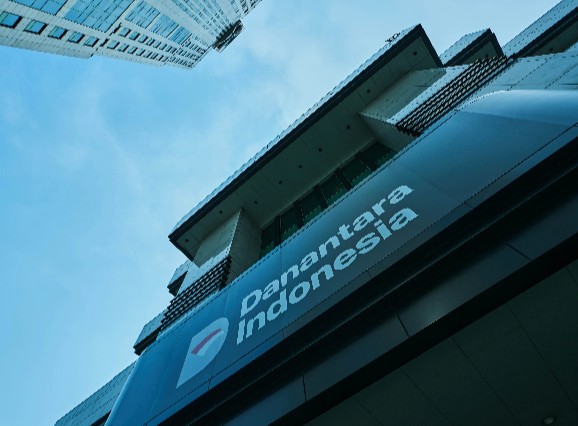
Jakarta: Indonesia has entered a new chapter in the management of state assets and investment through the presence of the Daya Anagata Nusantara Investment Management Agency (BPI Danantara). Danantara is a new government instrument for managing, optimising, and developing Indonesia’s strategic assets.
Through Danantara, state assets are no longer merely held as ownership that generates dividends, but are directed towards becoming capital that can be managed, developed, and invested to create long-term value.
The establishment of Danantara also places Indonesia on a new map of state asset management on a global scale. With consolidated asset value exceeding USD1 trillion, Danantara has a scale that makes it comparable to several major state investment managers or sovereign wealth funds (SWFs) in the world, such as Temasek of Singapore, the Abu Dhabi Investment Authority (ADIA) of the United Arab Emirates, and the China Investment Corporation (CIC) of China.
Temasek, an investment company owned by the Government of Singapore, operates with a commercial approach and is oriented towards long-term investment. As of 31 March 2026, Temasek recorded a net portfolio value of SGD518 billion.
With a mandate to manage and optimise state assets, Danantara has characteristics that can be compared with Temasek in terms of its strategic role as a state investment instrument. However, the structure, mandate, and asset sources of the two are not entirely the same.
Danantara is also in the same group when viewed from the scale of assets with the Abu Dhabi Investment Authority, or ADIA. ADIA is one of the world’s largest sovereign wealth funds and functions to invest funds on behalf of the Government of Abu Dhabi to create long-term value.
Global SWF estimates cited by the Baker Institute place ADIA’s assets at around USD1.2 trillion in 2025. Thus, the scale of Danantara’s assets, which is in the range of a trillion US dollars, is close to a number of giant sovereign wealth funds, including ADIA.
Another comparison is the China Investment Corporation (CIC), one of the world’s largest managers of state wealth. CIC manages a global investment portfolio across various asset classes, ranging from public equities, fixed income, alternative assets, to cash and other instruments. CIC also carries out investments through a number of entities, including CIC International, CIC Capital, and Central Huijin.
Based on CIC’s report, its total assets at the end of 2024 reached around USD1.57 trillion, with net assets of around USD1.37 trillion. CIC also recorded a cumulative annual net return over 10 years of 6.92 percent in US dollar terms.
This means that, using an asset figure of around USD1 trillion, Danantara is still below the scale of CIC. However, in terms of size, Danantara has already entered the group of state investment institutions with very large capital capacity.
The comparison with Temasek, ADIA, and CIC also shows that Danantara’s challenge is not only about how large the assets under management are, but how those assets can generate added value for the Indonesian economy.
The comparison also gives Indonesia one of the important characteristics of a country with a large and advanced economy, namely the ability to manage state wealth institutionally through long-term investment.
Until now, Indonesia’s economic strength has been viewed more in terms of gross domestic product, population size, natural resources, domestic market, and economic growth. Now, Indonesia has a new layer in its economic architecture, namely a state investment vehicle tasked with managing strategic assets and developing investment value over the long term.
In this context, Danantara makes Indonesia increasingly resemble the pattern of state wealth management used by countries with large economies.