
Danantara: Bogor Raya PSEL 1 can supply green energy to local households
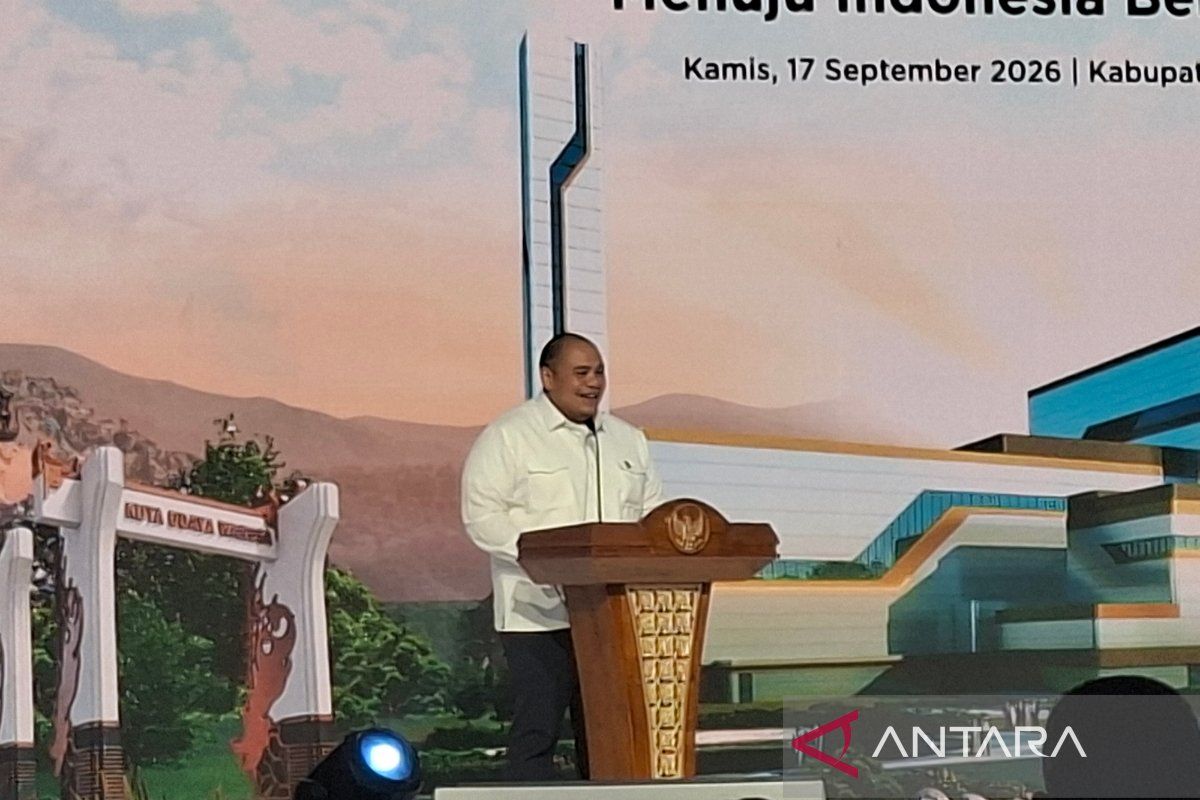
Bogor Regency, West Java (ANTARA) - The Daya Anagata Nusantara (Danantara) Investment Management Agency has revealed that the Bogor Raya 1 Waste-to-Energy (PSEL) project is projected to be able to supply green energy to more than 100,000 households in the Bogor Raya area.
“From an energy perspective, this initiative will generate green energy capable of supplying over 100,000 homes in the Bogor Raya community,” said Pandu Patria Sjahrir, Chief Investment Officer (CIO) of BPI Danantara, during the inauguration of the Bogor Raya 1 PSEL construction in Bogor Regency, West Java, on Thursday.
Pandu stated that the Bogor Raya 1 PSEL project is designed to provide a tangible impact on waste management, green energy, and local economic empowerment, while adhering to environmental standards.
The project, he continued, is targeted to process more than 500,000 tonnes of waste per year, representing approximately 45 per cent of the waste generated in the Bogor city and regency areas.
According to him, from an environmental standpoint, this PSEL facility is also projected to reduce waste emissions from landfills (TPA) by up to 80 per cent and decrease carbon emissions by 640,000 tonnes of CO2 equivalent per year.
“This initiative also represents an investment value of Rp2.8 trillion and, God willing, will create approximately 1,200 jobs and reduce the need for landfill space by about 80 per cent,” said Pandu.
He noted that the construction progress of the Bogor Raya 1 PSEL has reached a critical stage, specifically the signing of the electricity sale and purchase agreement.
This milestone, Pandu added, marks the readiness to drive the realisation of integrated waste management solutions in Indonesia, following Danantara’s previous implementations in Bekasi City and Denpasar Raya.
For further information, the Coordinating Minister for Food, Zulkifli Hasan (Zulhas), stated that the government is simplifying regulations for Waste-to-Energy (PSEL) projects to accelerate the handling of urban waste issues.
According to him, the development of waste-to-energy facilities previously progressed slowly because developers had to navigate various stages of approval, licensing, and inter-agency coordination.
He cited examples where developers were required to coordinate with local governments, regional parliaments (DPRD), provincial governments, the Ministry of Finance, the Ministry of Energy and Mineral Resources, the Ministry of Environment, and PT PLN (Persero) before a project could be realised.