
Danantara Begins to Prove Performance, President Outlines SOE Profits
Public doubt regarding the Daya Anagata Nusantara Investment Management Agency (Danantara) is slowly being answered. Several indicators show that the performance of the body managing the country’s strategic assets is beginning to yield positive results, particularly through increased profits at a number of state-owned enterprises (SOEs).
Since its inception, Danantara has faced various questions. One of them was whether the consolidation of state assets under a single management umbrella could make that wealth more productive and provide added value for the country.
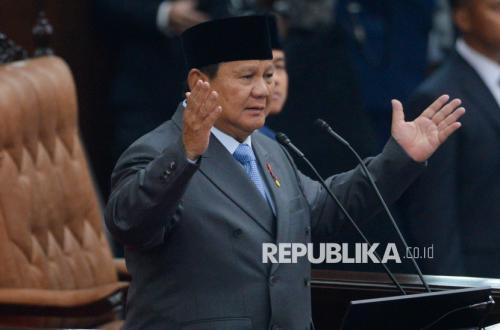
President Prabowo Subianto, in his annual address at the Parliamentary Complex in Senayan, Jakarta, on Friday (14/8/2026), presented a number of SOE profit achievements. PT Timah, for instance, recorded a profit increase of up to 804.7 per cent. It was followed by Pupuk Indonesia at 253 per cent, Semen Indonesia at 196.5 per cent, Pegadaian at 84.6 per cent, Pertamina at 80 per cent, Pelindo at 60.4 per cent, BTN at 40.8 per cent, and Bank Mandiri at 24.3 per cent.
In addition to the profit increases at several SOEs, there were also positive developments at state companies that had previously faced performance issues. Krakatau Steel and Kimia Farma, for example, were said to have successfully turned around and returned to profitability.
Although the performance recording periods for each company differ, these achievements indicate the same direction of improvement, namely towards positive performance.
Communications observer Hendri Satrio assessed that Danantara’s role is not only related to efforts to improve SOE performance. According to him, these achievements are also beginning to restore public optimism regarding the management of state assets.
“So it is clear that Danantara is playing a very important and primary role in Indonesia’s future development. At least in the first term of President Prabowo’s administration and it is very likely to be continued in the future given the important and strategic role currently being carried out by Danantara,” said the man familiarly known as Hensat on Friday (14/8/2026).
According to Hensat, this development shows that Danantara is beginning to occupy a strategic position in the management of state wealth. The improvement in SOE performance is also considered to be no coincidence. A number of fundamental changes in the governance of state companies have begun to be implemented, including through the restructuring of business structures and focus.
Deputy Chairman of House of Representatives Commission VI from the Gerindra Party faction, Andre Rosiade, appreciated Danantara’s performance in carrying out SOE reforms. According to him, these achievements are part of the partnership between Commission VI and Danantara Asset Management in reforming state companies.
“That shows that the partnership between the House of Representatives Commission VI and Danantara Asset Management is a success. A success in how we partner and support each other to reform the existing SOEs,” Andre said in Jakarta on Friday (14/8/2026).
He stated that one form of reform is carried out through streamlining the number and structure of SOEs so that their management becomes more effective and efficient. “The third is reforming how to improve performance. And the basis for this is the amendment to the SOE Law that we carried out, which brought about Danantara and also the second amendment to further perfect performance. I am very pleased that the President appreciates the performance of Danantara in partnership with us in Commission VI of the House of Representatives,” he said.
Focus on Core Business
The presence of Danantara is also expected to make SOEs more focused on their core business while reducing activities that do not provide added value. Through streamlining, organisational structures, business processes, and operational costs are reorganised so that companies become leaner and more disciplined. At the same time, state assets held by SOEs are encouraged to be more productive and generate returns, rather than merely being recorded on the company’s balance sheet.
Synergy among SOEs is also an important part of this strategy. By optimising cooperation, state companies can unlock opportunities for economies of scale and economies of scope.
Thus, the measure of success in managing state assets does not stop at the size of the assets owned. What is more important is the ability of those assets to generate economic value for the country.
House of Representatives member from the Golkar Party faction, Bambang Soesatyo, assessed that SOE reform is an important step to improve the productivity of state companies. “SOE reform is a bold and important step because too many unproductive state companies can actually burden state finances. SOEs must be filled by healthy, professional, productive companies that are capable of creating added value,” said Bambang on Friday (14/8/2026).
However, he reminded that the restructuring process must still be carried out transparently, accountably, and professionally. Thus, the ultimate goal is to truly increase the contribution of SOEs to the economy as well as state revenues.
SOEs with good performance, he continued, are not solely determined by the size of their assets. That performance is born from assets managed with discipline, efficient organisations, and professional management.
In that context, Danantara’s role becomes strategic to ensure that state wealth is not merely maintained as assets, but managed to generate greater value for Indonesia.
The changes taking place within SOEs are considered not merely administrative restructuring. More than that, it reflects a transformation in the way the state manages its wealth.
If previously the public questioned how Danantara differed from previous SOE management models, a number of answers are now beginning to emerge. SOEs are being pushed to be more focused, efficiency is being strengthened, assets are being optimised, and profitability is beginning to show improvement.
The fundamental change lies in the measure of success. That measure is no longer solely about who manages state assets, but rather how productively those assets work for the benefit of Indonesia.