
Danantara and State-Owned Banks Intervene to Resolve Cash Flow Issues in People's School Project
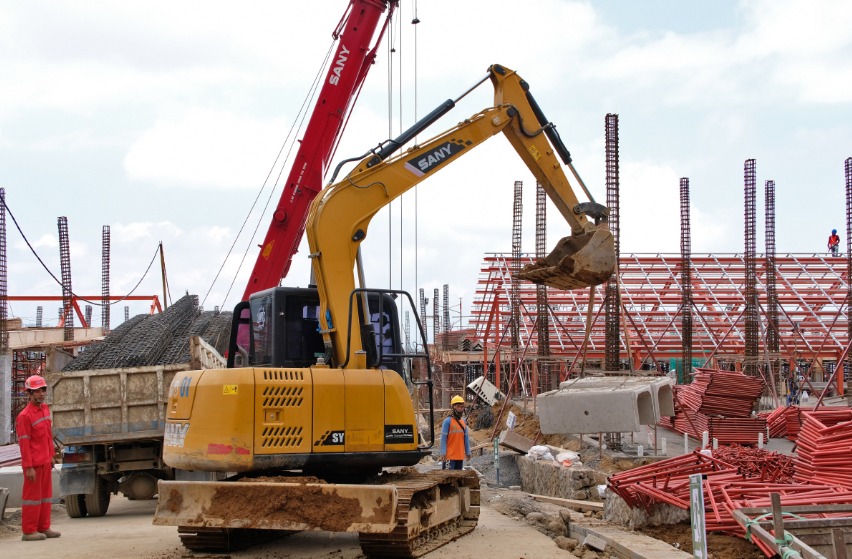
Minister of Public Works (PU), Dody Hanggodo, has requested the Investment Management Agency (BPI) Daya Anagata Nusantara, or Danantara, along with state-owned banks (Himbara), to intervene and support the smooth operation of the People’s School (SR) project. This move aims to address cash flow issues faced by contractors on the ground. As of end-May 2026, physical progress of the second phase of the People’s School project across 93 sites has reached 62.63%, while financial progress stands at 41.76%. This discrepancy has caused liquidity pressures for service providers, potentially delaying the June 2026 completion target. Dody Hanggodo stressed the importance of coordinating with Danantara, given its strategic role in managing national investments and assets. With Danantara’s support, Himbara banks are expected to provide more flexible financing schemes for contractors. ‘For service providers facing cash flow issues, we have coordinated with Danantara to secure assistance from Himbara banks. The aim is to prevent work stoppages due to administrative funding problems,’ Dody stated in an official release. The Ministry of Public Works aims for all 93 second-phase People’s School sites to be fully operational by July 2026, coinciding with the new academic year. To meet this target, several technical strategies have been implemented. In addition to focusing on Phase II, the government is preparing Phase III of the People’s School project, covering 107 new locations. However, Dody noted that the main challenge for the next phase will be land readiness. He requested local governments, with coordination from the President’s Staff Office (KSP) and the Ministry of Home Affairs (Kemendagri), to swiftly resolve land ownership and environmental impact assessment (AMDAL) issues. Once land administration is settled, tenders can commence immediately, with a target for permanent completion by June 2027. ‘We hope students currently in temporary SR facilities can move to permanent buildings by the 2027 academic year,’ he added. The government has mandated coal, palm oil, and ferroalloy exporters to report to PT Danantara (DSI) from 1 June 2026 to prevent foreign exchange leakage. Mahfud stated that DSI will help resolve the decades-long issue of foreign exchange leakage. The regulation through DSI is also projected to redirect 10%-20% of potential under-invoicing funds back into the country. This surge in natural resource sector revenue will directly secure funding for various national development programmes, including the MBG Programme. National Economic Council (DEN) Chairman Luhut Binsar Pandjaitan praised the one-stop strategic commodity export policy via Danantara Sumberdaya Indonesia (DSI). The policy will initially cover three strategic commodities: palm oil, coal, and iron alloys or ferroalloys. President Prabowo Subianto delivered a briefing to 400 participants of the Presidential Future Leaders Program (PFLP) 2026 in Hambalang to cultivate integrity-driven BUMN leaders. Presidential Chief of Staff Teddy Indra Wijaya noted that President Prabowo has prepared 400 BUMN leadership candidates through the PFLP 2026. IHSG Plummets to 6,248 Level, Finance Minister Purbaya Cites Market Worries Over BUMN Exports. Danantara Indonesia Chief Executive Officer (CEO) Rosan Roeslani assured the government will honour existing contracts regarding natural resource commodity exports.