
Danantara Aims to Transform Thousands of Tonnes of Jakarta's Waste into Electricity
Jakarta, CNBC Indonesia — The Investment Management Agency Daya Anagata Nusantara (BPI Danantara) is partnering with the DKI Jakarta Provincial Government to pursue the Waste Processing into Electricity project (PSEL) or waste-to-energy (WTE). This is being carried out through the signing of a Memorandum of Understanding (MoU) between the two parties.
Coordinating Minister for Food Affairs Zulkifli Hasan stated that Jakarta’s waste problem has reached emergency levels and is receiving special attention from Indonesian President Prabowo Subianto. The mounting waste in Jakarta requires integrated handling from upstream to downstream.
“Jakarta is even receiving special attention from the President. Just a few weeks ago, we were almost called every week about waste, mainly Bantar Gebang,” he said during the MoU signing event for the PSEL between Danantara and the regional government at Graha Mandiri Jakarta on Monday (4/5/2026).
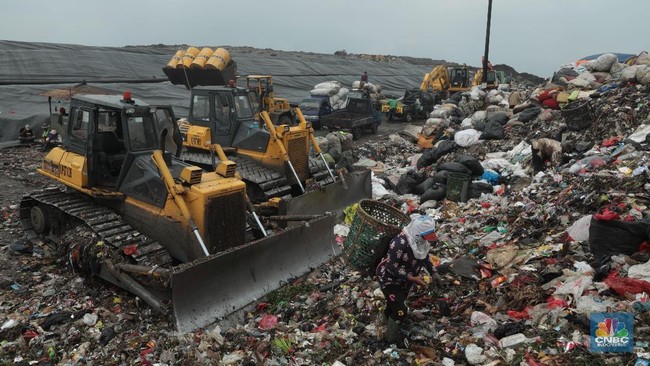
The man familiarly known as Zulhas revealed that the waste emergency in Jakarta is reflected in the over 9,000 tonnes of waste generated daily. Moreover, Jakarta’s waste management largely depends on Bantar Gebang, which serves as the city’s final waste processing site.
“Jakarta’s waste accumulation reaches 9,000 tonnes per day. Currently, 87% still relies on Bantar Gebang, which is far beyond capacity. If measured, Governor, Bantar Gebang is like a 16-17 storey building,” he explained.
Jakarta’s waste management is being implemented through the instruction of Presidential Regulation No. 109 of 2025.
“The Perpres 109 of 2025 is intended to accelerate the handling of urban waste emergencies using waste-to-electricity processing technology; our waste will be processed into electricity,” he said.
With the acceleration of the business entity selection process, Zulhas noted, the Governor of DKI has proposed two PSEL locations: Bantar Gebang and Tanjung Priok’s Kamal Muara.
He added that handling waste in Jakarta will serve as the benchmark for the success or failure of this PSEL project. If managed well, waste handling in other regions will also succeed.
“Because if Bantar Gebang in Jakarta isn’t resolved, even if the rest of Indonesia is, people will say the waste isn’t sorted, Governor. But if Bantar Gebang is resolved, even if others aren’t, people will say the waste is sorted,” he concluded.