
Danantara Aims to Implement Rp 89 Trillion Waste-to-Energy Projects Across Indonesia
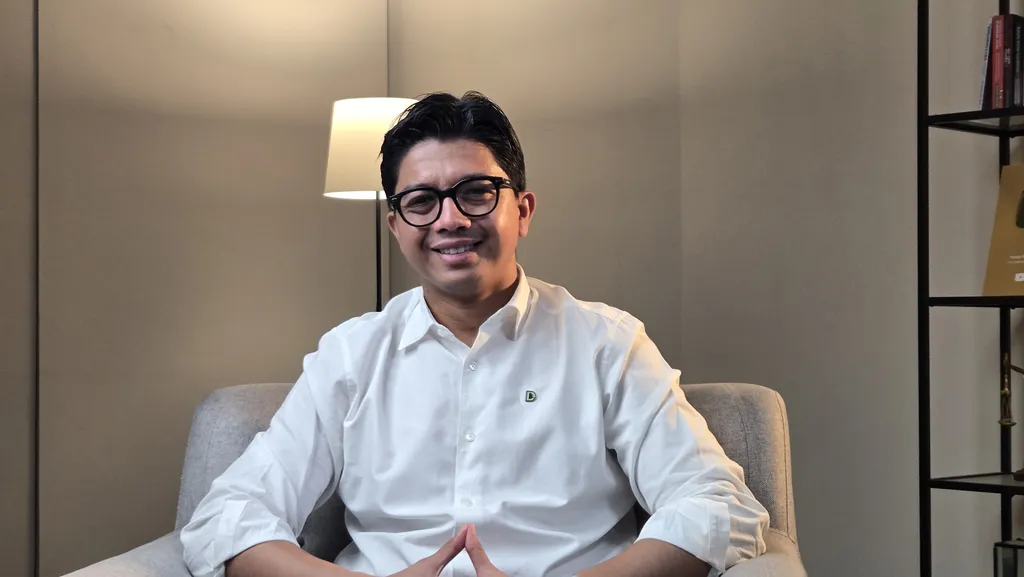
Danantara aims to implement 17 waste processing projects into electricity in 33 regencies/cities. The project, with an investment of Rp 89 trillion, is targeted for completion by 2028.
23 Sep 2026 07:00 WIB · Ekonomi & Bisnis
Kompas/Nina Susilo
Danantara aims to develop 17 waste processing projects into electricity or PSEL, covering 33 cities and regencies in Indonesia. The project, with a total investment of 5 million USD or approximately 89 trillion IDR, is targeted for completion by May 2028.
The legal framework is Presidential Regulation Number 109 of 2025 concerning Urban Waste Management through Waste Processing into Renewable Energy Based on Environmentally Friendly Technology.
In its implementation, Danantara seeks investor partners who possess suitable and optimal technology. The local government, in this case, also serves as one of the strategic stakeholders, including the obligation to provide land and ensure the input of waste in sufficient volume on a daily basis.
Danantara then established PT Daya Energi Bersih Nusantara (Denera), an integrated waste management company that also serves as a holding company for all entities implementing Waste-to-Energy (PSEL) projects in Indonesia. PT Denera was officially established on April 1, 2026.
So far, Danantara and the relevant stakeholders have begun to develop three waste management projects. Following Denpasar and Bekasi, Danantara recently held a groundbreaking ceremony for the Bogor Raya waste management project in Galuga Village, Bogor Regency, on Thursday (17/9/2026).
How will this ambitious megaproject be realized in the future? To gather strategic information regarding the PSEL project, Kompas interviewed PT Denera CEO Fadli Rahman in Jakarta on Friday (September 18, 2026).
A special interview with Fadli is also available on the official Kompas Daily YouTube channel. For this digital version, the interview is divided into two parts. This is part 1. The interview is as follows.
So far, investment partners seem to be mostly from abroad. Is it that there are currently no Indonesian companies that can be approached, or are there no companies deemed to have sufficient experience in converting waste into energy or other forms?
When we choose partners, there are several main criteria that we consider. The first is that they have a track record. The second is that they have financial capability. The third is that they have the ability to execute quickly. And the fourth is that they have the ability to execute in Indonesia.
Well, external partners have a track record and most of them possess financial capabilities. They are committed to swift execution. Local partners may and almost certainly have execution experience in Indonesia.
They may be committed to rapid execution. They may have strong financial capabilities, but they may not have a track record for waste-to-energy plants, as there are no waste-to-energy plants in Indonesia yet.
Therefore, the combination of external partners with local partners is what we are seeking. If we choose external partners, we will certainly encourage them to have local partners to ensure execution capabilities in Indonesia. This is because knowledge of the local conditions is important.
Likewise, if a local partner wants to lead a consortium, they must partner with an external partner with a proven track record. This combination is ideal, and so far, it’s the one that has consistently been found in each location.
In Denpasar, the selected name may indeed sound like an external partner, but there is certainly a local partner involved. The same goes for Bekasi. The same applies to Bogor. And it is the same in the other eight locations. In Medan, it is led by an external partner assisted by a local partner.
In Serang, it is led by a local partner assisted by an external partner. The same applies in Yogyakarta, led by a local partner—an Indonesian state-owned enterprise supported by an external partner. Therefore, that combination is what we ensure is present.
PSEL is not a panacea, nor a cure-all for Indonesia’s waste problem. In fact, it only covers 22.5 percent of the country’s total waste. Going forward, will Denera be involved in developing a plan to address this waste problem?
If all PSELs are implemented, they will only cover approximately 20-22.5 percent of Indonesia’s waste (which is managed). We will involve ourselves in the supply chain or value chain of waste management from end to end. Of course, we will be selective, as not all value chains of waste management activities can be commercially viable, as this also helps the environment.
There are several aspects that are very high in social value but not commercial. What we want is something that has both high commercial and social aspects. Therefore, if both of these elements are present, then Denera will be involved.
It is true that the current focus is to ensure that the mandate from PSEL can be implemented. Therefore, the main focus, 95 percent of our team’s attention, is to ensure that this can proceed. The primary focus of Danantara Investment Management is also to ensure that this can be executed. Thus, this is a top priority for Danantara Investment Management.
However, we also see that this cannot be limited to PSEL alone. Therefore, there is 5 to 10 percent of our focus that is beginning to develop other businesses. In Denera, there are 4 pillars.
The first pillar is waste to energy, or PSEL, which is our current focus. We were only established last April. We’re ensuring this is operational. Three PSELs are already operational, and eight will be launched in other locations once they’re ready.
The second pillar is to develop towards other value chains, especially those upstream. Thus, it involves vertical integration and aims to build waste management infrastructure from the very beginning, before reaching the final disposal site.
Whether it pertains to waste management infrastructure, waste logistics, waste sorting, or other infra
Source: jawawa.id (https://jawawa.id/newsitem/danantara-aims-to-implement-rp-89-trillion-waste-to-energy-projects-across-indonesia-1790229046)
Originally published by kompas.id (https://www.kompas.id/artikel/fadli-rahman-psel-not-to-boost-electricity-but-to-handle-garbage-22?open_from=English_Page)