
Danantara Accelerates SOE Portfolio Restructuring to Strengthen Consolidation
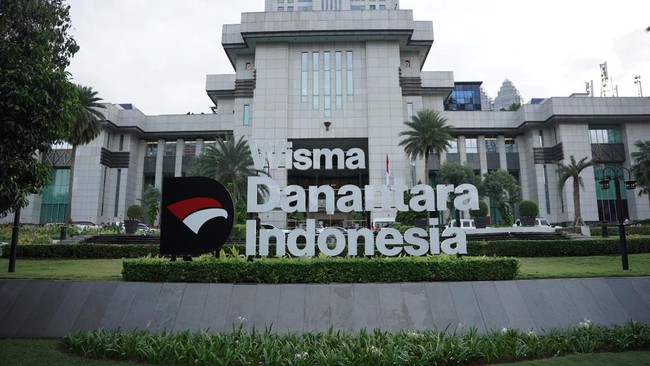
The Investment Management Agency (BPI) Danantara Indonesia is continuing its comprehensive restructuring efforts to accelerate the transformation of state-owned enterprises (SOEs) in the country. This agenda is being carried out by streamlining the number of SOEs, consolidating various strategic sectors, and directing investments towards national downstream projects. These measures are expected to improve efficiency, competitiveness, and the contribution of SOEs to national economic growth. Restructuring the SOE portfolio is a primary focus for Danantara, achieved through mergers, consolidation, divestment, and dissolution if entities no longer hold strategic value. The goal is to create a leaner number of SOEs with larger business scale. In the first 18 months of transformation, Danantara successfully reduced the number of SOEs by 250 from a total of 1,077 through mergers and other processes. The closure of these 250 entities is estimated to have saved approximately Rp 50 trillion in state funds. Danantara is also directing investments towards national strategic projects focused on downstream processing, energy security, food security, and natural resource management. This is evidenced by the realisation of 26 strategic national downstream projects with a total investment value of Rp 225 trillion. These projects are expected to absorb 37,833 workers, thereby strengthening downstream processing as a key driver of job creation and national economic growth. The downstream agenda is being implemented in two phases. Phase I, which began with a groundbreaking on 6 February 2026, encompasses projects worth Rp 109 trillion with the potential to absorb 11,456 workers. Phase II commenced on 29 April 2026, bringing in investments of Rp 116 trillion with the potential to absorb 26,377 workers. The 26 projects cover various strategic sectors, ranging from mineral processing industries such as aluminium, stainless steel, and copper smelters, to the energy and food sectors through the construction of bioavtur and bioethanol facilities, palm oil and coconut processing, and integrated poultry farming. In the financial sector, Danantara is transforming the Association of State-Owned Banks (Himbara) by strengthening its treasury function into a standalone division rather than an ordinary business unit. In the plantation sector, Danantara is carrying out a large-scale restructuring of the PTPN Group by forming three main pillars: PalmCo, SugarCo, and SupportingCo. This restructuring has reduced the number of subsidiary entities from 65 to 18 companies, effectively cutting bureaucratic chains and focusing on core businesses. Transformation is also underway at InJourney, focusing on unifying the SOE tourism ecosystem into an integrated holding. The company is consolidating airport management, destination management, hotels, aviation services, and retail and tourism support so they no longer operate independently. Danantara has also formed a national logistics holding by merging seven SOE logistics entities. These include PT Multi Terminal Indonesia (MTI) and PT Prima Indonesia Logistik (PIL) from the Pelindo Group, PT Pos Logistik Indonesia (POSLOG), PT Sarana Bandar Logistik (SBL), PT KBN Prima Logistik (KPL), PT Varia Usaha Dharma Segara (VUDS), and PT Krakatau Jasa Logistik (KJL). This consolidation has the potential to create the largest state-owned logistics holding in Indonesia, with a service network covering ports, warehousing, distribution, industrial logistics, and national delivery. In the energy sector, Danantara is overseeing the consolidation of three main Pertamina entities: PT Pertamina Patra Niaga, PT Kilang Pertamina Internasional (KPI), and PT Pertamina International Shipping (PIS). This represents the largest downstream oil and gas ecosystem in Indonesia, integrating refineries, logistics, distribution, and energy marketing. Through this consolidation, Pertamina is also building one of the most integrated downstream oil and gas ecosystems in Southeast Asia, from refineries to energy distribution. In the transport sector, Danantara mandated KAI and INKA on 18 May 2026 to conduct due diligence and integration studies. The acquisition target for INKA was signed in November 2026, giving KAI as the operator stronger control over the train supply chain. INKA will become a manufacturing sub-holding, allowing long-term fleet planning. Danantara is also driving the consolidation of state-owned airlines by positioning Garuda Indonesia as the national aviation holding. Under this scheme, Pelita Air will become an integral part of the Garuda Group to strengthen the competitiveness of the national aviation industry. Danantara is also overseeing the merger of state-owned construction firms, namely Hutama Karya, Waskita, WIKA, ADHI, PTPP, Brantas Abipraya, and Nindya Karya. The aim is to reduce overlapping functions, achieve greater scale, and prevent SOEs from competing against each other for the same projects. Furthermore, Danantara is strengthening the position of Danareksa (Persero) as the consolidation manager for all SOE-owned industrial estates. This move has the potential to add more than 13,000 hectares of managed land and make Danareksa the largest industrial estate manager in Southeast Asia. The transformation includes the development of seven industrial estates, asset optimisation, restructuring of non-core entities, and strengthening recurring income from utilities, infrastructure, and property sectors. Finally, the transformation of Pupuk Indonesia is focused on shifting from a fertiliser producer to an agro-solution company. The company will no longer just produce and distribute fertiliser, but will also provide seeds, pesticides, farmer assistance, and financing.