
Danamon Economist Forecasts Rupiah at Rp18,032 per US Dollar by End-2026
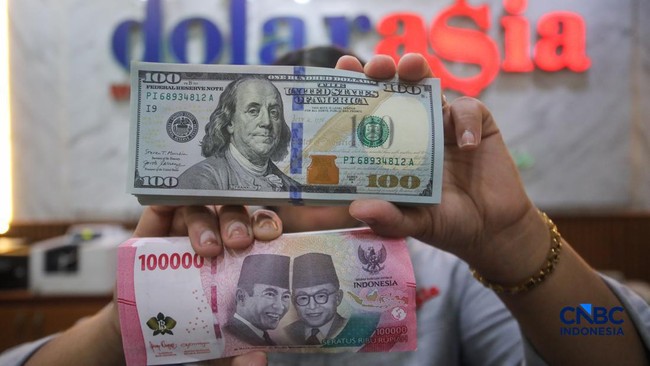
Sabang, CNBC Indonesia — The rupiah is expected to remain under pressure through the end of 2026. Bank Danamon Chief Economist Irman Faiz forecasts the currency will stand at Rp18,032 per US dollar at year-end.
Pressure on the rupiah is primarily coming from external factors, including geopolitical tensions that have pushed up energy prices, rising global inflation risks and high yields on US government bonds, or US Treasuries.
Irman said the rise in global oil prices was one of the unexpected factors that changed the global economic outlook this year. Geopolitical tensions between the US and Iran early in the year drove oil prices sharply higher. Although prices have since fallen, they remain elevated.
“Energy prices have been a surprise factor this year. There was the US-Iran war early in the year, and then oil prices suddenly rose quite significantly. They fell again for a while, but most recently prices have remained sticky above US$100 a barrel,” Irman said at a Bank Indonesia media briefing in Sabang, Aceh, on Thursday (5 November 2026).
He said the surge in energy prices had also reversed expectations for global inflation. The disinflation trend that had been expected to continue has instead given way to the risk of inflation rising again.
This has made it more difficult for central banks around the world to cut interest rates. US rates could remain high for longer, ushering in an era of “higher for longer”.
High US interest rates also make dollar-denominated financial assets more attractive. As yields on US government bonds rise, investors have a greater incentive to shift their funds into instruments considered safer.
This poses a challenge for emerging economies such as Indonesia. Uncertainty over US monetary policy and geopolitical risks are prompting global investors to reduce their exposure to riskier assets, including shares and bonds in emerging markets.
“When there is risk-off sentiment, investors will choose relatively safer financial assets, including safer countries. Which countries will they look to? Advanced economies,” he said.
The shift in capital flows towards developed economies could add to pressure on the rupiah. Foreign investors’ withdrawal from domestic financial markets could increase demand for US dollars as they repatriate their funds.
Pressure on the rupiah is also coming through international trade. Irman noted that Indonesia is a net oil importer, so higher global oil prices increase the need to pay for energy imports in dollars.
Higher energy import costs could widen the oil and gas trade deficit. This would then put pressure on the current account as the need for foreign currency to pay for imports increases.
Irman forecasts Indonesia’s current account deficit (CAD) will reach about 1.5% of gross domestic product (GDP) in 2026 and widen to 1.6% in 2027.
“We therefore expect the trade balance to result in a current account deficit of 1.5% of GDP this year, widening slightly to 1.6% next year,” he said.
The current account deficit indicates that Indonesia still needs foreign financing to meet its US dollar requirements. If capital inflows are not strong enough to cover those needs, the rupiah could remain under pressure.
Nevertheless, Irman sees prospects for improvement in global oil prices next year. Easing geopolitical tensions and the normalisation of supply chains could boost global oil supplies.
If geopolitical conflicts de-escalate and oil-processing facilities that had halted operations reopen, OPEC+ countries could increase production. This could lead to an oversupply in the global oil market.
However, a fall in crude oil prices would not immediately bring down consumer inflation. Oil products such as diesel still face distribution, logistics and refinery-capacity constraints, meaning it will take time for lower crude prices to be passed on to consumers.
Global inflation is therefore expected to ease gradually. This would leave the US Federal Reserve (the Fed) with limited room to cut interest rates in 2027.
For Indonesia, a combination of relatively high energy prices, US interest rates remaining elevated, a current account deficit and the potential outflow of foreign capital are among the challenges that could weigh on the rupiah through the end of the year.
Source: jawawa.id (https://jawawa.id/newsitem/danamon-economist-forecasts-rupiah-at-rp18-032-per-us-dollar-by-end-2026-1793933430)
Originally published by CNBC Indonesia (https://www.cnbcindonesia.com/market/20261106075649-17-782827/ekonom-danamon-ramal-rupiah-rp18032-us--di-akhir-2026), translated from Indonesian