
Danamon Economist: BI Rate Could Rise Twice More by End of 2026
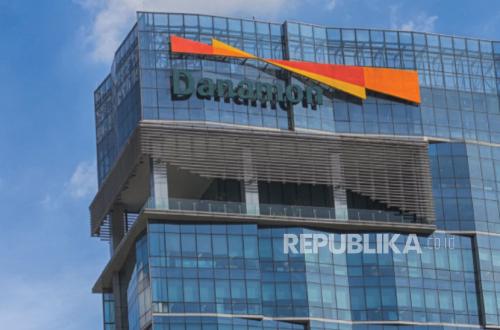
Bank Indonesia (BI) is expected to still have room to raise its benchmark interest rate (BI Rate) by up to two more times, each by 25 basis points, by the end of the year. The move is deemed necessary if pressure on the rupiah exchange rate due to global uncertainty persists.
Bank Danamon economist Irman Faiz said the possibility of a BI Rate hike remains open. However, it will depend heavily on global developments, especially geopolitical tensions and financial market volatility.
“Our estimate is that there is still room for two interest rate hikes, each of 25 basis points, by the end of the year. However, if global conditions improve later, BI may not need to utilise all of that room,” Irman said after a Media Luncheon for Danamon’s 70th anniversary in Jakarta, Tuesday (14/7/2026).
According to Irman, the rupiah’s current movement is influenced more by external factors, particularly geopolitical conflict developments and world oil prices. Nevertheless, he assessed that pressure on the rupiah is still relatively under control because the surge in oil prices has not been as severe as the market feared.
“If the escalation of the conflict is not too great, the impact on the rupiah will also be relatively limited. This could be a positive sentiment for the exchange rate going forward,” he said.
Irman added that monetary policy alone is insufficient to maintain rupiah stability. The government also needs to maintain fiscal discipline so that investor confidence is preserved.
According to him, Standard & Poor’s (S&P) Global Ratings’ decision to maintain Indonesia’s sovereign credit rating at BBB with a stable outlook is a positive signal for the market. The assessment shows that Indonesia’s economic fundamentals are still considered strong even though various government policies are in a transition period.
“S&P assesses that the government’s transformation direction is already positive. The concern now is how these policies are executed. Execution must be good so that investor confidence is maintained,” he said.
Furthermore, Irman estimates that Indonesia’s economic growth in the third quarter of 2026 has a chance to be better than the previous quarter. This optimism is driven by the potential increase in government spending realisation in the second half of the year, which is expected to stimulate public consumption and investment.
However, he reminded the government to ensure that state revenue, particularly taxes, meets the target so that the fiscal space to drive growth remains intact. “Government spending can be a growth driver. But state revenue must also be on target so that the prepared stimulus can run optimally,” Irman said.