
Damar resin becomes a source of livelihood for the people of Negeri Neniari, Maluku
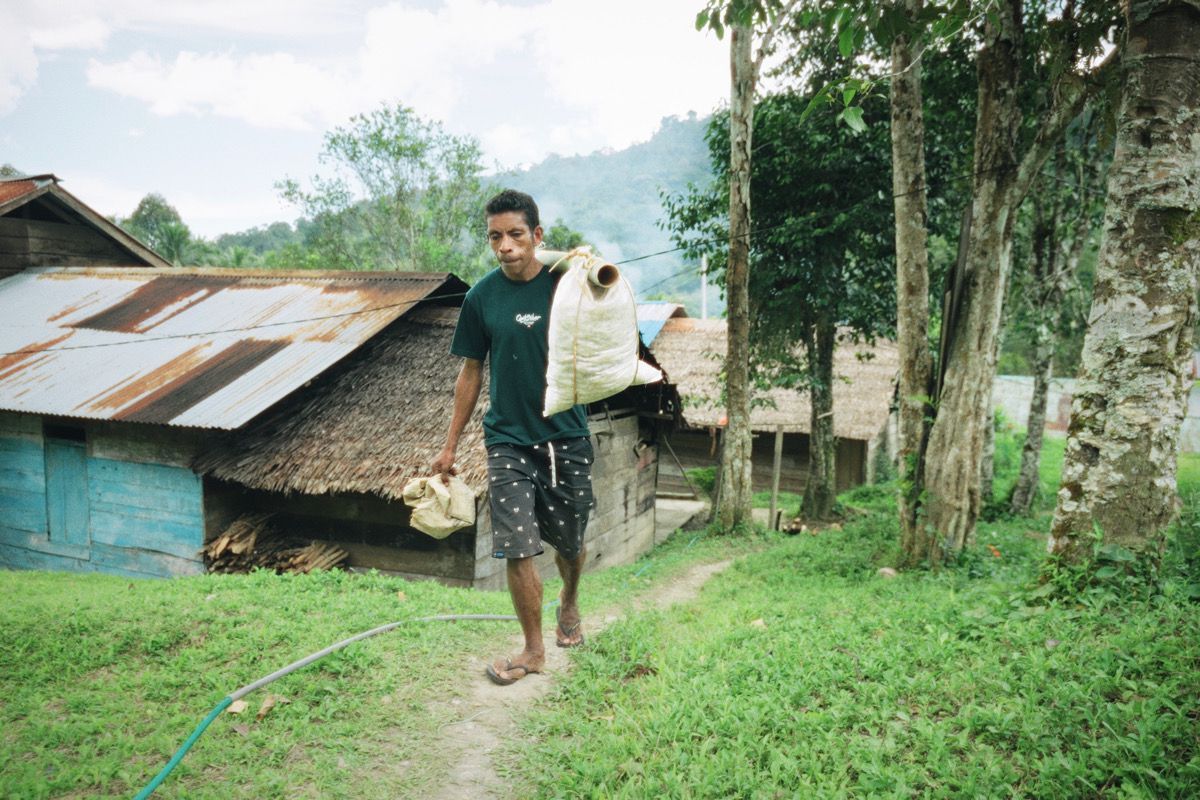
The utilisation of damar resin as a non-timber forest product has become the main source of livelihood for the people of Negeri Neniari, West Seram Regency, Maluku, whilst demonstrating a practice of sustainable forest management without tree felling. The local community has harvested damar resin for generations by tapping trees that grow in the forest area, then selling the harvest to meet household needs, including financing children’s education. Damar farmer Maku Rumahsoal said the community refers to the damar tree as an ‘ATM’ because it can generate income almost every day. ‘Here, damar is like an ATM. When you come down from the forest, it means money is coming soon,’ Maku said. The damar forest is about a six-hour walk from the settlement. After tapping the resin, residents carry the harvest to the village to sell to buyers who now come directly to Negeri Neniari. Unlike seasonal plantation commodities such as nutmeg and cloves, damar resin can be harvested all year round, making it a more stable source of income for the community. ‘Every day the resin comes out, so there is no season,’ said damar farmer Leu Sasake. Damar resin is sold for around Rp12,500 to Rp25,000 per kilogramme, depending on quality and sales location. A single family can own more than a thousand damar trees. Negeri Neniari customary leader Meki Lelesol said the community is capable of producing about three tonnes of damar resin each month. ‘You can take as much as you want, as long as you are strong enough to carry it,’ he said. According to Meki, the proceeds from damar sales have helped many families meet their living needs, including funding their children’s education up to university level. The practice of utilising non-timber forest products in Negeri Neniari is considered an example that forests can provide economic benefits without needing to be converted or cut down. Similar potential has also been found in Kais Darat District, South Sorong Regency, Southwest Papua. Based on an assessment by the EcoNusa Foundation, the area still has stands of white damar (Agathis spp) scattered in Hohore and Siranggo villages, which are considered to have the potential to be developed as a non-timber forest product commodity managed sustainably by indigenous communities. The experience of sustainable forest management by communities will be one of the good practice examples discussed at the PAPEDA (Papua Action for Development, Economy, and Sustainable Nature) Summit 2026 in Sorong, Southwest Papua, on 2-4 September 2026. The forum will discuss strengthening the economy based on local resources, sustainable forest management, and the role of indigenous communities in preserving forests.