
Dam Bursts at Dawn, Flash Flood Sweeps Settlement – 100 People Killed
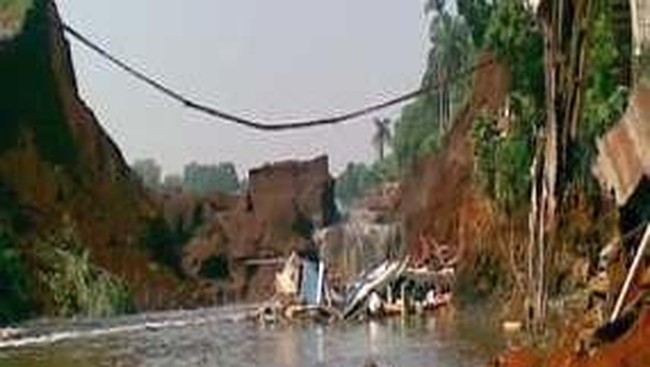
The collapse of a dam in Nepal due to a glacier collapse has brought back memories of the Situ Gintung tragedy in Ciputat, South Tangerang. On 27 March 2009, the dam burst and around one million cubic metres of water swept through residential areas. In total, 100 people were killed.
The disaster began the previous day. On Thursday, 26 March 2009, heavy rain fell across the Ciputat area. The water level in Situ Gintung rose until water began to overflow at one section of the dam.
However, no major damage occurred at that point. The rain then eased in the early hours of Friday and the situation briefly appeared safe.
A few hours later, at around 4.30 a.m. Western Indonesian Time, the Situ Gintung dam finally burst. The flash flood struck the Cirendeu Permai housing estate and swept through part of Kampung Poncol. Several buildings at the University of Muhammadiyah Jakarta were also affected.
Around 100 people were killed and hundreds of homes were damaged in the disaster, which residents described as a small ‘tsunami’. The term was used because the water arrived with such force and destruction.
After the disaster, many initially suspected extreme rainfall was the main cause. Rainfall at the time reached around 113.2 millimetres per day.
However, findings later emerged showing the problem was not as simple as heavy rain. In a report by detik.com on 3 April 2009, the head of the Agency for the Assessment and Application of Technology (BPPT), Sutopo Purwonugroho, revealed that the BPPT had conducted research on Situ Gintung on 5 December 2008.
The team found indications of erosion or piping in the structure of the spillway at Situ Gintung.
‘Therefore, rainfall was not the main factor,’ Sutopo said, as reported by detik.com.
BPPT researcher Budi Harsoyo, in a study titled ‘The Collapse of the Situ Gintung Dam (27 March 2009) Was Not Due to Extreme Rainfall’, revealed that cracks had been found in the dam body before the incident. He highlighted the lack of monitoring and maintenance as one of the factors that left the damage unaddressed.
The research also revealed the old age of the dam as one of the main factors. Situ Gintung was a Dutch colonial-era irrigation system whose condition had changed shortly before the collapse, including cracks in the dam and a reduction in the width of the drainage channel.
Regarding the drainage channel, this condition reduced the dam’s discharge capacity, increasing the hydrostatic pressure on the structure. Moreover, the area around Situ Gintung had been transformed into a densely populated settlement.
Thus, the heavy rain on 26 March 2009 was not the only problem. The ageing dam, the narrowed drainage channel, indications of erosion, cracks, and poor maintenance all made the structure increasingly vulnerable.
When the water level rose, the dam was ultimately unable to withstand the pressure. In the early hours of 27 March 2009, Situ Gintung burst. The flash flood swept through residential areas and killed around 100 people.