
Dahnil Anzar: Prabowo is the Right Leader Amidst Global Uncertainty
President Prabowo Subianto is the right leader for Indonesia at a very opportune time, in my view. Why? Because at a time when global anarchy is difficult to control, Mr Prabowo is leading Indonesia.
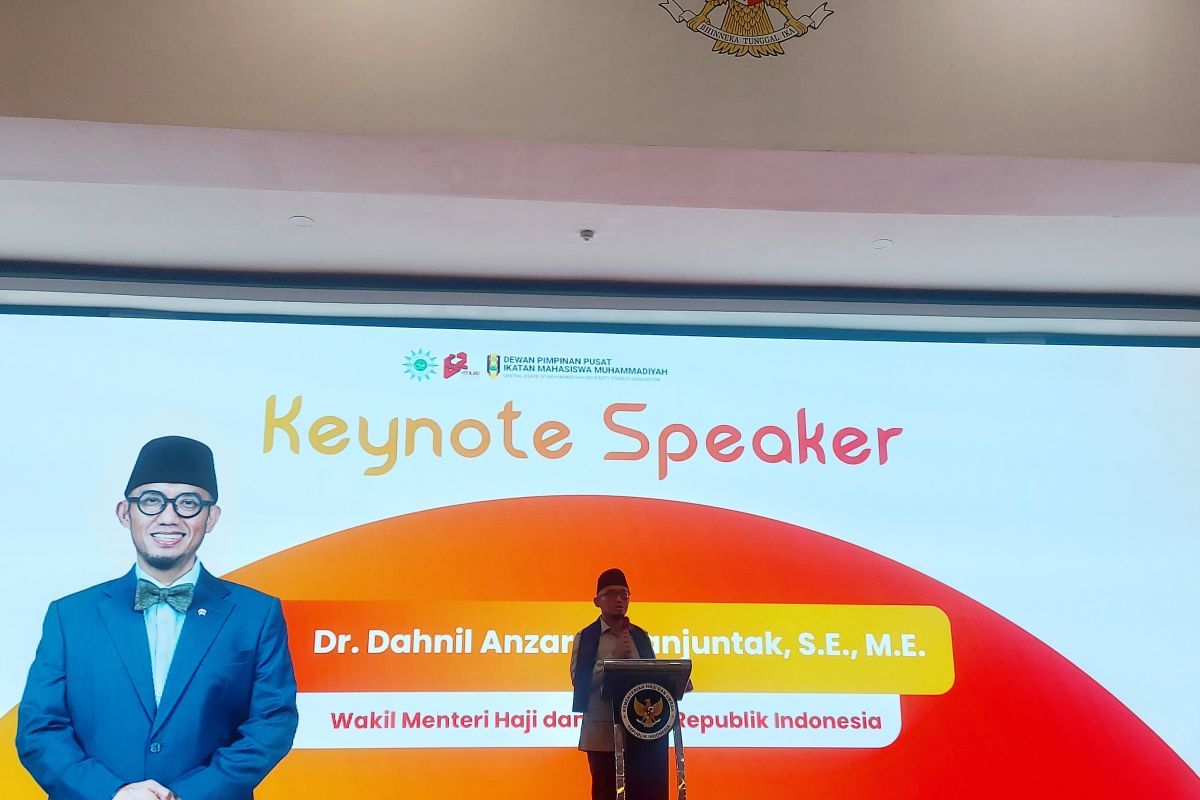
angerang (ANTARA) - The Deputy Minister of Hajj and Umrah, Dahnil Anzar Simanjuntak, believes that President Prabowo Subianto is the appropriate leader for Indonesia amidst a global situation filled with uncertainty.“President Prabowo is Indonesia’s leader at a very opportune time, in my view. Why? Because at a time when global anarchy cannot be controlled and is not easily managed, Mr Prablo is leading Indonesia,” Dahnil stated during the Tanwir event of the Muhammadiyah Students Association (IMM) in Cipondoh, Tangerang City, on Wednesday.
Dahnil noted that the current global condition is marked by increasing tensions and conflicts between nations, necessitating leadership capable of viewing issues through a long-term perspective.
According to him, Prabowo possesses a visionary leadership character with the ability to foresee problems far into the future, rather than being solely oriented towards short-term political interests.
Dahnil cited several of the Prabowo administration’s policies, such as the Free Nutritious Meal (MBG) programme, People’s Schools, and the strengthening of the education and defence sectors.
He argued that these programmes must be viewed from a long-term perspective and should not be judged solely based on their immediate visible impacts.
“This is what distinguishes Prabowo, because he possesses a long-term vision,” he said.
He also distinguished between leaders who strive to maintain power and those who are brave enough to make decisions to enact change.
“There are two typologies. First, there are those in power who wish to maintain their existence. But there are also those in power who wish to implement change,” he said.
Dahnil noted that leaders who only wish to maintain power tend to choose policies that are safe and easily accepted by the public. Conversely, leaders seeking fundamental change must be prepared to face resistance.
Dahnil also highlighted government policies regarding natural resource management. He assessed that the government must be brave enough to halt exploitation if its utilisation does not yet provide optimal benefits for the nation’s interests.
“If we cannot exploit it effectively today, then let it be. Natural resources should be preserved for our grandchildren,” said Dahnil.
In his view, policies oriented towards long-term interests carry consequences and have the potential to trigger resistance from certain groups.
He described this condition as a trade-off in public policy, where a policy may benefit one group while simultaneously creating consequences for another.
“A trade-off means that policy cannot encompass or please everyone; there will inevitably be a trade-off,” he remarked.
Furthermore, he stated that Muhammadiyah students possess three competencies that must be continuously strengthened: religiosity, intellectuality, and sociality or humanity.
He assessed that the tradition of intellectuality must be realised through a culture of reading and understanding issues in their entirety.
“Literacy is not about consuming snippets of sermons or propaganda on social media. It is about reading comprehensively to understand what a policy is and what its underlying basis is,” he concluded.