
da Vinci Xi Robot Assists in More Precise Kidney Cancer Surgery
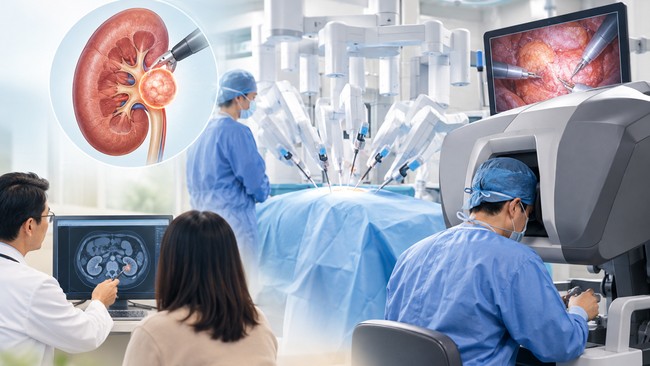
A diagnosis of kidney cancer often brings immediate concerns regarding whether the entire kidney must be removed. However, not all cases require a total nephrectomy. In certain conditions, doctors can perform a partial nephrectomy, a procedure designed to remove only the portion of the kidney containing the tumour while preserving the remaining healthy kidney tissue.
In such procedures, robotic technology such as the da .da Vinci Xi can be used to assist doctors in performing surgery with greater precision and control. According to Dr Syamsu Hudaya from Mayapada Hospital South Jakarta, robotic technology in partial nephrectomy does not operate independently. The surgeon maintains full control before and during the operation, while the robotic system helps to optimise instrument movement, ensuring the procedure is more controlled.
“Before the operation, patients receive guidance regarding preparation, including dietary and fluid restrictions, as well as which medications to continue or stop. During the operation, the patient is placed under general anaesthesia, after which the doctor controls the procedure using the da Vinci Xi robot, while a 3D camera helps to view the surgical area more clearly,” Dr Syamsu stated in a written release on Monday (28/9/2026).
He noted that robotic instruments assist doctors in performing more stable, precise, and flexible movements to remove tumours in narrow or complex areas of the kidney, whilst preserving healthy kidney tissue. Performing a partial nephrectomy with robotic technology can offer several benefits to patients, including helping to reduce the risk of blood loss during surgery, shortening hospital stays, and maintaining kidney function as normally as possible post-surgery.
So, who requires a partial nephrectomy? “Partial nephrectomy is generally considered for tumours of an ideal size below 7 cm, if the location and condition allow the tumour to be removed without removing the entire kidney. However, this size is not an absolute limit, as larger tumours may also be considered after the doctor assesses the patient’s condition and the tumour,” Dr Syamsu explained.
Dr Syamsu added that partial nephrectomy may also be considered for patients with only one kidney, those with multiple small tumours or tumours in both kidneys, and patients at risk of chronic kidney disease. To determine the appropriate treatment, doctors will perform ultrasound, CT Urography with contrast, and MRI with contrast. These examinations are conducted to assess the size, location, and characteristics of the tumour.
For certain patients, a SPECT-CT Scan may also be used to assess the function of each kidney, particularly in patients with a single kidney, impaired kidney function, or tumours in both kidneys. “Once cancer is diagnosed, doctors will determine the stage of the disease to understand how far the cancer has progressed and decide whether the patient can undergo a partial nephentectomy, a total nephrectomy, or other treatments,” Dr Syamsu clarified.
The advancement of surgical technology allows more complex procedures to be performed minimally invasively, including partial nephrectomy procedures. Accurate detection and diagnosis help doctors determine the appropriate treatment according to the patient’s condition.
The Tahir Uro-Nephrology Centre at Mayapada Hospital provides services to handle various disorders of the renal system and urinary tract, supported by a multidisciplinary team ranging from early detection and diagnosis to treatment. Mayapada Hospital South Jakarta also features the da Vinci Xi robotic technology to support more precise and targeted surgical actions according to patient needs. This robotic technology complements the services of the Oncology Centre at Mayapada Hospital South Jakarta, specifically in supporting surgical procedures for various cancer cases alongside a multidisciplinary medical team.