
Cyber University Prepares Elite Cybersecurity Talent
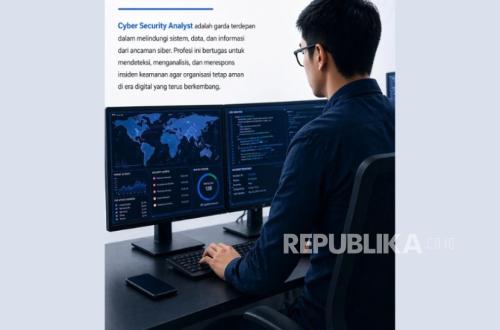
REPUBLIKA.CO.ID, JAKARTA - Cyber University’s Systems and Information Technology Study Programme (Prodi STI) continues to strengthen graduates’ readiness to pursue careers as Cyber Security Analysts in the digital transformation era. This move comes as demand for cybersecurity experts across various industrial sectors rises.
Increasingly complex cyber threats have made the Cyber Security Analyst role one of the most sought-after positions by companies. This role is crucial for safeguarding systems, networks, and data against digital attack risks.
Cyber University’s Systems and Information Technology Study Programme Head, Neneng Rachmalia Feta, said the demand for cybersecurity professionals continues to grow with digitalisation acceleration. She added that industry requires graduates who not only understand theory but also possess relevant practical skills.
‘Cybersecurity is now a top priority across all sectors. Therefore, students must be equipped with system security analysis, digital risk management, and practical experience to directly tackle industry challenges,’ Feta stated in Jakarta on Tuesday, 26 May 2026.
She explained that through an Outcome-Based Education (OBE) curriculum, STI students are equipped with competencies aligned with digital industry needs. Learning focuses on system security analysis, network infrastructure understanding, and data management and protection.
In addition to technical skills, students are trained in critical thinking and problem-solving, deemed essential for systematically addressing various cyber threat scenarios.
Cyber University also implements a 3+1 Company Learning Program (CLP), integrating internships into industry-focused curriculum. The programme combines three years of campus learning with a full year of internship at partner companies.
Through this programme, students not only learn academic concepts but also engage directly in industrial projects and build professional portfolios early. This approach is expected to enhance graduates’ readiness for the industry.
Feta stated that integrating theory and practice is crucial in cybersecurity education. Students are encouraged to understand real-world workplace conditions to better adapt to technological advancements and digital threats.
‘We want graduates to have experience closer to industry needs. By directly engaging in projects and professional work environments, students can better understand real-world cybersecurity challenges,’ she said.
Beyond academic and technical aspects, Cyber University instils ethical and professional values in students. Awareness of information security’s importance is considered vital for shaping responsible graduates in the workplace.
She explained that Cyber Security Analyst graduates have broad career opportunities across sectors including technology firms, banking, fintech, government agencies, and multinational corporations. Graduates can also progress to roles such as Network Security Engineer, IT Auditor, and Security Consultant.
With rising demand for cybersecurity experts, Cyber University views strengthening digital competencies as crucial for supporting future technology ecosystem security. ‘A practice-based and industry-collaborative learning approach is expected to produce graduates ready to contribute in the digital era,’ she said.