
Cyber University Lecturer Highlights Potential of Simple Agentic AI to Boost Work Efficiency
A lecturer from the Information Technology Study Programme at Cyber University, Dedi Dwi Saputra, has highlighted the potential for simple implementations of Agentic AI to improve everyday work efficiency. Entering 2026, the development of various frameworks and tools is making AI technology capable of planning, making decisions, and executing tasks independently increasingly easy to apply, including for the needs of industry and Micro, Small, and Medium Enterprises (MSMEs) in Indonesia.
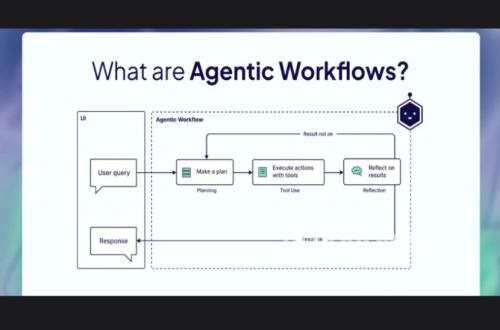
Agentic AI is a form of artificial intelligence that allows systems to carry out a series of tasks more autonomously to achieve specific goals. Dedi explained that this technology does not merely produce text or images based on commands like generative AI. Agentic AI is also able to plan steps, use external tools, make decisions, and execute tasks with minimal continuous human intervention.
The application of Agentic AI can begin with various routine and repetitive tasks that have been time-consuming, such as automated research, document processing, and office workflow automation. This simple approach allows the use of Agentic AI to be carried out gradually, including by industry players and MSMEs who want to increase productivity without having to immediately build complex systems.
Agentic AI can also be implemented through a single-agent system designed to carry out one specific goal automatically. One example is a researcher agent capable of searching for information on the web, reading articles, summarising them, and compiling structured reports.
Dedi explained that this process can be built by determining the task objective, assigning a role to the agent, and providing the tools needed to carry out the task. “In just tens of lines of Python code, this agent can already run,” said Dedi in a statement on Wednesday (26/8/2026).
This ease is further supported by the various frameworks and tools developing in 2026. CrewAI, LangGraph, and AutoGen are some of the frameworks that can be used to build agents, while no-code and low-code tools such as n8n and Agno provide alternatives for users who want to create Agentic AI-based workflows without relying on deep coding skills.
Agentic AI can be found in various work needs, including customer support services and personal research assistants. In customer service, AI agents can receive questions via email, analyse customer needs, search for answers from the company’s knowledge base, and then draft replies that can be reviewed by a supervisor before being sent. Meanwhile, in the manufacturing and logistics sectors, this technology can be used to monitor machine data, detect anomalies, and send notifications regarding maintenance schedules.
For users who are just beginning to learn about Agentic AI, the choice of tools is also an important factor in the implementation process. Dedi recommends CrewAI because its concept resembles a human work team, with several agents that can perform different roles such as researcher, writer, and reviewer to complete tasks collaboratively. Meanwhile, users who want to reduce coding requirements can use n8n to build agentic workflows through a drag-and-drop system.
The gradual application of Agentic AI opens opportunities for industry, MSMEs, and educational environments to adopt artificial intelligence technology without having to start from complex systems. By selecting the right needs and maintaining human oversight, this technology can become one approach to building more efficient work processes while preparing digital talent for future technological developments.
“In Indonesia, great opportunities are open for lecturers, students, or industry practitioners to experiment with Agentic AI using local resources such as increasingly mature Indonesian language models,” said Dedi.