
Cyber University Hosts Cyber Connect 2026 to Discuss Digital Talent Needs in the AI Era
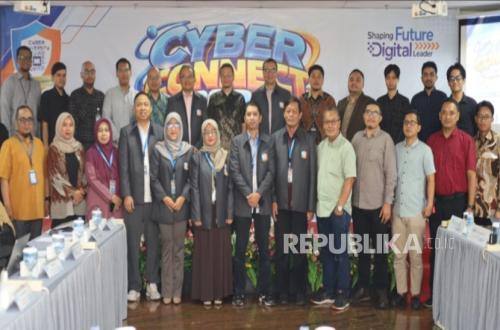
Cyber University (Universitas Siber Indonesia) held the Cyber Connect 2026 – Industry University Dialogue on Thursday (24/9/2026) at the Cyber University Hall, South Jakarta. The forum brought together the leadership and academic community of Cyber University with industry practitioners, graduate users, and alumni to discuss the competency needs of digital talent amidst the development of artificial intelligence (AI) and changes in the working world.
This activity serves as a dialogue space between Cyber University and industry to identify evolving competency needs in the professional world. During the forum, practitioners shared perspectives on the technical skills, business understanding, and character traits required for graduates to adapt to technological changes and industrial needs.
Cyber Connect 2026 addressed the shifting industrial requirements driven by the acceleration of digital transformation. Graduates are required not only to master technical abilities but also to understand business processes, industrial characteristics, and the application of technology to create value for organisations. Such understanding is vital so that technology can be utilised to provide solutions that meet organisational needs.
The discussion regarding industrial needs also emphasised the importance of closer ties between universities and the professional world. Such collaboration is necessary so that higher education institutions can understand industrial developments while adjusting learning processes to the competencies required by graduates.
The Rector of Cyber University, Gunawan Witjaksono, stated that industry plays a crucial role in developing education that is relevant to the needs of the working world.
“Cyber University views industry not merely as a user of graduates, but as a strategic partner in shaping the future of education. We want to continue listening to industry needs, learning from the practical experiences of professionals, and together creating an educational ecosystem capable of producing talent that is relevant, adaptive, and provides real value,” Gunawan said in a statement on Tuesday (29/9/2026).
The development of artificial intelligence (AI) was one of the primary topics in Cyber Connect 2026. Practitioners assessed that graduates need the ability to use AI effectively, ranging from crafting prompts and evaluating generated responses to using those results as considerations in decision-making. Beyond technical skills, understanding the safe, ethical, and verifiable use of AI is also a key concern in facing these technological advancements.
In addition to AI competencies, the forum discussed the need for specific skills in data, statistics, modelling, cybersecurity, and risk management. The changing digital security landscape is also driving organisations to strengthen cyber resilience, meaning graduates must understand how to anticipate, face, respond to, and recover from various digital risks. Practitioners also highlighted the importance of understanding regulatory developments and the ability to adapt to changing needs within industrial sectors.
Beyond technical abilities, Cyber Connect 2026 also highlighted the importance of non-technical skills in supporting graduate readiness. Communication, teamwork, presentation, business understanding, and cross-disciplinary collaboration are essential competencies for facing an increasingly dynamic work environment. Practitioners also emphasised the importance of integrity, accountability, a collaborative mindset, a growth mindset, and learning agility as part of the character that must be developed in students.
These various inputs serve as material for Cyber University to strengthen learning integrated with industrial needs. This approach is implemented through the Company Learning Program (CLP) 3+1, internships, the involvement of practitioners as guest lecturers, and the strengthening of professional certifications. Through this approach, students gain opportunities to connect campus learning with the evolving problems and needs of the working world.
Cyber Connect 2026 also marks the initial step for Cyber University to expand industrial collaboration through curriculum development and learning programmes. Feedback from practitioners will serve as evaluation material to strengthen AI literacy, cybersecurity, data analysis, and student readiness in facing technological developments. This collaboration also opens opportunities for the development of cooperation in internships, research, and joint innovation between universities and industry.
Meanwhile, the Vice Rector of Cyber University, Dr. Agus Trihandoyo, emphasised that industry input is a vital part of developing learning at Cyber University. According to him, graduates must possess the ability to understand problems, view context, and provide solutions that hold value for organisations.
“For Cyber University, the success of education is not only when students graduate, but when graduates are able to bring their knowledge and competence to solve real problems and create value for organisations and society,” said Dr. Agus.
Through Cyber Connect 2026, Cyber University continues to strengthen the relationship between higher education and industry as part of its efforts to prepare digital talent capable of adapting to technological developments and the needs of the working world.