
Cutting Methane Emissions Could Help Reduce Upstream Oil and Gas Operating Costs
BALI — Reducing methane emissions could be one strategy for improving operating cost efficiency in the upstream oil and gas industry. The International Energy Agency (IEA) estimates that about 60% of methane emissions from the oil and gas sector in ASEAN in 2025 could be cut without additional net costs to operators.
Sadhika Gulati, legal counsel and regulatory analyst at the IEA, explained that reducing methane emissions does not always require additional expenditure that would burden companies. In some circumstances, mitigation can bring economic benefits by recovering gas that would otherwise have escaped into the atmosphere.
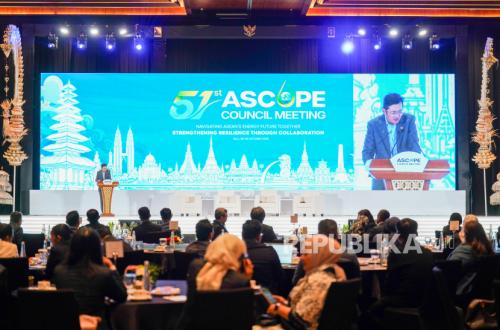
“Most methane emissions reductions can be achieved without additional net costs to operators,” Sadhika said at the ASEAN Council on Petroleum (ASCOPE) 2026 event in Bali on Monday (26 October 2026).
According to Sadhika, in some cases the investment and operating costs of reducing methane emissions are lower than the market value of the gas recovered. Companies can therefore benefit not only from lower emissions but also from increasing the economic value of resources that would otherwise have been wasted.
Globally, the IEA estimates that more than 35 million tonnes of methane — around 30% of total methane emissions from the fossil fuel sector in 2025 — could in fact have been reduced without additional net costs. These opportunities are expected to become more attractive in 2026 as fuel prices come under upward pressure.
In upstream oil and gas, potential cost savings can be achieved through operational measures including detecting and repairing leaks at facilities, replacing equipment that may release methane, and capturing and reusing gas that would otherwise be wasted.
One approach highlighted by the IEA is Leak Detection and Repair (LDAR), a programme of regular gas leak detection and repair. It helps operators identify gas losses at production facilities and determine the necessary corrective action.
The IEA also highlighted opportunities to use associated gas and reduce flaring that is not required in emergency situations. Gas that was previously flared or released into the atmosphere may have economic value if it can be captured and used in technically and commercially viable ways.
However, not every mitigation measure automatically delivers savings. The economics of each measure depend on field characteristics, the volume of gas that can be recovered, investment costs, infrastructure availability, and opportunities to use or sell the gas.
For Indonesia, reducing methane emissions could form part of a strategy to improve operational efficiency while optimising the use of natural gas. Amid investment needs to sustain production and develop oil and gas fields, making the most of existing assets is important to maintaining the economic viability of operations.
Deploying leak-detection technology, repairing facilities and using associated gas can help operators reduce resource losses. Recovered gas could be used in operations, supplied to consumers or put to other commercial uses, depending on field conditions.
Even so, realising these economic benefits requires technical and financial assessment. In fields with limited pipeline networks or processing facilities, for example, using captured gas may require additional investment. Operators therefore need to prioritise mitigation measures according to their emissions-reduction potential and the economic benefits they can deliver.
The IEA also stressed the importance of data transparency in accelerating methane reductions. Accurate emissions inventories can help companies establish a baseline, identify the largest sources of emissions and assess the effectiveness of mitigation measures.
For upstream operators, this data can provide a basis for allocating investment more effectively. Companies can prioritise measures that deliver the greatest emissions reductions at the lowest cost, while also assessing the operational benefits of recovered gas.
Beyond cost efficiency, methane reduction is increasingly relevant to the competitiveness of the oil and gas industry. A number of international markets are paying greater attention to emissions intensity in oil and gas production. Companies’ ability to measure, control and report emissions could therefore become an important factor in maintaining the competitiveness of energy products.
In her presentation, Sadhika said three main factors could strengthen the business case for the industry to accelerate methane mitigation: cost, transparency and market competitiveness.
Together, these factors show that methane reduction is not solely an environmental agenda, but is also linked to operational efficiency and asset management. For Indonesia’s upstream oil and gas industry, the challenge is to turn these opportunities into concrete programmes with measurable results, both in lower emissions and in greater economic value from produced resources.