
Cutting Emissions, Mining Industry Accelerates Decarbonisation
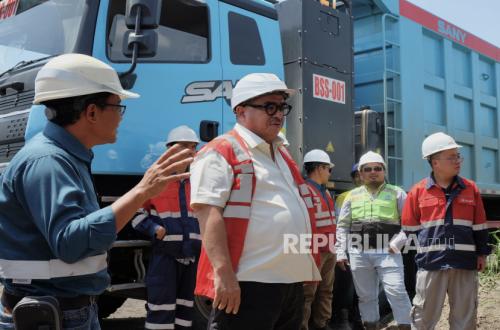
The mining industry faces increasing pressure to lower carbon emissions amid the global energy transition agenda. Technology-based approaches and strengthened reporting systems are now the primary strategies for reducing the environmental impact of operational activities.
One notable implementation is the emission reduction efforts by PT Multi Harapan Utama (MHU), a subsidiary of MMS Group Indonesia (MMSGI), which has begun integrating operational efficiency, fleet electrification, and land reclamation as part of its decarbonisation strategy.
Throughout 2024, the company’s Scope 1 and Scope 2 emissions were recorded at 275,065.53 tonnes of CO2e, a 41.34% decrease compared to the previous year. This reduction is equivalent to cutting the carbon footprint of more than 130,000 passenger vehicles.
Compared to the 2021 baseline target, the company aims for an 8% reduction in Scope 1 emissions by 2030. However, the 2024 achievement shows a 40.89% reduction, far exceeding initial projections.
PT Multi Harapan Utama’s President Director, Kemal Djamil Siregar, stated that this accomplishment results from a gradual data- and technology-based transformation. “We are not only targeting emission reductions but also ensuring every step is measurable, transparent, and accountable,” he said on Monday (4/5/2026).
The emission reduction is supported by three main approaches: fleet efficiency through a hybrid truck programme, data-based operational energy management, and carbon absorption via post-mining land reclamation.
The dump truck fleet transformation programme to hybrid technology has reduced fuel consumption by up to 46%, while also generating operational cost efficiencies. Meanwhile, data-based operational monitoring systems have further curbed emissions from daily production activities.
Post-mining land reclamation serves as the largest contributor to carbon absorption, reinforcing the role of nature-based approaches in the decarbonisation strategy for the extractive industry.
Looking ahead, the company is also trialling electric dump trucks in operational areas as part of the transition to fleet electrification. This step aims to reduce reliance on fossil fuels while lowering long-term operational costs.
Thanks to its emission reduction achievements, MHU recently received the Green Achievement in Emission Reduction and Ruby Achievement in Emission Transparency awards at The Best Corporate Transparency and Emission Reduction Awards 2026.
In addition to emission reduction aspects, the company has developed a reporting system based on international standards such as ISO 14064-1 and IPCC Guidelines, along with routine reporting through the Ministry of Environment’s PROPER programme.
At the group level, MMSGI scored 52/100 in the 2025 Corporate Sustainability Assessment by S&P Global for the coal sector. This achievement indicates the growing push for the industry to strengthen transparency and environmental performance.