
Customs Prepares BTKI 2028, Aiming for Tariffs that Support Key Industries and Commodities
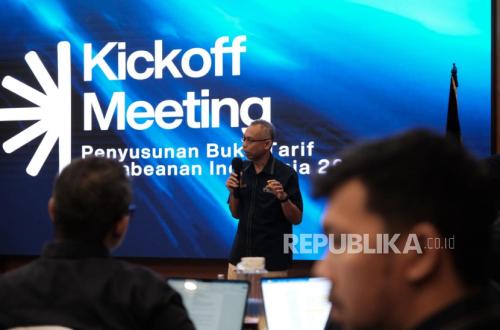
The Directorate General of Customs and Excise held a kick-off meeting for the preparation of the 2028 Indonesian Customs Tariff Book (BTKI) on Wednesday (9/9/2026). This serves as the initial step in preparing a customs classification and tariff imposition system that is responsive to trade developments and national economic needs.
Through BTKI 2028, Customs aims to establish tariff headings that are more representative of Indonesia’s leading commodities and domestic industrial sectors.
The Head of the Sub-directorate of Public Relations and Community Service at Customs, Budi Prasetiano, stated that the preparation of BTKI 2028 is part of Indonesia’s commitment to the international trading system. Indonesia has ratified the International Convention on the Harmonised Commodity Description and Coding System (WCO HS Convention) through Presidential Decree Number 35 of 1993. This provision requires national nomenclature to be periodically adjusted in accordance with the developments of the Harmonised System (HS) established by the World Customs Organization (WCO).
In June 2026, the WCO completed the 7th HS Review Cycle, resulting in HS 2028. This cycle lasted six years due to the COVID-19 pandemic and will be applied internationally starting 1 January 2028. HS 2028 contains 299 amendment packages, featuring 1,229 headings and 5,852 subheadings, including the addition of six new headings and 428 new subheadings compared to HS 2022. These changes respond to developments in global trade, technology, public health, the circular economy, and environmental protection.
Furthermore, Indonesia is obligated to adopt HS 2028 into the ASEAN Harmonised Tariff Nomenclature (AHTN) in accordance with the ASEAN customs cooperation framework. The results of this harmonisation will then serve as the basis for drafting national regulations in the form of a Minister of Finance Regulation regarding the goods classification system and tariff imposition, known as BTKI 2028.
“The preparation of BTKI 2028 is not merely about nomenclature conversion. This process serves as a momentum to harmonise the national tariff structure, adjust import prohibitions and restrictions, fulfil commitments within Free Trade Agreements (FTA), and strengthen national interests through the creation of more representative tariff headings,” added Budi.
He also mentioned that BTKI 20lar 2028 is an opportunity to ensure that classifications and tariff structures more accurately reflect the development of Indonesian commodities and industries. “Therefore, the preparation process requires synergy across ministries and agencies so that the resulting policies can support national interests while fulfilling international trade commitments,” said Budi.
The kick-off meeting for the preparation of BTKI 2028 involves various internal and external parties. Internally, from the Ministry of Finance, the process involves the Directorate General of Economic and Fiscal Strategy, the National Single Window (LNSW), and the Directorate General of Taxes, with the Customs Technical Directorate as the organiser. Externally, the Ministry of Industry and the Ministry of Trade are involved according to their respective authorities, including proposals for tariffs and FTA rates.
Through this collaboration, Customs is performing its role as a trade facilitator by implementing tariff policies that support the protection of domestic industries, facilitate national leading commodities, and strengthen Indonesia’s competitiveness in global trade. BTKI 2028 is also designed to be digital-based, making it easier to navigate, faster to search, consistent in legal and terminological aspects, and easier to update.