
Customs Foils Smuggling of 99.5 Tonnes of Illegal Rattan, Protecting National Furniture Industry and MSMEs
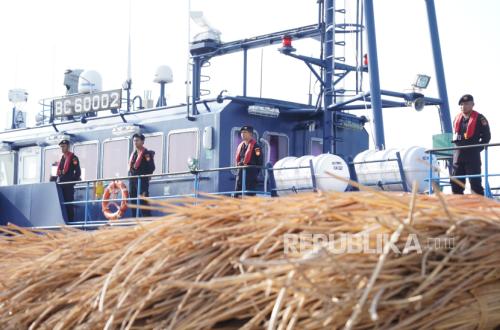
The Directorate General of Customs and Excise (DJBC) has once again foiled an attempt to smuggle a strategic national commodity. This time, officers secured 99.5 tonnes of whole rattan suspected of being illegally exported to Tawau, Malaysia.
The enforcement action is part of the government’s efforts to maintain the availability of raw materials for the domestic rattan industry while protecting the sustainability of the furniture and craft industries, which are dominated by micro, small, and medium enterprises (MSMEs).
The operation was carried out on 18 June 2026 by a joint team from the Directorate of Enforcement and Investigation (P2) of Customs, the Regional Office (Kanwil) of Customs for East Kalimantan (Kalbagtim), Tarakan Customs, and Nunukan Customs.
Acting on intelligence information, officers stopped the KLM Brothers vessel in the Indonesia-Malaysia border waters and discovered 1,493 bundles of whole sega/segah rattan weighing approximately 99.5 tonnes. The estimated value of the goods reached Rp 4.28 billion.
To date, two individuals have been named as suspects and the investigation process is still ongoing. The Head of the Kalbagtim Customs Regional Office, Bagus Nugroho Tamtomo Putro, stressed that illegal rattan exports are a violation of the law that harms the state and the national industry.
“The practice of illegal rattan export is a criminal offence in the field of trade and customs. This modus operandi is carried out by individuals seeking profit through illegal channels,” he said in a statement on Wednesday (5/8/2026).
According to Bagus, the enforcement action is not only aimed at upholding the law, but also at ensuring that rattan raw materials remain available for domestic processing industries, thereby providing greater added value compared to selling them in raw form.
Rattan is one of Indonesia’s leading commodities, particularly from Kalimantan, which is the main production centre. Processing rattan into furniture and craft products can create far higher economic value, open up employment opportunities, and serve as a source of livelihood for many MSME players.
However, the availability of rattan raw materials domestically still faces challenges. Data from Statistics Indonesia (BPS) shows that over the past five years, Indonesia has continued to import various rattan-based products with a total value of approximately US$2.26 million, or around Rp 36.1 billion.
The import trend has also been increasing since 2023, indicating that domestic market demand for rattan products remains substantial. Indirectly, the rampant smuggling of whole rattan can reduce the supply of raw materials for the national industry.
This condition has the potential to weaken the competitiveness of the domestic rattan furniture and craft industry, especially MSMEs, while opening up opportunities for a greater influx of substitute products, such as furniture made from synthetic rattan from abroad.
In addition, supervisory challenges are becoming increasingly complex. The vastness of Indonesia’s border areas, the many unofficial routes, and the distribution of rattan using various modes of transport mean that supervision requires inter-agency synergy and adequate technological support.
For this reason, the government continues to strengthen intelligence development, the use of surveillance technology, the improvement of patrol fleets, and cooperation with law enforcement agencies and related institutions.
On the other hand, the government is encouraging improvements in rattan industry governance through the refinement of trade regulations, cross-ministerial and institutional policy synchronisation, and the strengthening of downstream processing programmes.
These measures are expected to guarantee the availability of raw materials for domestic industries, increase the added value of rattan products, and expand the competitiveness of Indonesian furniture in the global market.
Bagus emphasised that the foiling of the smuggling of 99.5 tonnes of whole rattan demonstrates that Customs’ supervisory function is not only oriented towards law enforcement, but also plays a role in maintaining the sustainability of the national industry.
“Through effective supervision, the government seeks to ensure that Indonesia’s natural resources are utilised to create added value, strengthen MSMEs, open up employment opportunities, and support the downstream processing agenda to improve public welfare,” he concluded.
Source: jawawa.id (https://jawawa.id/newsitem/customs-foils-smuggling-of-99-5-tonnes-of-illegal-rattan-protecting-national-furniture-industry-and-msmes-1785934382)
Originally published by Republika (https://republika.co.id/berita//tjaoku472/bea-cukai-gagalkan-penyelundupan-995-ton-rotan-ilegal-lindungi-industri-mebel-dan-umkm-nasional), translated from Indonesian