
Customs Foils 32 Smuggling Cases Worth Rp846 Billion
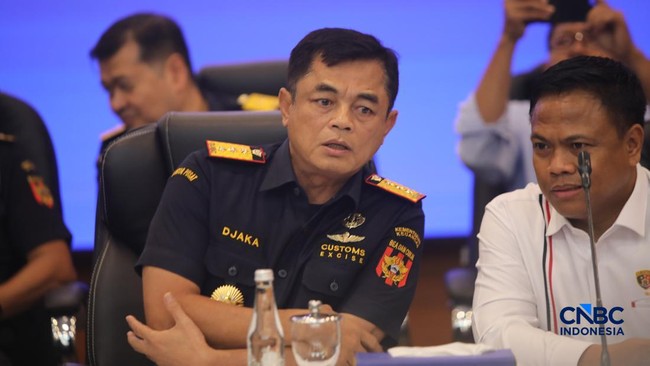
The Directorate General of Customs and Excise (DJBC) at the Ministry of Finance has reported its enforcement results against various attempts to smuggle goods into and out of the country this year. Up to August 2026, Customs has foiled dozens of smuggling cases with a substantial economic value.
Director General of Customs and Excise Djaka Budhi Utama said that up to August 2026, his agency had taken action against 32 smuggling cases. From these enforcement actions, the economic value of the goods secured reached approximately Rp846 billion.
“Up to August this year, efforts to thwart smuggling by certain parties have yielded an economic value of around Rp846 billion from 32 cases in 2026,” Djaka said at a press conference at Customs Headquarters on Tuesday (18/8/2026).
According to Djaka, the number of cases successfully handled this year has surged significantly compared with last year. In 2025, Customs recorded only four smuggling enforcement cases.
“Enforcement this year has increased compared with last year, which had only four cases. With the gold export duty policy, we managed to foil around 32 cases with a total economic value reaching Rp846.94 billion,” he said.
He stressed that Customs will continue to tighten surveillance to curb smuggling practices, particularly for high-value commodities such as gold, which has recently been found in various schemes.
To strengthen surveillance, DJBC will optimise the use of passenger data analysis, risk-based monitoring, selective examination, and information exchange with various relevant agencies.
“To anticipate this, we will continue to optimise passenger data analysis, risk-based monitoring, selective examination, as well as coordination and information exchange with stakeholders,” Djaka said.
In addition to enforcement, Customs also affirmed its commitment to improving education for the public and business operators so that export activities and the carrying of goods abroad are conducted in accordance with applicable regulations.
Through this combination of surveillance and education, the government hopes to curb smuggling practices while safeguarding state revenue and creating a more transparent and regulation-compliant export trade system.