
Customs DG Reveals 2027 Cigarette Tariff Policy Direction
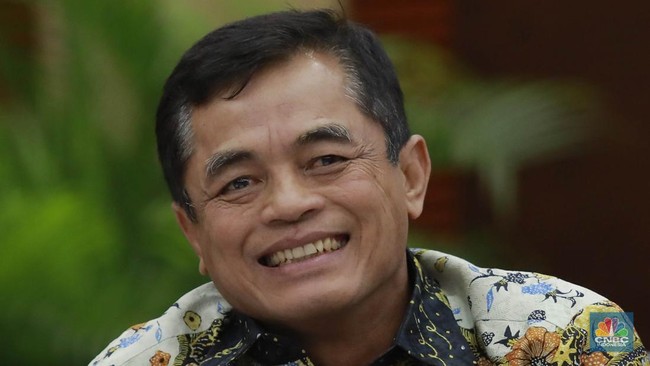
Director General of Customs and Excise Djaka Budhi Utama has unveiled a series of customs and excise policies to be implemented in 2027. He stated that the policies of the Directorate General of Customs and Excise (DJBC) at the Ministry of Finance will encompass four aspects, designed to respond to ongoing economic challenges at the global level. “In 2027, there are several strategic challenges that need to be anticipated,” Djaka said during a working meeting with Commission XI of the House of Representatives in Jakarta on Monday (15/6/2026).
Djaka noted that the challenges requiring a response from DJBC include global economic uncertainty due to conflict, which is now causing significant potential for a growth slowdown. Furthermore, there is an increased risk to state finances from climate change, as well as the underdevelopment of the green and blue economies. He also mentioned that commodity price volatility persists, impacting state revenue.
Additionally, the phenomenon of downtrading to cheaper cigarettes remains prevalent among the public. This includes the ongoing threat of increased circulation of illegal excisable goods, as well as a rise in illicit trade and the abuse of Narcotics, Psychotropics, and Precursors (NPP). Djaka also cited the underground economy that continues to thrive due to resistance to law enforcement, along with the complexity of surveillance areas and smuggling methods, as factors considered in the 2027 policy.
“To address these challenges, the 2027 policy is directed towards four main focuses,” Djaka stated. The four 2027 customs and excise policies are as follows:
HEALTHY AND SUSTAINABLE FISCAL MANAGEMENT
Enhancement of customs facilities to attract investment, boost exports, and support downstream processing.
Optimisation of Special Economic Zone facilities to support regional growth.
Increased exports of MSME products through optimisation of export clinics and collaboration with various entities.
Improved effectiveness of international customs cooperation and economic diplomacy.
PUBLIC PROTECTION AND ECONOMIC SUPPORT
Capacity strengthening and revitalisation of surveillance at sea, borders, coasts, and major ports and airports.
Prevention and eradication of trade in illegal goods, illegal Excisable Goods, Narcotics, Psychotropics and Precursors (NPP), and transnational crime.
Increased effectiveness of law enforcement and customs and excise audits.
OPTIMISATION OF STATE REVENUE
Intensification of tobacco excise tariff policies and import duty tariffs on certain commodities.
Extension of excisable goods and expansion of the export duty revenue base for certain commodities in line with the latest economic developments and public purchasing power.
Strengthening of customs valuation and development of adaptive goods classification.
Strengthening of collaborative Ministry of Finance programmes (joint programmes).
SERVICE AND GOVERNANCE OF ORGANISATIONAL MANAGEMENT, HUMAN RESOURCES, AND IT
Strengthening of a more dynamic and adaptive organisation.
Refinement of customs and excise business process management.
Strengthening of human resources with integrity, competence, and culture according to needs and organisational values.
Refinement of the Core System and Smart Customs.
Improvement of the quality of public communication, user guidance, and inter-agency cooperation.