
Customs and Police Foil Smuggling of 3.4 Tonnes of Mercury Worth Rp17.5 Billion to West Africa
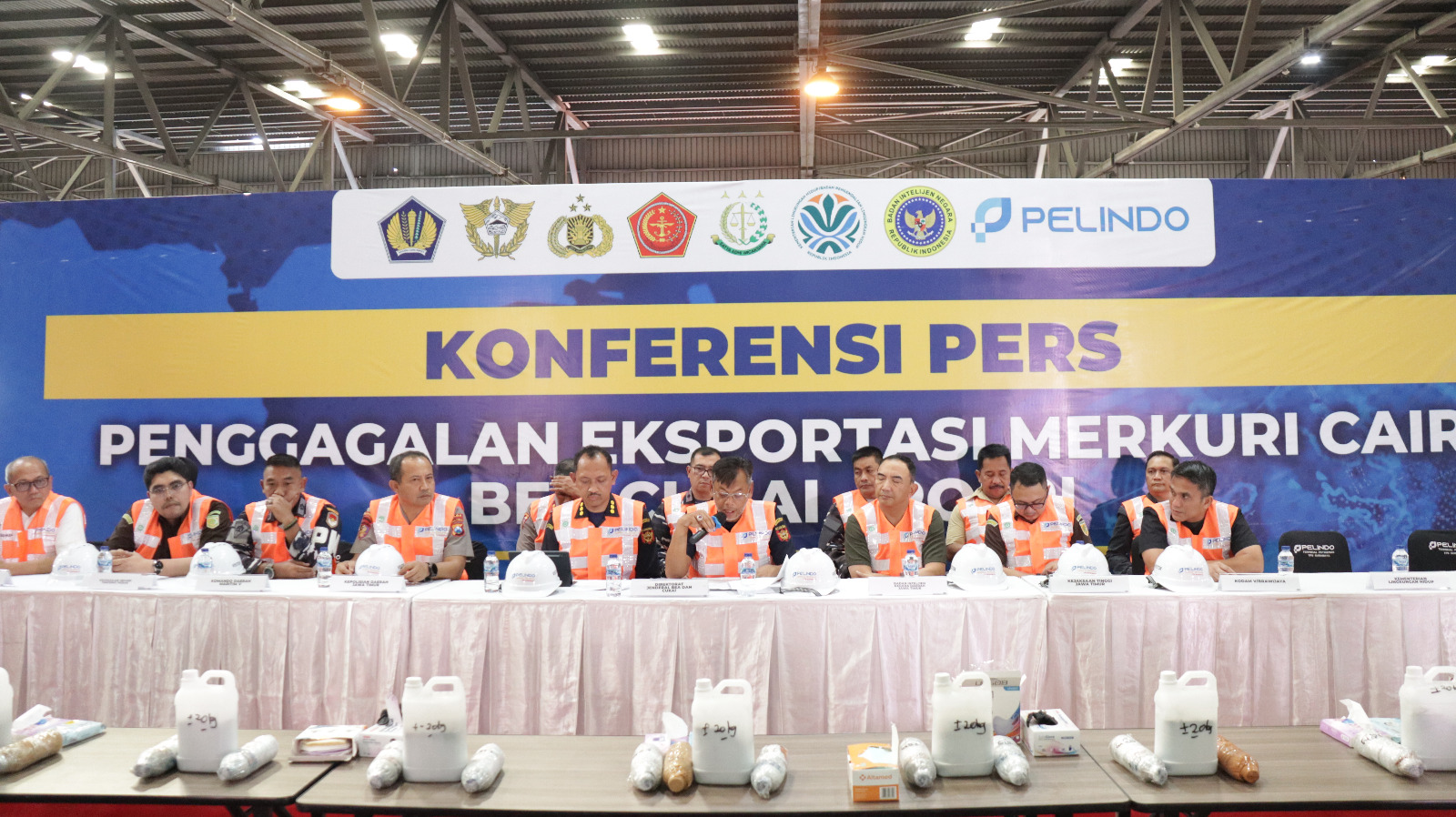
An attempt to smuggle approximately 3.4 tonnes of liquid mercury with an estimated value of ±Rp17.5 billion destined for Burkina Faso, West Africa, has been successfully foiled by the East Java I Regional Office of Customs and Excise, together with Tanjung Perak Customs and the Indonesian National Police. The enforcement action took place on Friday (24/7) at PT Terminal Petikemas Surabaya, following intelligence analysis and a physical examination of an export container declared as ceramics. Mercury is a heavy metal commonly used in the amalgamation process in small-scale gold mining. Although this method is relatively cheap and simple, the use of mercury has extremely dangerous impacts because it is toxic, can pollute the environment, and causes serious health problems from both short-term and long-term exposure. Therefore, international trade in mercury is controlled through the Minamata Convention on Mercury, which the Indonesian Government has ratified via Law Number 11 of 2017 concerning the Ratification of the Minamata Convention on Mercury. Head of the East Java I Regional Customs Office, Rusman Hadi, stated that the uncovering of this case was the result of optimising intelligence functions, risk analysis, and strong synergy with the Police in supervising the flow of export goods. ‘This success demonstrates the commitment of Customs and the Police in preventing the smuggling of high-risk commodities. The supervision we carry out aims not only to protect state revenue but also to protect the public and the environment from the impact of uncontrolled mercury circulation,’ said Rusman. The enforcement was carried out by the Enforcement and Investigation Team of the East Java I Regional Customs Office together with the Tanjung Perak Customs Investigation Section on Friday (24/7) between 14.00 and 17.00 WIB at PT Terminal Petikemas Surabaya. This step was a follow-up to intelligence results on a 20-foot container deemed high-risk. During the physical examination, witnessed by the customs brokerage service company as the exporter’s representative, officers found discrepancies between the export documents and the container’s contents. The export documents stated the cargo was 900 cartons of ceramics weighing 11,000 kilogrammes. However, the physical examination revealed 826 cartons of ceramics, a shortfall of 74 cartons from the declaration, and 251 plastic bottles and 71 jerry cans containing a silver-coloured liquid hidden inside ceramic pallets and wrapped in aluminium foil. To ascertain the type of liquid, officers took samples and conducted tests at the Surabaya Customs Laboratory. The laboratory results confirmed the liquid was mercury. Following the discovery, officers immediately detained and sealed the goods for further investigation. The secured goods comprised 826 cartons of ceramics, 251 plastic bottles with a gross weight of approximately 2,008 kilogrammes, and 71 jerry cans with a gross weight of approximately 1,420 kilogrammes. The total liquid mercury secured reached around 3,428 kilogrammes with an estimated value of ±Rp17.5 billion. Regarding the enforcement, Head of Tanjung Perak Customs, Agus Cahyono, added that the perpetrators used a concealment method, hiding the liquid mercury in plastic bottles and jerry cans placed within ceramic pallets and wrapped in aluminium foil to avoid detection by scanning machines. ‘Based on the export documents, the mercury was known to be destined for Burkina Faso, a gold-producing country in Africa whose mining sector is a major contributor to national export value. It is suspected the mercury was to be used to support gold mining activities,’ he continued. In this case, the exporter and related parties are suspected of violating Article 103 letter a of Law Number 10 of 1995 concerning Customs as amended by Law Number 17 of 2006, and Law Number 11 of 2017 concerning the Ratification of the Minamata Convention on Mercury along with provisions related to mercury trade control. The successful uncovering of this case is tangible evidence of the synergy between Customs and the Police in protecting the public, preserving the environment, and enforcing the law in the customs field. Customs will continue to strengthen supervision of cross-border goods traffic to prevent the smuggling of high-risk commodities and support Indonesia’s commitment to controlling mercury circulation in accordance with the Minamata Convention.