
Customs and Excise Backs New Export Proceeds and Strategic Commodities Governance Rules
The government is strengthening the management of Natural Resource Export Proceeds and the governance of strategic natural resource commodity exports through Government Regulation (PP) Number 21 of 2026 and Number 24 of 2026. This policy is part of the government’s effort to increase foreign exchange retention, fortify the stability of the national financial system, increase added value in natural resource management, and strengthen national export governance.
Head of the Customs and Excise Public Relations and Outreach Sub-directorate, Budi Prasetiyo, stated that the DHE SDA policy and strategic commodity export governance are implemented synergistically by various ministries and institutions, including Customs and Excise. “We will support the implementation of this policy through our service and supervision functions in the field of customs, particularly exports,” he said in a statement on Wednesday.
The main points of the DHE SDA policy require resource exporters to place 100 percent of their export proceeds into the Indonesian Financial System through a Special Account at state-owned banks. For retention, a minimum of 30 percent must be placed for three months for the oil and gas sector, and 100 percent for twelve months for the non-oil and gas sector. The government has also set a maximum conversion limit from foreign exchange to rupiah at 50 percent to maintain optimal foreign exchange management, down from a previous 100 percent. Flexibility is provided for exporters affiliated with countries that have bilateral trade agreements with Indonesia, where mining sector proceeds must be placed at a minimum of 30 percent for three months and may be placed in banks other than state-owned entities.
Budi explained that the policy is equipped with regulations providing legal certainty for business actors. “What needs to be understood is that this policy is part of strengthening national economic governance. We also ensure customs processes run according to provisions and provide service certainty to service users,” he said.
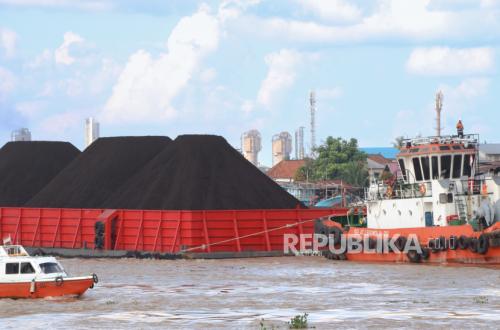
Beyond the DHE SDA policy, the government is regulating the export governance of strategic natural resource commodities, initially covering coal, palm oil, and ferro alloy. Under the new scheme, exports will be conducted through a designated state-owned enterprise, PT Danantara Sumberdaya Indonesia. The implementation will be phased to allow adjustment time. The transition phase runs from 1 June 2026 until 31 December 2026 at the latest, during which private exporters can still transact with overseas buyers and report documents to the state-owned exporter. The full implementation phase begins no later than 1 January 2027, where the state-owned enterprise becomes the sole executor of exports, handling contracts, shipments, and payment receipts.
Budi emphasised that Customs and Excise already has a digital system and technology-based supervision, including the CEISA system, which will be continuously optimised to support smooth export processes and strengthen international trade governance. “We are committed to maintaining the smooth flow of export goods while supporting the strengthening of national export governance through collaboration with relevant ministries and institutions,” he stated. Customs and Excise also urges business actors to follow regulatory developments and utilise official government information channels. Through synergy, the implementation of this policy is expected to strengthen national economic resilience and provide sustainable benefits for the Indonesian economy.