
Curious About the Origins of Epstein's Wealth?
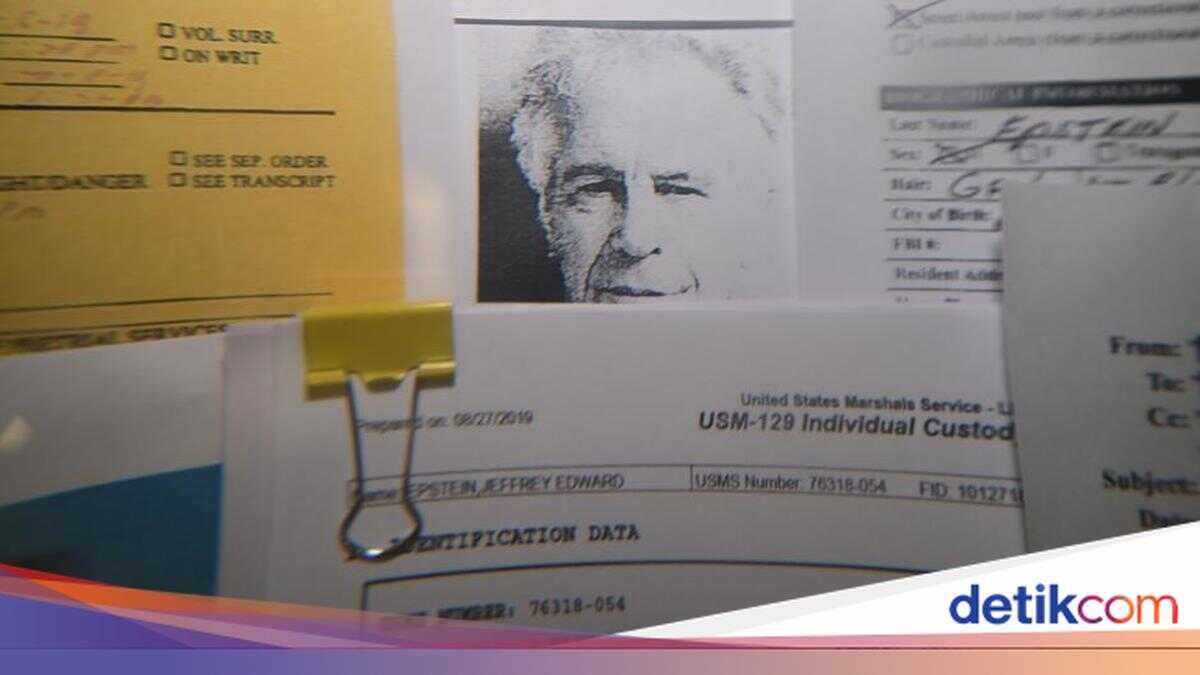
How did Jeffrey Epstein, a college dropout who began his career as a mathematics and physics teacher, manage to build such enormous wealth?
At least initially, the man from a working-class family in Coney Island, New York, appeared to be rather fortunate.
Through his connections, Epstein secured a position at investment bank Bear Stearns, which gave him insight into the world of high finance. In 1980, he was made a limited partner.
Five years later, he left the bank but leveraged the experience and network he had built there as proof of his credibility.
A mysterious figure in the financial world
After leaving Bear Stearns, Epstein’s name resurfaced among financial industry players, yet it was difficult to ascertain what he actually did for a living.
“He was like an enigma,” said Charles Gasparino, senior correspondent at Fox Business Network, in the 2020 Netflix documentary “Jeffrey Epstein: Filthy Rich.” Typically, Wall Street players leave a clear trail, but Epstein was difficult to trace.
“Many people talked about him, but there was virtually no tangible evidence of his activities in the investment world,” Gasparino said.
Alleged links to a Ponzi scheme
Steven Hoffenberg, former CEO of Towers Financial Corporation, claimed to know part of the story.
In the late 1980s, he recruited Epstein, whom he described as a “partner in crime” in an interview for the Netflix documentary. Hoffenberg was running a Ponzi scheme worth US$460 million.
According to Hoffenberg, Epstein “took over the securities side, the bogus assets, manipulated share prices and conducted illegal stock trading.”
In 1993, the scheme collapsed. Hoffenberg pleaded guilty and was sentenced to 20 years in prison. Epstein was never charged, making it difficult to determine the extent of his involvement and what financial gains he derived.
The relationship with Les Wexner
In the mid-1980s, Epstein met Les Wexner, a retail magnate from Columbus, Ohio, behind Victoria’s Secret and The Limited. Epstein promoted himself as a financial adviser and by 1991 had gained control over the billionaire’s personal finances.
Epstein controlled Wexner’s personal finances, paying himself substantial sums whilst acquiring a portfolio of properties and a private jet.
The two parted ways in 2007 when scandal began to engulf Epstein. It was then that Wexner realised Epstein had “misappropriated vast sums of money from me and my family,” as he later wrote.
Where did Epstein’s initial wealth come from?
According to a newly published US attorney’s report, Epstein had stolen or misappropriated hundreds of millions of dollars belonging to Wexner.
Lawyers cited in the report stated that these actions — combined with the hefty fees he set for himself — appeared to account for nearly all of Epstein’s wealth.
Epstein sold Wexner’s private jet to himself at well below its true value. He did the same with a townhouse in New York. He also purchased properties in Wexner’s name and then resold them to himself at a discount.
In 2008, Epstein returned US$100 million to Wexner through a closed settlement rather than facing a public hearing. Wexner severed ties but never filed an official complaint.
Nevertheless, Epstein walked away with a substantial quantity of assets and cash. Because Wexner did not disclose the matter publicly for over a decade, the public remained unaware of what had truly occurred.
Exploiting Wexner’s network
Wexner also gave Epstein something equally valuable: credibility. If Wexner trusted him, others felt justified in trusting him and his advice.
Epstein used that trust to build an elite network. He frequently dropped names such as Clinton and Rockefeller. The strategy appeared to work, and a number of prominent figures entered his circle, including private equity billionaire Leon Black.
Over the years, there were quiet accusations of excessive fees or exploitative practices, but it appears that only Wexner openly alleged direct theft.
The role of JPMorgan and Deutsche Bank
Even after Epstein was registered as a sex offender in 2008 and served a prison sentence, many people still sought his advice, as also confirmed by the latest Justice Department document releases.
Epstein used JPMorgan from 1998 to 2013, before the bank closed his accounts. A decade later, without admitting wrongdoing, the bank paid US$75 million to settle a lawsuit from the US Virgin Islands and US$290 million to settle a lawsuit from a group of Epstein’s victims.
After leaving JPMorgan, Deutsche Bank opened accounts for him in 2013. He eventually held approximately 40 accounts before the bank terminated the business relationship shortly before his death.
The bank expressed regret over its association with Epstein and agreed to a US$75 million settlement with a group of his victims without admitting fault.
What happened to Epstein’s wealth?
Epstein was arrested on 6 July 2019 and charged with sex trafficking of minors. He was found dead in his prison cell on 10 August of the same year.
In probate documents filed with a court in the US Virgin Islands — where he was registered as a resident — assets valued at US$577 million were listed.
This included US$56.5 million in cash, nearly US$194 million in hedge funds and private equity investments, and US$112 million in shares. Also listed were companies holding his properties in the US Virgin Islands, New Mexico, New York City, Palm Beach, and Paris.
However, taxes, maintenance costs, legal fees, and substantial settlements have eroded the estate’s value. Nevertheless, efforts to trace the origins of his wealth continue.
The New York Times, following months of investigation in December 2025, concluded that Epstein built his wealth through “fraud, theft, and lies.”
“Epstein was not a financial genius but rather a master manipulator and liar,” the newspaper wrote. “Time and again, he proved willing to operate on the edge of criminality and burn bridges in pursuit of wealth and power.”
This article was originally published in English and adapted by Ayu Purwaningsih.