
Curbing Oil Volatility to Stabilise Fuel Prices
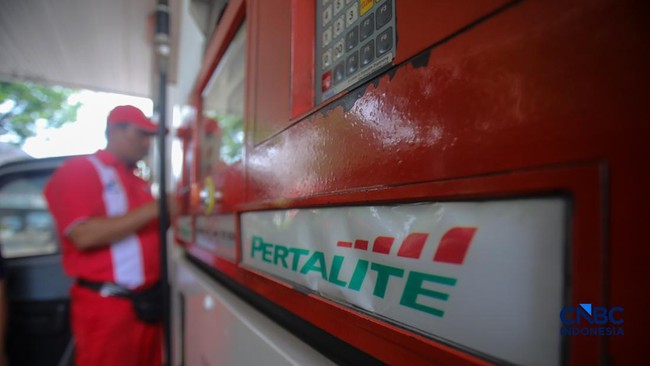
Tensions between the United States, Israel, and Iran that erupted in late February 2026 continue, but global oil prices have begun to level off from their peak. The Indonesian Crude Price (ICP), which touched US$117.31 per barrel in April 2026, fell to US$81.68 per barrel in July 2026, as supply partially recovered following the shocks in the Strait of Hormuz.
Amidst this, the same question continues to arise in society: if global oil prices have been falling since April, why haven’t prices at petrol stations dropped immediately?
Today’s fuel is not purchased at today’s price. The petrol dispensed today is not the oil bought at today’s price. National fuel requirements far exceed domestic production capacity, which stands at around 600,000 barrels per day. The deficit is covered through imports.
Importing takes time. Procurement contracts are signed weeks in advance, with prices applicable at the time the contract is signed. Following that, there is maritime transport, processing in refineries, national stock replenishment, and distribution to over seven thousand petrol stations. Throughout that chain, the price attached to the goods is the old price.
ICP is calculated based on the average Dated Brent of the current month, moving almost in tandem with the global market, with an average difference of only USD1.4 per barrel throughout January-July 2026. At the peak in April, the gap was as little as 2 cents.
This means the lag felt by the public at petrol stations does not stem from the crude oil price itself. The lag arises in two other places: the physical supply chain described above, and the fuel pricing formula itself.
The pricing formula uses an average from a previous period, not today’s price. Non-subsidised fuel prices are not determined by businesses alone. The government regulates the formula through Ministerial Decree ESDM No. 245.K/MG.01/MEM.M/2022, complete with floor and ceiling prices.
Businesses are required to report to the Minister of Energy and Mineral Resources (ESDM) and are prohibited from selling above the ceiling price. It is within this corridor that petrol stations such as Pertamina, Shell, BP, and Vivo compete, which is why prices are never exactly the same.
It is important to emphasise this: fuel prices in Indonesia are not left entirely to the market. There is a formula, there are limits, and there is a reporting obligation. According to the Ministry of ESDM, the benchmark is not the daily crude oil price, but rather the price of finished fuel products in the regional market, namely the Mean of Platts Singapore (MOPS) or Argus, whichever is lower. Added to this are distribution and storage costs in rupiah per litre, business margins, VAT, and fuel-related taxes (PBBKB).
This is where the answer lies. The MOPS average for the current month is taken from a period starting from the 25th of two months prior until the 24th of the previous month. For July prices, the data window closed on 24 June before July began.
The gap can be calculated. Between the day that data is recorded in the market and the day the fuel is purchased by consumers, the range is five to 67 days, with an average of approximately 37 days. This range is calculated based on the MOPS window in the ESDM Ministerial Decree, assuming the price remains valid for a full month from the 1st.
How does this scheme work in other countries? Malaysia demonstrates what happens when the window is shorter. There, retail prices are set weekly via an Automatic Pricing Mechanism, announced by the Malaysian Ministry of Finance every Wednesday and effective on Thursday, based on market movements from the previous week.
The result is felt immediately in the pockets of the people. Between February and April 2026, the average monthly price for non-subsidised retail diesel in Peninsular Malaysia rose by 93.0 per cent, and RON 97 rose by 61.7 per cent. The weekly peak reached RM 6.72 per litre on 9 April, up from RM 2.89 in early January. Within just a few weeks, transport costs and production costs there also fluctuated.
A short window does allow prices to drop quickly when the market levels off. However, it also causes prices to rise rapidly when the market is volatile, and that volatility is passed almost entirely to the public. Therefore, the Indonesian government chooses a window that is safe and predictable for the community.
British economist Robert Bacon refers to this phenomenon as “rockets and feathers”—prices rise quickly and fall slowly. This term originated from research into the British petrol market in 1991 and was rediscovered in the United States six years later, involving two markets where prices are entirely determined by businesses.
The cause lies in the supply chain. Retail prices change slowly; refineries need time to process, and the stock currently in tanks was purchased much earlier. Sellers calculate prices based on the cost of replacing stock, not the market price of that day.
A buffer that works in both directions. When ICP reached USD 117.31 per barrel in April 2026, the prices of Pertalite and Solar remained at Rp10,000 and Rp6,800 per litre, respectively, under the direction of President Prabowo Subianto and implemented by the Minister of ESDM Bahlil Lahadalia. They did not move at all, during a month when global oil prices were at their peak.
Pertamax, which is classified as non-subsidised, was also held. Its price remained unchanged for almost three months since the conflict broke out in late February, and was only adjusted on 10 June 2026. From February to April, ICP rose by 70.5 per cent, while Pertamax rose by 32.1 per cent.
Less than half of the market volatility was passed on to the public. Holding prices has a cost, and that cost is borne by the state through subsidies and compensation to businesses. The Ministry of Finance noted that the realisation up to the first semester of 2026 reached Rp233 trillion, or 52.1 per cent of the state budget (APBN) ceiling, an increase from Rp161.4 trillion during the same period the previous year.
The same buffer now works in the opposite direction. As of 1 July 2026, prices for Pertamax Turbo, Pertamina Dex, Dexlite, and avtur decreased. The following month, on 1 August 2026, Pertamax also decreased from Rp16,250 to Rp15,950 per litre, Pertamax Green 95 from Rp17,000 to Rp16,600, and Pertamax Turbo…
Source: jawawa.id (https://jawawa.id/newsitem/curbing-oil-volatility-to-stabilise-fuel-prices-1788303220)
Originally published by CNBC Indonesia (https://www.cnbcindonesia.com/opini/20260901172759-14-764101/menahan-gejolak-minyak-untuk-menstabilkan-harga-bbm), translated from Indonesian