
Curbing Inflation Through Data-Based Inter-Regional Cooperation
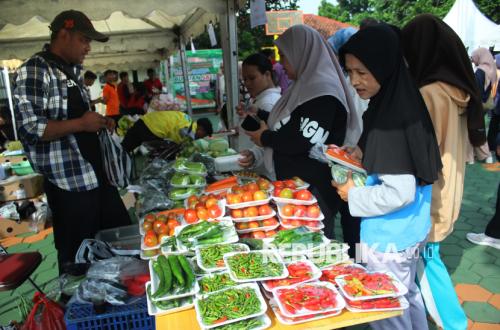
By: Reniati, Member of the Indonesian Economic Scholars Association (ISEI) for Macroeconomic and Financial Policy Formulation
According to the Food and Agriculture Organization (FAO, 2024), Indonesia is one of the countries with the highest levels of biodiversity (megabiodiversity) in the world. Meanwhile, Statistics Indonesia (BPS) records that the country’s agricultural sector is supported by a diversity of agroecosystems, enabling the development of various strategic food commodities across nearly all regions of the archipelago. This potential indicates that Indonesia’s main challenge is no longer resource availability, but rather how to integrate inter-regional potential into a single national food system. Ironically, amidst this wealth, the public remains familiar with a recurring problem: why do food prices continue to fluctuate?
This question is not fundamentally testing farmers’ ability to produce food. Instead, it is testing our capacity to manage food as a national system. Whenever the prices of chilli, shallots, or rice spike, public attention almost always focuses on production issues, with extreme weather, harvest failures, and distribution disruptions cited as the main causes. In reality, the more fundamental problem often lies in the lack of interconnected information regarding production, distribution, and demand between regions, meaning decisions are only made after price volatility has already occurred.
Bank Indonesia data shows that by the end of the second quarter of 2026, national consumer price index (CPI) inflation was recorded at 3.34 percent year-on-year (yoy), still within the target range of 2.5±1 percent. This achievement reflects strong synergy between the Government and Bank Indonesia through the Central Inflation Control Team (TPIP), Regional Inflation Control Teams (TPID), and various inflation control programmes. However, with inflation approaching the upper bound of the target, pressures from food prices, extreme weather risks, and distribution disruptions still require earlier anticipation.
The success of inflation control to date deserves appreciation. Nevertheless, climate change, geopolitical uncertainty, and the increasing complexity of food supply chains demand a different approach. Indonesia can no longer rely solely on reactive policies. What is needed is a system capable of predicting, anticipating, and connecting all national food potentials before price pressures arise.
Modern management literature promotes the principle that “what gets measured gets managed,” emphasising the importance of measurement as a basis for decision-making and organisational performance improvement. This principle is highly relevant to national food governance, where measurement must not stop at production volumes but must also encompass the interconnectedness of production data, distribution, logistics, and inter-regional demand. A simple example: when high rainfall causes a decline in local chilli production, market prices rise sharply. Simultaneously, another region might be entering its harvest season. The issue is not that Indonesia lacks chillies, but that information regarding harvest timing, market demand, and distribution has not been utilised as a basis for joint decision-making. Consequently, distribution is only carried out after prices have risen, rather than before the increase occurs.
This leads to a more critical question. If the main problem of food inflation is interconnectedness, what kind of governance is capable of linking all of Indonesia’s food potential into a mutually supportive ecosystem?
Building a National Food Collaboration Ecosystem
If the primary issue of food inflation lies in the lack of inter-regional information connectivity, then the solution is not simply to increase production or accelerate distribution. The more fundamental need is to build governance capable of connecting all of Indonesia’s food potential into an integrated system. In other words, Indonesia’s challenge today is no longer how to produce more food, but how to manage national food connectivity.
This is where Inter-Regional Cooperation (KAD) enters a new chapter. To date, KAD has been an important instrument in maintaining supply and facilitating the distribution of food commodities. Various inter-regional cooperation agreements have proven effective in reducing price pressures during supply imbalances. However, changes in the strategic environment require KAD to evolve further, not merely as a distribution mechanism, but as a data-based collaboration platform that supports joint planning of production, distribution, and food reserves.
This thinking aligns with the views of Elinor Ostrom, the 2009 Nobel Laureate in Economics, who asserted that solving complex public problems does not always require the creation of new institutions. What is far more important is building collaborative governance that enables various actors to share information, build trust, and make decisions based on shared goals.
In the Indonesian context, this foundation already exists through the Central Inflation Control Team (TPIP), Regional Inflation Control Teams (TPID), the National Food Agency, local governments, business actors, cooperatives, universities, and farmer groups. The challenge is how to make all these actors work using the same data, so that decisions become faster, more accurate, and better coordinated.
On this basis, the author proposes a National Food Collaboration Ecosystem (EKPN) as a governance framework that strengthens existing systems. EKPN is neither a new institution nor an additional layer of bureaucracy. It is a national collaboration framework that integrates production data, planting calendars, harvest calendars, consumption needs, logistics capacity, and climate risk projections as a basis for joint decision-making. With this approach, inflation control no longer begins when prices have already risen, but from the planning stage itself.