
Culture Must Serve as the Foundation of National Development, Says AMI
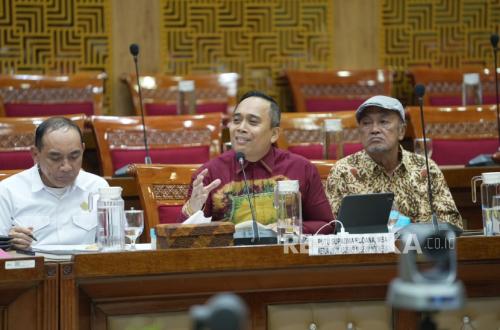
The Indonesian Museum Association (AMI) believes that strengthening museums must be part of a national strategy to face the crisis of national identity and character. Amidst the heavy flow of globalisation and social change, museums are seen as more than just repositories for historical objects, but as learning spaces that play a role in preserving the nation’s identity.
AMI General Chair Putu Supadma Rudana stated that national development cannot rely solely on economic and political aspects. Culture needs to be placed as the primary foundation in building national character and personality.
“The essence of nation-building must be built from culture. Museums are institutions that house, study, care for, and convey the richness of civilisation to the next generation. Therefore, museums hold a very strategic position,” said Putu during a Public Hearing (RDPU) with Commission X of the Indonesian House of Representatives (DPR RI).
According to Putu, Indonesia currently possesses 516 museums, with 373 registered and approximately 289 having undergone standardisation and evaluation. The re-establishment of the Directorate of History and Museology following the formation of the Ministry of Culture in 2024 is seen as a momentum to strengthen national museum governance.
However, most museums in Indonesia are still managed by private entities, foundations, and individuals facing various challenges, ranging from limited funding to a lack of infrastructure and facilities.
“Many figures and members of the community donate their labour, thoughts, and even wealth to build museums so that the nation’s artefacts and cultural works do not all leave the country and can still be enjoyed by the nation’s children. Museums are not built for profit, but for benefit and civilisation,” he said.
Putu believes that museums need to be redefined as living institutions that are relevant to the needs of modern society. In his view, museums can serve as spaces to understand history, strengthen cultural identity, and build national awareness among the younger generation.
“Museums are not places to be isolated or abandoned. A museum is a noble achievement of a nation. A museum is the pillar of a nation, the highest house of culture, the eternal house of civilisation, the house of inspiration, the house of the noble narrative of the Archipelago, and the house of the nation’s noble heritage,” he said.
He reminded that Indonesia’s ambition to be a nation with a cultural personality remains a significant task. Therefore, strengthening museums is considered essential to maintain the continuity of national values amidst changing times.
“A great nation must make culture the locomotive for the development of identity and national life. In many developed countries, culture serves as a driver for various development sectors,” he added.
AMI is also re-promoting the national movement “Let’s Visit Museums First” so that museums become the primary destination for the public when visiting a region. This step is believed to strengthen the understanding of history, cultural values, and local identity before visiting other tourist attractions.
On the other hand, AMI highlighted the absence of a specific Museum Law to regulate museums in Indonesia. Although Indonesia possesses Law Number 11 of 2010 on Cultural Heritage and Law Number 5 of 2017 on the Advancement of Culture.
According to Putu, the position of museums within these two regulations remains limited and does not yet reflect their role as strategic national cultural institutions.
“The ‘house’ does not yet exist. We have regulations for cultural heritage and the advancement of culture, but we do not yet have a Museum Law. Therefore, strengthening regulation is an urgent need,” he said.
AMI also proposed revisions to existing cultural regulations, increased support for private museums, and the formation of a specialised body to handle museums, cultural heritage, and the advancement of culture in an integrated manner.
As a long-term vision, AMI proposed the concept of a “Land of a Thousand Museums,” including the construction of museums at cultural heritage sites, museums of heroes, museums of national figures, museums of the Nusantara palaces, and a Grand Museum of Nusantara Civilisation.
“Our hope is that Indonesia is not only strong economically and politically, but also becomes a nation with a strong cultural personality. Because culture has the power to unite, inspire, and maintain the sustainability of the nation’s civilisation,” concluded Putu.
Source: jawawa.id (https://jawawa.id/newsitem/culture-must-serve-as-the-foundation-of-national-development-says-ami-1780609826)
Originally published by Republika (https://news.republika.co.id/berita/tg49rh416/ami-kebudayaan-harus-jadi-fondasi-pembangunan-bangsa), translated from Indonesian