
Culture Ministry Sets Out Two-Year Achievements, from Preservation to Diplomacy
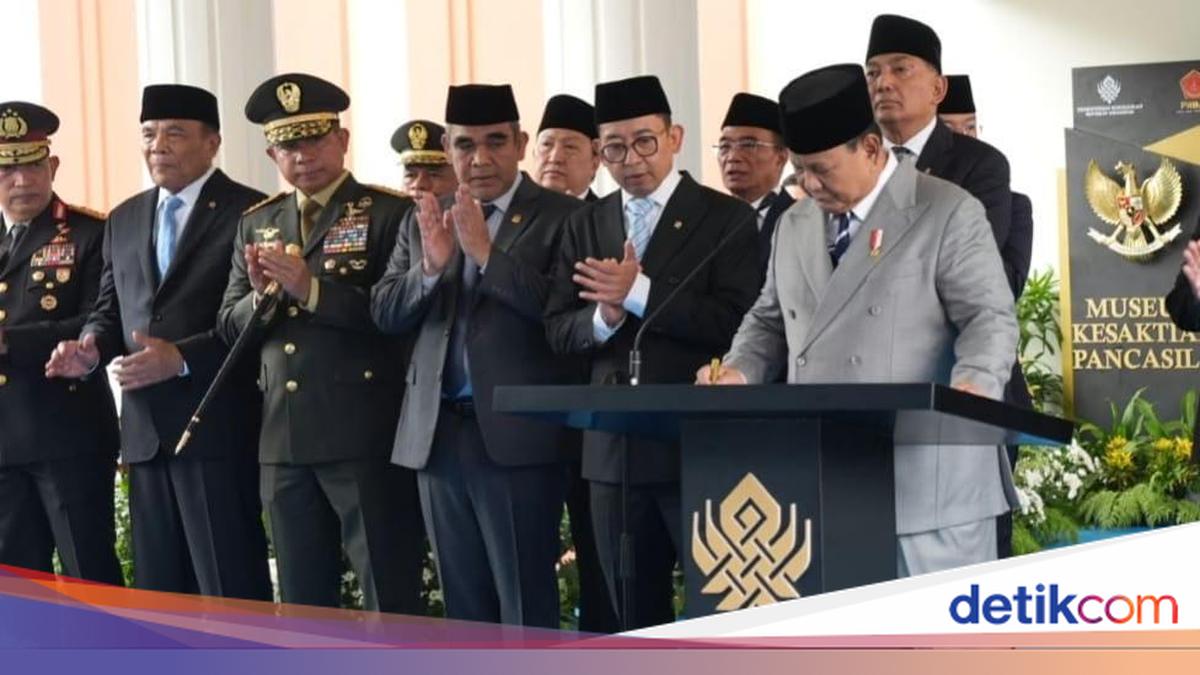
The Ministry of Culture (Kemenbud) was established as a standalone ministry in 2024 under President Prabowo Subianto’s administration, for the first time in the 79 years since Indonesia’s independence.
The establishment of the ministry strengthened culture’s role as a foundation for development, from reinforcing national identity and safeguarding unity to improving welfare and expanding Indonesia’s influence internationally.
“The first two years have focused on three interconnected areas: cultural protection; diplomacy and cooperation; and cultural development and use. Their implementation is based on Law No. 5 of 2017 on the Advancement of Culture and Presidential Regulation No. 190 of 2024 on the Ministry of Culture,” the ministry said in an official statement on Wednesday (21 October 2026).
The Cultural Development Index (IPK) shows a growth trajectory that supports the target of 68.15 for Golden Indonesia 2045. The Cultural Heritage and Cultural Expression dimensions have recorded positive trends. The Cultural Economy dimension remains the lowest-performing, although it continues to grow gradually.
Cultural protection: safeguarding heritage and sustaining traditions
Kemenbud said national-level cultural heritage designations rose from 10 in 2024 to 85 in 2025, then reached 7,471 between January and early October 2026. For Indonesia’s Intangible Cultural Heritage, there were 272 designations in 2024 and 550 by September 2026.
The enhanced status has been accompanied by physical preservation, including the restoration of Dalam Loka Palace in West Nusa Tenggara, the revitalisation of Rumah Tabuik in West Sumatra and assistance with temple restoration. In 2026, the palace and royal court revitalisation programme covered 21 sites.
In 2026, intellectual property support included 129 copyright registrations, 25 trademark applications and 250 registrations of communal intellectual property. By September 2026, the Artists Go to School movement had reached 216 schools and 3,521 students. Support for indigenous communities and adherents of local beliefs had reached 43 organisations by that month.
In 2027, the Artists Go to School movement is targeted to reach at least 341 institutions. Support for indigenous communities and adherents of local beliefs will include assistance for 40 organisations, development of 22 customary villages and capacity-building for 550 people.
Advancing culture in the regions through preservation centres and offices
Under Culture Ministerial Regulation No. 2 of 2026, the network of technical implementation units under the Directorate General of Cultural and Traditional Protection comprises 33 units: 30 Cultural Preservation Centres and three Cultural Preservation Offices. These centres and offices serve as regional hubs for cultural work.
Regional support is backed by sustainable funding through the IndonesiaRaya Fund, formerly known as the Indonesiana Fund. In 2026, Kemenbud announced an allocation of Rp500 billion from the proceeds of the Cultural Endowment Fund. In 2025, 58 per cent of beneficiaries were in areas with an IPK below the national average, an increase of around two percentage points from 2024.
Diplomacy and cooperation: championing heritage and strengthening Indonesia’s standing
In 2025, four objects from the Dubois Collection were repatriated from the Netherlands and four cultural objects were returned from New York, including the Puspatara statue. A subsequent agreement in 2026 covered the repatriation of 30,190 objects from the Dubois Collection, comprising 29,763 objects and 427 ancestral skeletal remains.
There was also an agreement to return 20 other historic cultural objects from the Netherlands, while preparations are under way to repatriate the Von Koenigswald Collection from Germany.
In the field of World Heritage, the Megalithic Heritage of the Lore Lindu area and the 13th–18th-century Spice Trade Routes were added to UNESCO’s Tentative List in 2025. Indonesia is supporting nominations for tempeh and Mak Yong, and initiated a joint nomination of Zapin with Malaysia, Singapore and Brunei Darussalam. Indonesia’s membership of UNESCO’s Intergovernmental Committee for the Safeguarding of the Intangible Cultural Heritage for 2026–2030 is expanding its contribution to the global protection agenda.
Cultural promotion was supported by Rumah Budaya Indonesia, which reached 12 countries in 2025. In 2026, the Indonesian Pavilion at the 61st Venice Biennale Arte featured seven artists under the title Printing the Unprinted. The Indonesia Cultural Megadiversity programme in the United States is being prepared for November 2026.
Partnerships were strengthened through 11 cultural cooperation forums in 2025, exceeding the target of 10, and the signing of 13 international cooperation documents against a target of 10. Cooperation is continuing through facilitation of a letter of intent between Indonesia and India on preserving Prambanan Temple, an Indonesia–Belarus memorandum of understanding, and the processing of draft cooperation agreements with 35 partner countries.
Priorities for 2027 include continuing repatriation efforts, proposing three candidate sites for UNESCO’s Tentative List, supporting nominations for dangdut, keroncong and weaving, and continuing the joint Zapin nomination. Indonesia Cultural Megadiversity is planned to expand to Egypt and Mexico, while Rumah Budaya Indonesia is targeted to reach 15 countries.
Cultural development and use: empowering practitioners and widening access
The National Arts and Culture Talent Management programme recorded 5,711 talents for data collection and further development in 2025, with 116 receiving international recognition. The 2026 report recorded 52,055 talents reached through 214 programmes involving 169 partners in 83 regencies and cities, as well as 200 instances of international recognition.
In film, Layar Indonesiana received 553 proposals in 2025 and produced 10 short films. Public access was expanded through 85 screenings of 21 national film titles, attracting 14,140 attendances by October 2026.
In music, the 2025 Indonesian Traditional Music Festival involved around 1,221 cultural practitioners and reached 30,200 audience members across four provinces. In 2026, the festival is targeting events at 10 locations across various provinces, particularly in disadvantaged, frontier and outermost regions.
The digitisation of cultural heritage produced 8,827 digital records in 2025, while the Interactive Culture Map displayed 601 records of cultural heritage sites and intangible cultural heritage. The Budaya GO! programme involved 627 teams from 33 provinces in 2025.
In 2025, infrastructure and facilities assistance worth Rp29,842,021,635 reached 81 recipients in 23 provinces. For 2027, development targets include the National Arts and Culture Talent Management programme for 5,278 people, technical training for 340 people, certification for 385 people, and the Advancement of Village Culture programme in 130 villages.
Cultural economy: potential for future growth and prosperity
The cultural economy is a strategic source of potential growth for Indonesia. Challenges include maintaining production, building business-management capacity, protecting rights, accessing finance and strengthening distribution networks.
This direction underpins Kemenbud’s 2027 Priority Programme: strengthening the cultural ecosystem as a foundation for accelerating quality growth through productivity, investment and industry. The success of the cultural economy will be assessed through higher incomes, better-quality jobs, sustainable businesses, the transfer of skills to new generations and a more even distribution of benefits between regions.
Looking towards Golden Indonesia 2045, culture is intended to become a source of social resilience and sustainable growth. Safeguarded heritage, empowered practitioners, flourishing creative works and more equitably distributed benefits are seen as foundations for building a knowledgeable, just and prosperous Greater Indonesian Civilisation.
Source: jawawa.id (https://jawawa.id/newsitem/culture-ministry-sets-out-two-year-achievements-from-preservation-to-diplomacy-1792594479)
Originally published by detikcom (https://news.detik.com/berita/d-8718045/kemenbud-beberkan-capaian-dua-tahun-dari-pelestarian-hingga-diplomasi), translated from Indonesian