
Culture Ministry Officially Takes Over KNIU Secretariat, Strengthening Indonesia's Governance at UNESCO
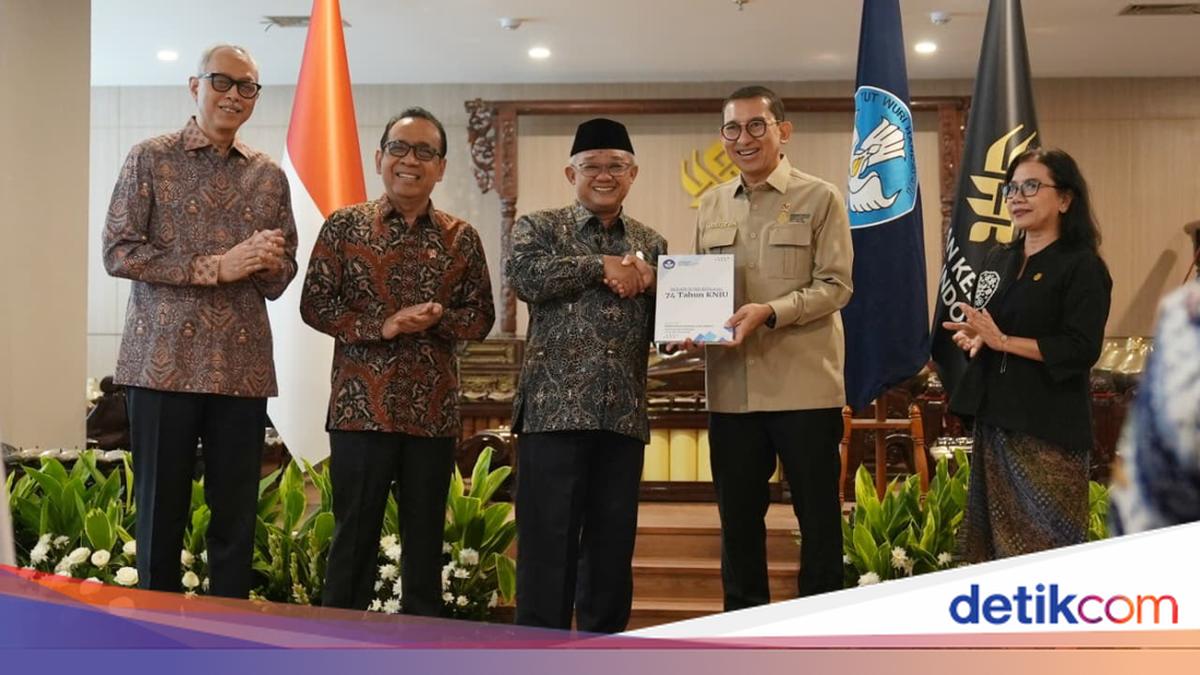
The Indonesian Ministry of Culture (Kemenbud) has officially taken over the administration of the Indonesian National Commission for UNESCO (KNIU) through the signing of a Handover Minutes (BAST) from the Minister of Primary and Secondary Education (Mendikdasmen), Abdul Mu’ti, to the Minister of Culture (Menbud), Fadli Zon, at the Kemenbud Office in Senayan, Jakarta. The signing follows the mandate of Presidential Regulation No. 31 of 2026 concerning the Indonesian National Commission for UNESCO, marking the commencement of KNIU’s duties and functions under the coordination of Kemenbud.
“With the issuance of Presidential Regulation No. 31 of 2026 concerning the Indonesian National Commission for UNESCO, we at the Ministry of Culture have received a new task to continue what has been carried out by the Ministry of Primary and Secondary Education. Both historically and in terms of various important technical directives, everything will be implemented immediately,” Fadli Zon stated on Tuesday (7/7/2026). He further outlined six priority steps to be promoted, including strengthening coordination among all UNESCO focal points in Indonesia, improving the quality of Indonesia’s nominations for various UNESCO programmes, reinforcing the implementation of all UNESCO conventions, expanding the use of digital technology in managing UNESCO programmes, supporting the development of Ethics of Artificial Intelligence, Education for Sustainable Development, and Open Science in line with global developments, and optimising Indonesia’s role as a member of the UNESCO Executive Board for the 2023-2027 period to ensure a more tangible contribution to UNESCO policy-making.
As Chair of KNIU, Fadli Zon affirmed the commitment to strengthen national coordination across UNESCO’s five mandate areas: education, science, culture, communication, and information. The institutional strengthening of KNIU is expected to enhance Indonesia’s strategic position in various UNESCO forums while optimising the use of international programmes for national development. Indonesia currently holds various significant achievements in cooperation with UNESCO, including recognition of world heritage sites, intangible cultural heritage, UNESCO Global Geoparks, Biosphere Reserves, Memory of the World, and the trust to serve as a member of the Intergovernmental Committee for the Safeguarding of the Intangible Cultural Heritage for the 2026-2030 period. These achievements serve as important capital to strengthen Indonesia’s diplomacy and increase the nation’s global contribution.
Meanwhile, Abdul Mu’ti stated that the transfer of KNIU’s administration represents a relay of service to strengthen Indonesia’s role in UNESCO. “Today, on behalf of the Ministry of Primary and Secondary Education, we hand over the administration of KNIU along with all its archives, documents, and institutional administration to the Ministry of Culture as outlined in the Handover Minutes we will sign together,” he explained. He further emphasised that decades of accumulated experience, international networks, good practices, and institutional systems are valuable assets for the Ministry of Culture to continue managing KNIU. The Ministry of Primary and Secondary Education also expressed its commitment to supporting the implementation of various UNESCO programmes in the education sector through cross-ministerial synergy.
On the same occasion, the Coordinating Minister for Human Development and Cultural Affairs, Pratikno, who serves as the Steering Committee for KNIU, stressed the importance of ensuring an effective and swift transition process without disrupting KNIU’s services and programmes. The implementation of Presidential Regulation No. 31 of 2026 is expected to be promptly followed by strengthened governance, completion of institutional structures, division of roles, and cross-ministerial and institutional coordination mechanisms. “KNIU has produced many achievements under the Ministry of Primary and Secondary Education. With its administration now under the Ministry of Culture, we hope its performance and contribution will become even stronger and provide greater benefits for Indonesia,” Pratikno remarked. The handover ceremony was witnessed by Pratikno, accompanied by the Daily Chair of KNIU for the 2025-2026 period, Ananto Kusuma Seta, and the Director General of Cultural Diplomacy, Promotion, and Cooperation, who also serves as the Daily Executive and Coordinator of the KNIU Secretariat, Endah T.D. Retnoastuti, followed by the handover of a book titled ‘A Brief Record of 74 Years of KNIU’ from Abdul Mu’ti to Fadli Zon.