
Culture Minister Urges Stronger Cultural Ecosystem from Source to Market at WCCE 2026
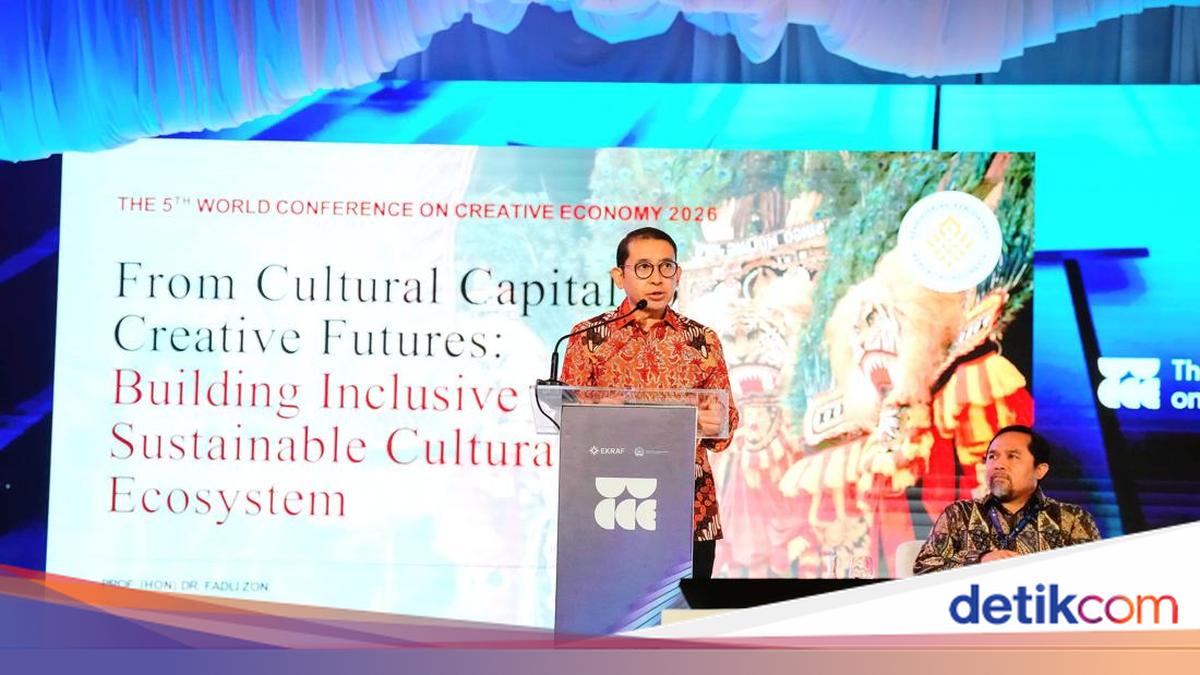
Indonesian Culture Minister Fadli Zon attended the plenary session of the 5th World Conference on Creative Economy (WCCE) 2026 at Hotel Indonesia in Jakarta. Held from 21 to 25 October, the conference carries the theme “Inclusively Creative: Collective Continuity”, emphasising the importance of inclusion, collaboration and sustainability in building the global creative economy ecosystem.
The WCCE is an international forum on the creative economy, bringing together policymakers, creative industry players, academics, creators and stakeholders from various countries. It discusses the role of the creative economy in sustainable development.
In his speech, Fadli stressed that culture is not merely a cost centre in government spending, but productive capital underpinning innovation in the creative economy.
He said Indonesia is a civilisational state, supported by a long history and immense cultural diversity. Its wealth includes more than 1,340 ethnic groups, 718 regional languages and thousands of cultural advancement objects (OPK).
Fadli said that behind every creative product—such as films, music, crafts and digital content—lies a broad cultural ecosystem encompassing traditional knowledge, historical narratives and artistic expression passed down through generations. The Ministry of Culture is therefore working to bridge and strengthen the cultural ecosystem from source to market, in order to advance culture sustainably.
“Culture is not merely a commodity, but a foundation that must be preserved. We need to realise what I call a circular cultural economy (cultural and creative industries): a process in which culture inspires innovation, generates economic value, and the proceeds in turn support cultural communities and nurture the next generation of creators,” Fadli said in a written statement on Saturday (24 October 2026).
The Ministry of Culture is focusing on three main levels to strengthen the cultural ecosystem. At the upstream level, its priorities are protecting cultural heritage, supporting communities, and accelerating the documentation and transmission of traditional knowledge to younger generations.
At the intermediate level, support is provided for talent development and the creation of creative works through the National Talent Management Programme for Arts and Culture (MTN) and the Dana Indonesia Raya cultural endowment fund.
Downstream, the ministry is expanding the distribution of creative works, participation in international festivals and cross-border collaboration to strengthen Indonesia’s cultural diplomacy globally.
Fadli emphasised that cooperation between the Ministry of Culture and the Ministry of Creative Economy is important to strengthening the cultural ecosystem. The Ministry of Culture safeguards knowledge and nurtures the upstream ecosystem, he said, while the Ministry of Creative Economy plays a key role in commercialising intellectual property, developing industries and broadening market access.
Fadli added that the sustainability of the creative economy depends heavily on how the nation protects and cares for its cultural heritage.
“The future of creativity depends not only on what we create today, but also on the knowledge, culture and opportunities we pass on to future generations,” he said.
In a similar vein, National Research and Innovation Agency (BRIN) head Arif Satria stressed the importance of science and technology in connecting research with cultural heritage to boost national economic competitiveness. This collaboration includes using Indonesia’s cultural assets to develop local games and food-stabilisation technology to strengthen culinary products as a key driver of the country’s creative economy.
The Ministry of Law is also supporting the strengthening of the national creative economy ecosystem through faster regulation, bureaucratic simplification and integrated intellectual property protection.
“Close cooperation between ministries is essential to ensure that the economic benefits of creative works are genuinely felt by industry players,” Law Minister Supratman Andi Agtas said.
Thirty-five ministries and agencies are currently working together to prepare Indonesia’s intellectual property economy roadmap. The aim is to go beyond protecting rights and ensure that creators and businesses directly benefit economically from intellectual property registrations.
Also attending the WCCE plenary were Creative Economy Minister Teuku Riefky Harsya, BRIN head Arif Satria and Law Minister Supratman Andi Agtas. Fadli was accompanied by Endah T. D. Retnoastuti, Director-General of Cultural Diplomacy, Promotion and Cooperation, and Anindita Kusuma Listya, the minister’s expert staff member for economics and cultural industries.
Through the forum, the Ministry of Culture affirmed its strategic commitment to advancing culture by using Indonesia’s immense cultural diversity to create opportunities in the creative economy. Cross-sector cooperation—spanning heritage protection, research and technology, legal protection of intellectual property and the downstream development of creative industries—forms the basis for an inclusive, globally competitive and sustainable circular cultural economy for future generations.
Source: jawawa.id (https://jawawa.id/newsitem/culture-minister-urges-stronger-cultural-ecosystem-from-source-to-market-at-wcce-2026-1792828341)
Originally published by detikcom (https://news.detik.com/berita/d-8722071/menbud-dorong-penguatan-ekosistem-budaya-hulu-hilir-di-wcce-2026), translated from Indonesian