
Culture Minister Says Yasti and Borobudur Mahastupa Restoration Meets Conservation Standards
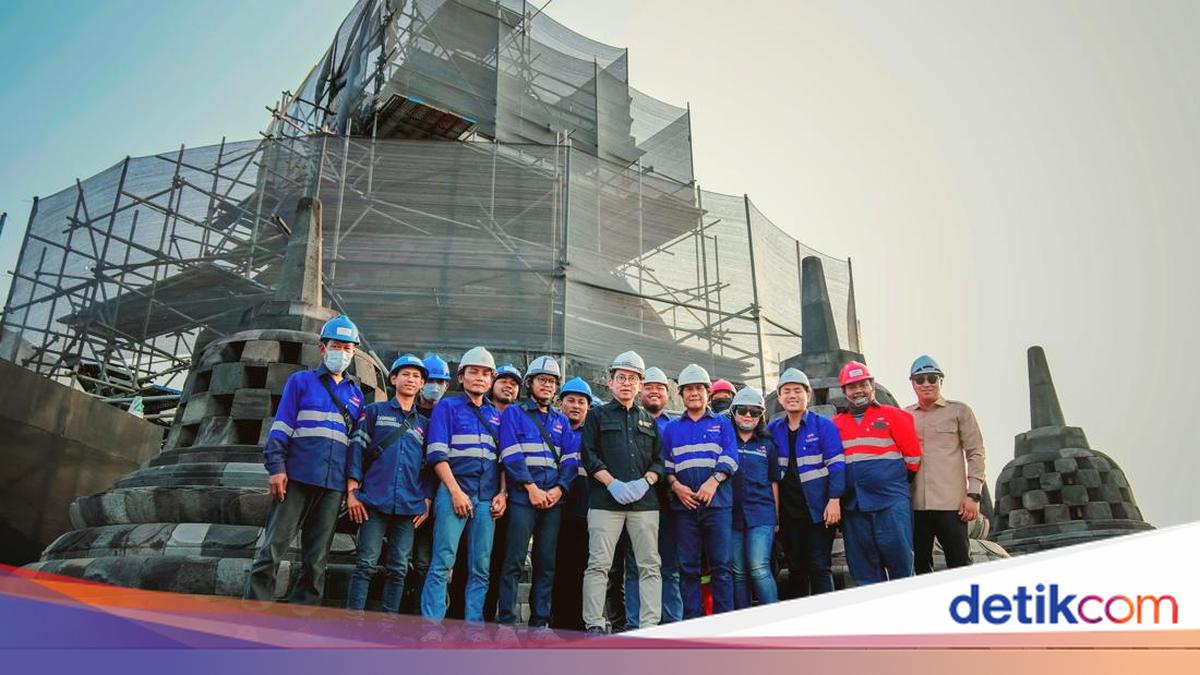
Indonesia’s Culture Minister Fadli Zon inspected restoration work on the yasti and conservation of Borobudur Temple’s Mahastupa. The visit aimed to ensure that the treatment of the temple’s structures and materials was carried out carefully, based on scientific research and in accordance with conservation principles.
The inspection was also part of the Ministry of Culture’s efforts to safeguard the structure’s stability, the authenticity of its materials and the continued preservation of Borobudur Temple as a world cultural heritage site.
During the visit, Fadli observed the strengthening of the yasti structure and the removal of salt deposits from the temple stones. The work takes into account the condition of the materials, the history of previous restoration and environmental challenges that could affect the stones’ durability over the long term.
Fadli said preservation of Borobudur would not end with restoration, but would also require ongoing maintenance and conservation. Although the temple is made of stone, he said, it remains vulnerable to weathering caused by exposure to the elements and changing environmental conditions.
“Andesite stone certainly needs conservation. Our climate is changing, and rainfall conditions today are different from those of 100 or 200 years ago. So we need to ensure that the right treatment is applied to preserve Borobudur’s stones and reliefs,” Fadli said in a statement on Wednesday (14 October 2026).
Fadli explained that restoration of the yasti was needed to reinforce the structure at the top of the main stupa, where the arrangement of stones had shifted. Conservation of the Mahastupa, meanwhile, is intended to address salt deposits and weathering that could reduce the material’s durability.
He said both projects required careful inspection to ensure that every intervention reflected the building’s actual condition. He also stressed the importance of using suitable technology and conservation methods to preserve the authenticity of the temple stones.
Interventions at cultural heritage sites, he said, must be measured and take account of the characteristics of the materials and the environment in which the temple stands.
“Borobudur’s reliefs, which are more than 1,000 years old, require appropriate treatment. We need to ensure their maintenance is continuous so that the reliefs retain their sharpness and the stones do not soften or suffer damage. This is an important conservation task that must be carried out on the basis of careful study,” he said.
At the end of the inspection, Fadli urged the public to help preserve Borobudur by following visitor rules and avoiding actions that could damage the temple’s stones or reliefs.
He said visitors’ participation was an important part of supporting efforts to protect the cultural heritage site.
“We also hope visitors will help look after it by not touching the reliefs and not applying chemicals, liquids or anything else that could damage them,” he said.
The restoration of the yasti and conservation of the Mahastupa are being carried out by the Ministry of Culture through the Museum and Cultural Heritage agency (MCB). Monitoring and technical assessments in August 2026 identified displaced stones, cavities and cracks in the yasti and harmika, as well as material damage to the main stupa. The yasti restoration is focused on restoring structural stability while prioritising the use of original materials.
Conservation of the Mahastupa includes treating salt deposits, weathering, cavities and cracks in the stone. Salt deposits, which appear as a white layer on the stone’s surface, may be associated with water movement and the presence of salts within the material. Treatment requires an appropriate method to prevent further damage while retaining the stone’s authenticity.
The work also involves a multidisciplinary team with expertise in archaeology, conservation, civil and structural engineering, and metallurgy. It is being carried out in stages, with inspections, documentation and material analysis conducted before further measures are decided.
Historically, Borobudur’s first major restoration took place from 1907 to 1911 under the leadership of Theodoor van Erp. The next major restoration was carried out from 1973 to 1983 in partnership between the Indonesian Government and UNESCO.
The current restoration of the yasti provides an opportunity to address the top of the Mahastupa while also evaluating the condition of its materials and earlier treatment methods in light of developments in conservation science.
Source: jawawa.id (https://jawawa.id/newsitem/culture-minister-says-yasti-and-borobudur-mahastupa-restoration-meets-conservation-standards-1791996718)
Originally published by detikcom (https://news.detik.com/berita/d-8707507/menbud-pastikan-pemugaran-yasti-mahastupa-candi-sesuai-kaidah-konservasi), translated from Indonesian