
Culture Minister Highlights Global Conflicts and Calls for UNESCO’s Role in World Peace
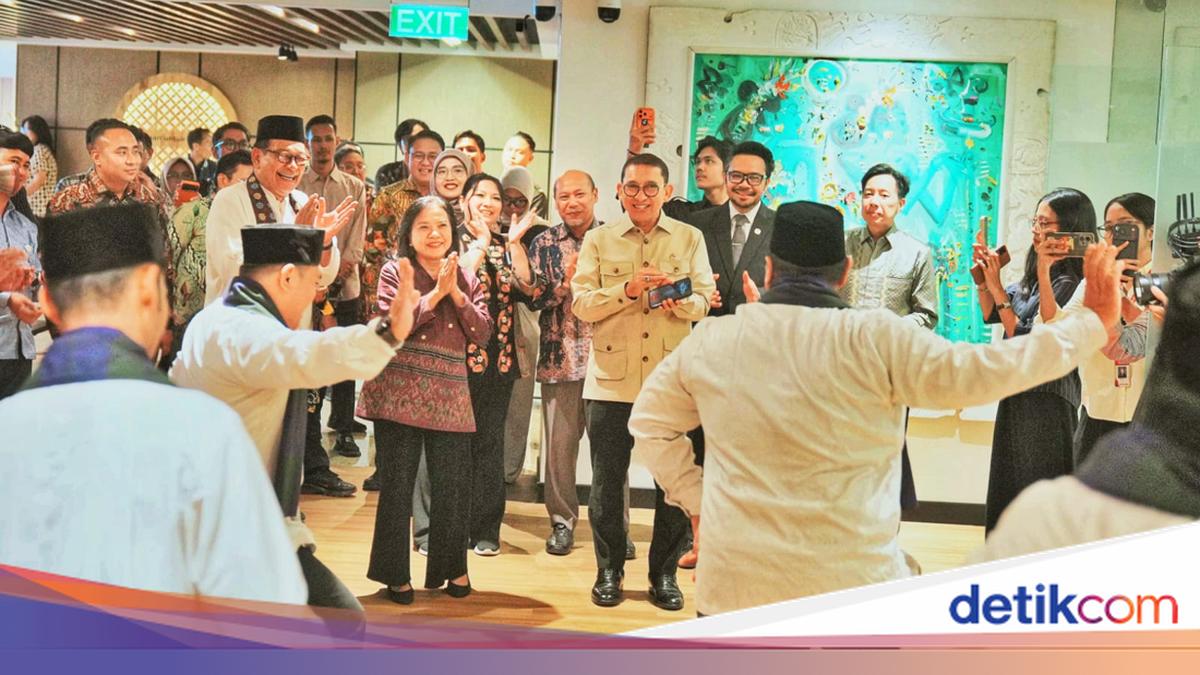
Culture Minister Fadli Zon affirmed Indonesia’s commitment to strengthening UNESCO’s role as a pillar of peace and multilateral cooperation, and as a bridge between nations through education, science, culture and access to information.
Fadli said the world currently faces various global challenges, from conflict, displacement and inequality to the climate crisis and rapid technological development.
“Sustainable peace cannot rest solely on political agreements. Peace must be built through education that broadens opportunity, science that advances humanity, culture that strengthens mutual understanding, and access to information that enables societies to become more resilient,” Fadli said in a statement on Friday (9 October 2026).
He made the remarks at a session of UNESCO’s Executive Board, attended by representatives of its 40 member states and several observer countries. The session was opened by UNESCO Director-General Prof Khaled El-Enany and chaired by the board’s president, Dr Nasser Bin Hamad Al Hinzab of Qatar.
Fadli expressed Indonesia’s concern over conflicts affecting civilians, schools, universities, libraries, cultural heritage, religious sites, journalists, educators and people forced to leave their homes.
He said Indonesia called on all parties to meet their moral and legal obligations and settle disputes peacefully in accordance with the United Nations Charter.
According to Fadli, UNESCO should continue to strengthen efforts to document damage, protect cultural heritage, ensure the continuity of education and safeguard freedom of expression in communities affected by conflict and displacement.
Diversity as a source of strength for Indonesia
Fadli said representation must go hand in hand with responsibility. As an archipelagic country with around 290 million people, 1,340 ethnic groups and 718 living languages spread across more than 17,000 islands, Indonesia understands the importance of preserving diversity as a source of resilience and an asset for sustainable development.
Indonesia also shared its experience in safeguarding living cultural heritage, developing inclusive education, strengthening marine science and tsunami preparedness, integrating scientific and local knowledge, and developing ethical governance of artificial intelligence (AI).
Repatriation as a pillar of cultural sovereignty
Fadli also stressed that repatriation is an important part of Indonesia’s cultural sovereignty. Indonesia continues to work with partner countries to secure the return of cultural objects and artefacts, including the Dubois Collection from the Netherlands, which comprises more than 30,000 fossils associated with Homo erectus, known as Java Man or the Java Man.
“For Indonesia, repatriation is a moral imperative to restore the integrity of cultural heritage, address historical injustice and build mutual respect,” Fadli said.
He also urged UNESCO member states to strengthen cooperation in protecting tangible and intangible cultural heritage and to promote the return and restitution of cultural property to its countries of origin.
Fadli added that the recognition of Indonesian as the 10th official language of UNESCO’s General Conference showed that multilateralism would be stronger when more languages, cultures and perspectives had a place in international cooperation.
Indonesia’s three priorities for UNESCO
To strengthen UNESCO’s future impact, Fadli outlined three priorities for Indonesia. The first is human-centred, inclusive and universally accessible digital transformation.
As the first country in South-east Asia to complete UNESCO’s AI Readiness Assessment Methodology, Indonesia is calling for expanded support for developing countries through access to expertise, capacity-building and policy support for ethical and inclusive AI use.
“Technological progress must narrow gaps, not widen inequality. AI governance must remain ethical and transparent, while respecting cultural and linguistic diversity and people’s rights,” Fadli said.
The second priority is strengthening multilateralism amid global fragmentation. He said UNESCO should remain a space for dialogue and cooperation despite political differences, while using knowledge and mutual understanding as bridges to overcome divisions.
The third is reforming UNESCO. Indonesia supports the UNESCO-80 agenda to make the organisation more effective, coherent, agile and responsive. Reform must strengthen, not diminish, UNESCO’s fundamental mandate.
Call for balanced geographical representation
Indonesia also emphasised the importance of fair geographical representation in UNESCO’s Secretariat. Several member states, particularly from the Asia-Pacific region, remain under-represented or have no representation at all.
Indonesia is calling for a more representative UNESCO Secretariat to strengthen the organisation’s legitimacy and effectiveness. It also recognised the strategic role of National Commissions for UNESCO as a bridge connecting the organisation with governments, universities, communities, young people and civil society.
Fadli affirmed Indonesia’s readiness to work with all member states to build a stronger, more representative and more effective UNESCO.
“UNESCO must be a platform for knowledge, a bridge across differences, a guardian of our shared humanity and, above all, a builder of peace,” Fadli concluded.
Source: jawawa.id (https://jawawa.id/newsitem/culture-minister-highlights-global-conflicts-and-calls-for-unescos-role-in-world-peace-1791510724)
Originally published by detikcom (https://news.detik.com/berita/d-8698971/menbud-soroti-konflik-global-dorong-peran-unesco-untuk-perdamaian-dunia), translated from Indonesian