
Culture Minister: Bandung Spirit as a moral compass amid global dynamics
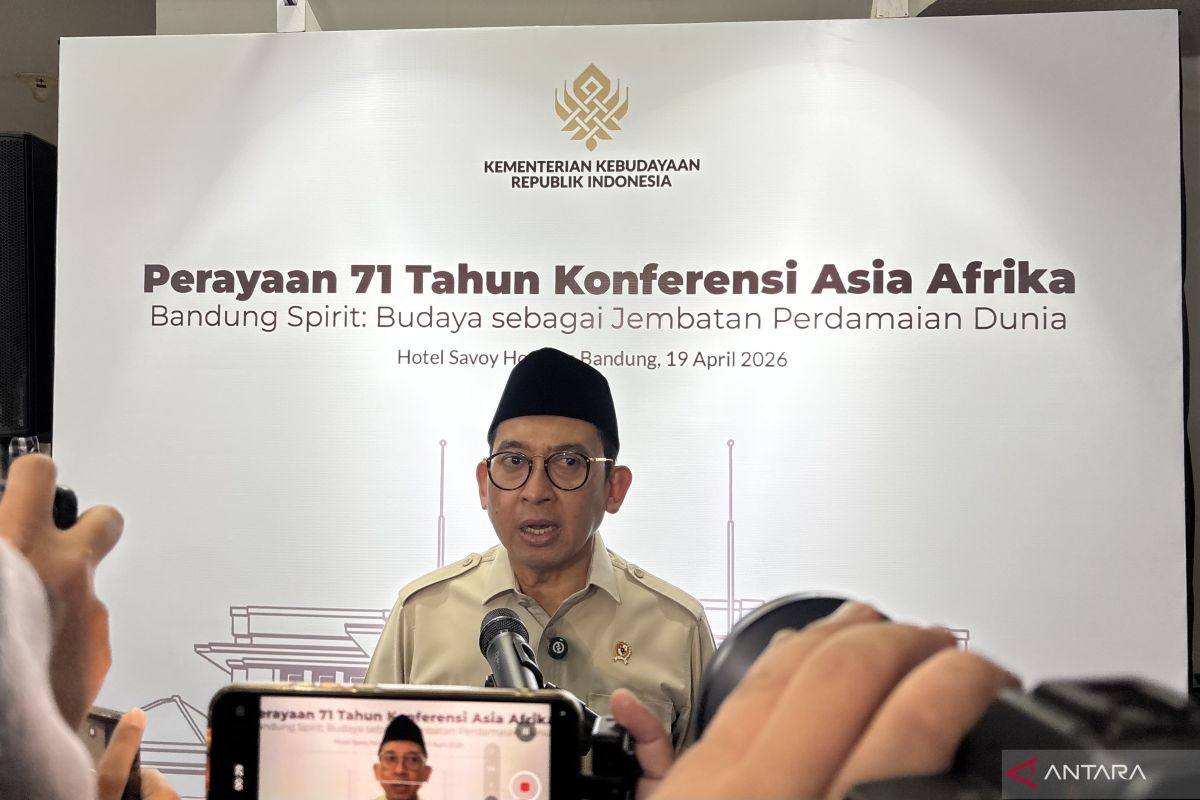
The city of Bandung (ANTARA) - Culture Minister Fadli Zon has stressed that the Bandung Spirit, which emerged from the Asia-Africa Conference, remains relevant as a moral compass amid increasingly uncertain global dynamics. “In a world that is becoming ever more uncertain, the Bandung Spirit is precisely what remains relevant as a moral compass. If we wish to build sustainable peace, we must protect culture,” Fadli said at the celebration of the 71st anniversary of the Asia-Africa Conference in Bandung on Sunday. According to Fadli, culture must be positioned as the primary instrument of diplomacy to strengthen solidarity and international friendship, particularly in the Asia and Africa regions. He stated that in a world without borders, culture plays two important roles: as a fortress to preserve a nation’s identity and as a bridge to open international dialogue. The Culture Minister also emphasised the importance of protecting culture as part of efforts to build sustainable peace. “We must ensure that no war erases a nation’s history, no domination silences identities, and no global system ignores the voices of the weak,” he said. Fadli conveyed that the Asia-Africa Conference, which took place 71 years ago, is an important milestone in world diplomacy. From that forum, the principles of the Bandung Ten Principles were born, encouraging solidarity, cooperation, and serving as the precursor to the Non-Aligned Movement, as well as guiding the struggle for independence of colonised nations. “The spirit of solidarity, equality, and international cooperation must continue to be championed as a moral force in facing a world that is becoming increasingly fragmented,” said Fadli. He encouraged strengthening cultural cooperation between Asian and African countries through knowledge exchange, preservation of cultural heritage, and solidarity in facing global challenges. “That differences between nations do not become a source of division, but a strength to build a more just, peaceful, and civilised world,” he said.