
Culture Minister Assures WFH Implementation Will Not Compromise Service Quality
The government prioritises maintaining the quality of education.
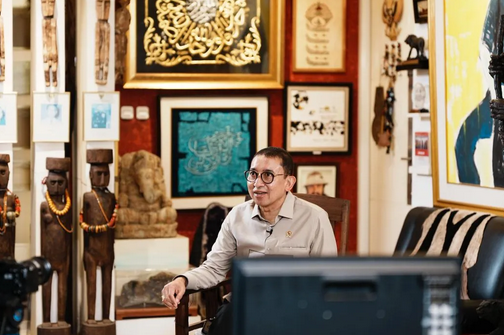
Culture Minister Fadli Zon has officially instructed the implementation of energy efficiency policies and work pattern adjustments within the Ministry of Culture. He conveyed this during an online meeting with ministry officials.
This proactive step is taken in response to global dynamics and the worldwide energy shortage impacting various sectors, including government programmes.
Fadli Zon stated that President Prabowo has instructed all ministries and agencies to proactively save consumption as an adaptation to the current global situation.
Savings to be made include through Work From Home (WFH) policies, budget efficiency, and transformation to solar power generation.
The Ministry of Culture will promote efficiency by implementing WFH for one working day per week.
Fadli Zon emphasised that WFH will still consider the quality of public services. “The output of services, whether online or offline, must meet the same standards, so it does not reduce services, and it encourages the implementation of SPBE, the Electronic-Based Government System,” he said.
Fadli Zon also urged all ministry ranks to have a sense of emergency in facing global economic turmoil.
He stressed that efficiency is not just about budget cuts, but also a strategic step to maintain ministry performance stability amid the current world situation.
“We know that fuel needs are a very vital and essential requirement, and can cause various other impacts. We must prepare for efficiency. Hope for the best, but also prepare for the worst,” said Fadli Zon.
Fadli Zon also instructed restrictions on the operation of electronic devices and official vehicles to significantly reduce energy consumption.
He views these policies as part of the ministry’s tactical steps to reallocate budgets from routine operational costs to programmes that directly impact cultural preservation in society.
“Of course, the goal is clear: efficiency through reduced mobility, because mobility uses a very large amount of fuel. Then, in just one day, at least we can make meetings more efficient through online means like this, because online meetings are also a very efficient method,” he explained.
Fadli Zon also outlined several efficiency policies for the Ministry of Culture to be enforced starting 1 April 2026, including the implementation of Work From Home (WFH), building energy efficiency, and reduction of ceremonial activities.
These policies are expected to reduce mobility, thereby cutting energy and fuel oil (BBM) usage.
The implementation of these policies is further outlined in Circular Letter of the Secretary General of the Ministry of Culture Number 5 of 2026 on the Flexible Implementation of Official Duties for Employees to Achieve Energy Efficiency in the Ministry of Culture Environment.
Fadli Zon added that the policy will be evaluated after two months to assess its effectiveness on energy savings and the ministry’s performance.
He also assured that despite work pattern adjustments, the quality of public services must remain the top priority and in accordance with applicable standards.
“I hope that all those implementing this programme and activities will be as efficient as possible and have a real impact, especially in building our cultural ecosystem,” he concluded.