
Cultural Tourism a Strategic Step to Strengthen Indonesia’s Economy, Observer Says
Jakarta (ANTARA) – The Bali-based Institute for Public Policy Studies (Lanskap) said developing culture-based tourism is a strategic step towards strengthening the economy and supporting the Asta Cita agenda, as the administration of President Prabowo Subianto and Vice-President Gibran Rakabuming Raka enters its third year.
Lanskap Bali director I Wayan Agus Pebriana said the future success of tourism would increasingly depend on the quality of visitor experiences and the economic benefits received by local communities.
“National tourism growth can no longer be measured by how many people arrive, but by how long they stay, how deeply they appreciate the culture and how much benefit goes back to local communities,” Wayan said in a statement received in Jakarta on Sunday.
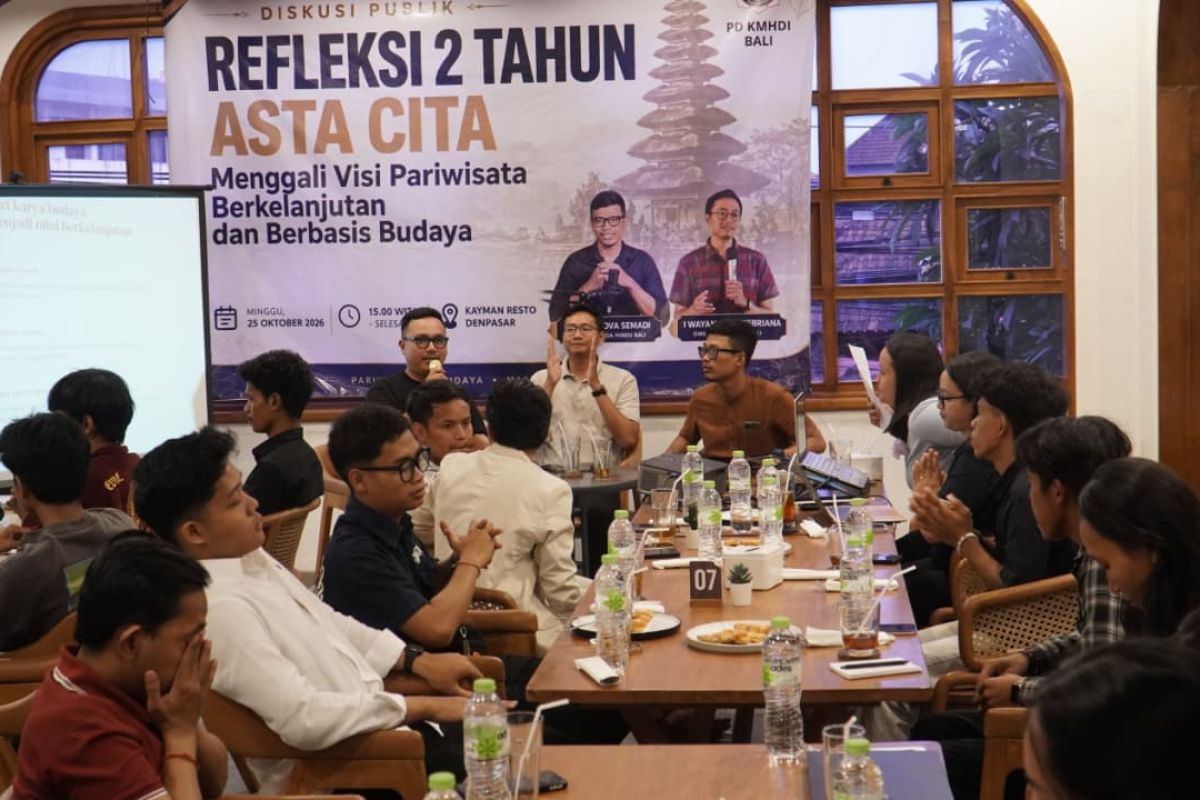
He made the remarks at a public discussion entitled “Reflecting on Two Years of Asta Cita: Exploring a Vision for Sustainable, Culture-Based Tourism”, organised by the Bali regional leadership of the Hindu Dharma Students Association of Indonesia (PD KMHDI) in Denpasar, Bali.
Wayan said culture-based tourism could strengthen the local economy by making use of local potential while safeguarding the environment and regional traditions.
As well as ensuring the sustainability of tourism in Bali, he stressed the importance of developing destinations across Indonesia to widen business opportunities and distribute economic benefits more evenly.
“Preserving Bali is key, but tourism development in Indonesia must not be limited to Bali,” he said.
He said the natural and cultural wealth of regions across the country could strengthen the competitiveness of Indonesian tourism while creating new economic opportunities for communities.
At the same event, Hindu youth activist I Kadek Nova Semadi said tourism based on local potential could bolster the community economy without sidelining regional cultural identity.
Nova said Bali had a range of potential attractions that could be developed, including spiritual tourism, plantation tourism, cultural tourism and educational tourism.
“Spiritual, plantation, cultural and educational tourism can be developed to broaden economic opportunities while introducing Bali’s diversity,” he said.
Such development is considered consistent with the Prabowo-Gibran administration’s Asta Cita agenda, particularly development from the villages, stronger entrepreneurship, increased economic value-added and more evenly distributed development.
In the tourism sector, this can be pursued by developing tourist villages, strengthening micro, small and medium-sized enterprises (MSMEs) and cooperatives, and improving community capacity so residents can play a greater role in tourism-related economic activity.
Collaboration between central and regional governments, customary villages, businesses, cultural communities, universities and the public is also needed to ensure that destination development brings economic benefits while protecting cultural heritage and the environment.
In a report on the Prabowo-Gibran administration’s two-year record on 20 October 2026, the Ministry of Tourism said foreign tourist arrivals reached 15.39 million in 2025, up 10.80 per cent from 2024.
That growth continued through August 2026, with foreign tourist arrivals reaching 10.58 million, a year-on-year increase of 5.38 per cent.
Domestic tourist trips totalled 842.15 million from January to August 2026, up 4.29 per cent from the same period a year earlier.
The Ministry of Tourism also recorded more than 6,300 tourist villages registered with the Tourist Village Network (Jadesta) as of September 2026.
Monitoring of 66 tourist villages found that village revenue from tourism activities rose 29.62 per cent, from Rp46.05 billion in 2024 to Rp59.70 billion in 2025.
Tourism Minister Widiyanti Putri Wardhana has also said that tourism development during the Prabowo-Gibran administration’s first two years has focused not only on increasing visitor numbers, but also on delivering economic benefits to communities and distributing development more evenly between regions.
Source: jawawa.id (https://jawawa.id/newsitem/cultural-tourism-a-strategic-step-to-strengthen-indonesias-economy-observer-says-1792943526)
Originally published by Antara (Indonesian) (https://www.antaranews.com/berita/5811047/pengamat-wisata-berbasis-budaya-langkah-strategis-perkuat-ekonomi-ri), translated from Indonesian