
CSIS: Green Logistics Key to Indonesia's Economic Competitiveness
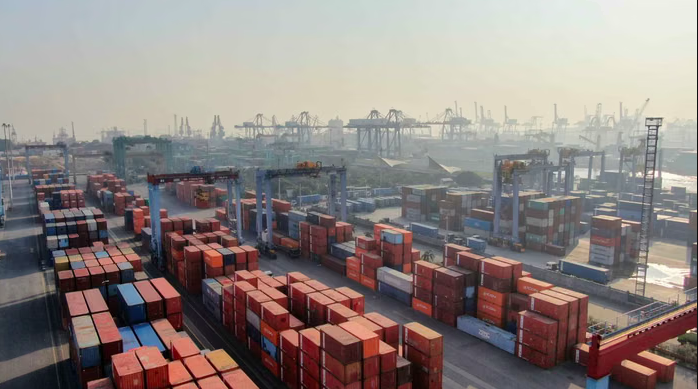
The Centre for Strategic and International Studies (CSIS) Indonesia considers the development of green logistics to be one of the keys to increasing Indonesia’s economic competitiveness while supporting sustainable trade and investment. This view was conveyed by CSIS Indonesia Executive Director Yose Rizal Damuri during the launch of the Indonesia Sustainable Trade and Investment Report 2026, titled ‘From Fragmentation to Transformation: Strengthening the Green Economy as Indonesia’s Competitiveness Strategy’, in Jakarta on Tuesday.
Yose explained that the annual report reviews developments in trade, investment, industrialisation, and sustainability issues in Indonesia over the past year. In addition to reviewing developments in sustainable trade and investment and their regulations, the report also raises specific strategic issues. While the previous report discussed critical minerals, this year’s edition focuses on sustainable logistics.
According to Yose, logistics is an important part of trade in services that supports goods trade, investment, and industrialisation activities. Therefore, efforts to build a green economy are not sufficient if they only focus on the production process but must also include supporting services. ‘Logistics services must be supported to become sustainable in order to increase competitiveness,’ Yose said.
He assessed that the use of logistics services that still rely on conventional systems with high emissions will reduce the effectiveness of various emission reduction efforts and the transition to a green economy. ‘It is futile if the production process has met sustainability principles, but the services used are still conventional and emit large amounts of carbon. This will negate our efforts to reduce emissions and support the green transition,’ he stated.
Yose also highlighted that recent global geopolitical developments, including the crisis in the Strait of Hormuz which has driven up fuel prices, further underscore the importance of transforming the logistics sector. According to him, green logistics not only supports the sustainability agenda but also strengthens energy and supply chain resilience. ‘We hope that resilience, especially in terms of logistics and energy use, can also be improved,’ he said.
Meanwhile, CSIS Economics Researcher Dandy Rafitrandi said the institution wants to see geopolitical fragmentation not only as a challenge but also as an opportunity to increase Indonesia’s competitiveness. According to him, one such opportunity is optimising the green economy, particularly through the development of green logistics services. Dandy explained that the report was prepared by considering two main pressures currently facing the world, namely increasing geopolitical fragmentation and the acceleration of decarbonisation demands. ‘So we want to see these dual pressures as a common thread that we will hold onto,’ Dandy said.
Dandy added that the report also discusses various international policies that could potentially affect Indonesian trade, including the implementation of the European Union Deforestation Regulation (EUDR). ‘Because the implementation of this EUDR has generated many pros and cons,’ he said. In addition to the EUDR, the report also highlights the importance of Indonesia’s readiness to face the European Union’s Carbon Border Adjustment Mechanism (CBAM). For this reason, Indonesia is deemed necessary to strengthen its carbon market and credible carbon economic value, supported by adequate regulations.
On the same occasion, the President’s Special Envoy for International Trade and Multilateral Cooperation, Mari Elka Pangestu, said that the application of environmental standards in export markets has become an unavoidable challenge. ‘What is already real before our eyes is CBAM and EUDR,’ Mari Elka said. According to her, although Indonesia has the opportunity to obtain lower tariff facilities through a trade agreement with the European Union, businesses must still meet various sustainability requirements, such as eco-labeling, sustainable timber certification (SVLK), and product origin traceability (geo-location).
She added that compliance risks will be even greater, especially for emission-intensive sectors such as steel and cement, which must meet various requirements related to emissions data, audits, traceability, and clean energy certification. Therefore, strengthening the national carbon market is an important instrument. ‘This is where the role of the carbon market is actually needed and is being developed,’ said Mari Elka, who also serves as Vice Chair of the National Economic Council. Furthermore, she assessed that the transition to a green economy should be seen as an opportunity to attract investment and expand exports, rather than merely a burden of compliance with global regulations. She mentioned that various green sectors have the potential to add between US$32 billion and US$51 billion to Indonesia’s economy by 2030. ‘So this should be an opportunity that we can seize,’ she stressed.