
Crude Oil Prices Soar Again, Brent Breaks Through US$109 per Barrel
Jakarta - Global crude oil prices rose again during Tuesday morning trading (28/4/2026), as global markets continued to weigh the risks of supply disruptions from the Middle East.
The strategic Strait of Hormuz, a vital artery for world energy trade, remains far from normal conditions, while negotiations between the United States and Iran have yet to yield a breakthrough.
According to Refinitiv data at 09:45 WIB, the nearest Brent crude contract was at US$109.46 per barrel, up from the previous close of US$108.23 per barrel. Meanwhile, West Texas Intermediate (WTI) crude was recorded at US$97.38 per barrel, strengthening from US$96.37 per barrel the previous day.
This increase extends the sharp oil rally over the past week. Brent has surged from US$90.38 per barrel on 17 April to US$109.46 per barrel today. Over eight trading sessions, the jump has exceeded 21%. WTI has moved similarly, from US$83.85 to US$97.38 per barrel, or up around 16%.
Citing Reuters, the market is currently focused on the impasse in the US-Iran conflict. Reuters reported that President Donald Trump is dissatisfied with Tehran’s latest proposal to end the deadlock. Iranian sources said the proposal does not address the nuclear programme issue until hostilities cease and Gulf shipping disputes subside.
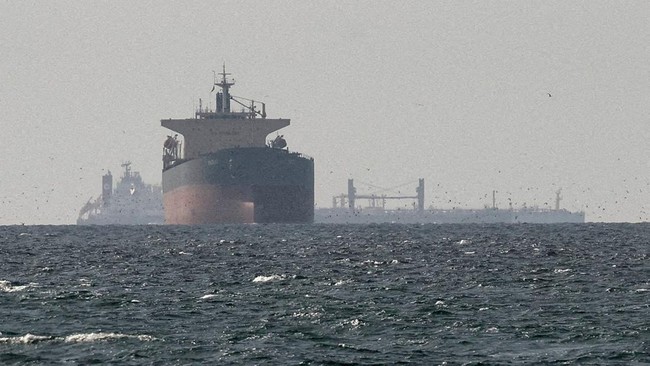
That situation keeps energy flows from the Gulf region disrupted. Iran is still restricting shipping through the Strait of Hormuz, while the US maintains a blockade on Iranian ports. The Strait of Hormuz itself typically carries supplies equivalent to about 20% of global oil and gas consumption, so any disruption quickly triggers a surge in risk premiums in the energy market.
The latest ship tracking information also highlights supply pressures. Six Iranian oil tankers were reported to have turned back due to the US blockade. On the other hand, an LNG vessel operated by Abu Dhabi National Oil Co successfully passed through and is heading to India. This means the route is not completely closed, but its traffic capacity remains disrupted.
Before the US-Israel war against Iran broke out on 28 February, around 125-140 ships crossed Hormuz every day. Now that number has dropped sharply. Even if a peace agreement is reached later, the market may not calm down immediately. Production disruptions, ship queues, insurance issues, and logistical adjustments could make supply recovery gradual.