
Cross-Sector Strategic Collaboration for Methane Mitigation Financing
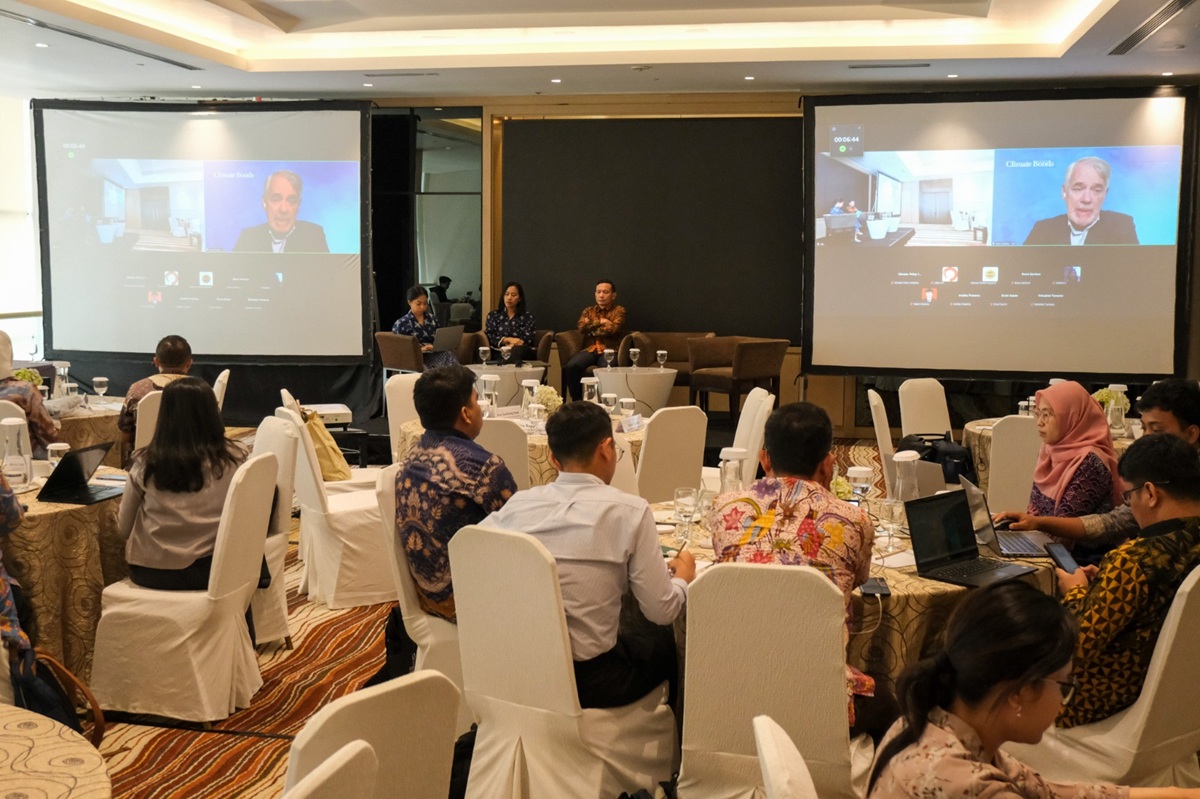
Driven by the urgency of reducing methane emissions, which contribute to up to one-third of global warming, Climate Policy Initiative (CPI) Indonesia organised a stakeholder discussion. The event brought together the government, financial institutions, development partners, industry associations, and the private sector to discuss opportunities for reducing emissions in the industrial sector, implementation barriers, and financing strategies that can accelerate mitigation actions.
The urgency of reducing methane emissions aligns with Indonesia’s commitment to actively mitigate the climate crisis through the Enhanced NDC, the 2025–2045 National Long-Term Development Plan (RPJPN), the Indonesia Gold Vision 2045, and participation in the Global Methane Pledge. “Indonesia’s participation in the Global Methane Pledge is a vital step in encouraging the industrial sector to strengthen waste management planning,” explained Dr. Ir. Haruki Agustina, M.Sc., Director of Climate Change Mitigation at the Ministry of Environment (KLH).
The Ministry of Environment has established a national waste sector roadmap that has been cascaded down to the sub-national level and is currently preparing methane mitigation guidelines for the industrial and domestic sectors. For the industrial sector, the Ministry emphasised the importance of cooperation with the Ministry of Industry to ensure these guidelines can be translated into more detailed methane mitigation roadmaps tailored to the specific characteristics of each industry.
In line with this, the Ministry of Industry highlighted methane mitigation opportunities in several key sub-sectors. This was presented by the Directorate of Chemurgy, Oleochemical, and Feed Industries (IKOP), which identified high emission reduction potential from Palm Oil Mill Effluent (POME) by using more efficient new technologies to process Crude Palm Oil (CPO). The Directorate of Forest Product and Plantation Industries (IHHP) then outlined mitigation opportunities in the pulp and paper industry, including upgrading wastewater treatment plants, utilising sludge as an alternative fuel, and strengthening emission measurement, reporting, and verification systems. This was confirmed by the Biomass Directorate of PLN Energi Primer Indonesia (EPI), which revealed the potential for using industrial waste to meet bioenergy needs in support of a low-carbon energy transition, dieselisation, and regional electrification.
Industry feedback was provided by the Indonesian Pulp and Paper Association (APKI), KIS Group, and the Indonesian Biomethane Society Foundation (IBMS). They noted that project implementation still faces challenges regarding licensing, contract structures, overlapping environmental regulations, EIA (AMDAL) requirements, and limited access to financing.
Regarding financing specifically, PT Sarana Multi Infrastruktur (SMI) and Indonesia Infrastructure Finance (IIF) emphasised the importance of cash flow certainty, credible off-takers, and bankable project structures. IIF also presented opportunities from the Blended Finance Delivery Mechanism (BFDM) programme, with potential grant funding of approximately US$45 million. The Climate Bonds Initiative further highlighted increasing interest from global investors through green bond instruments to finance methane mitigation projects that meet sustainability standards.
Targeted financing, strengthened by strategic cross-sector collaboration and stakeholder engagement, is key to scaling up methane mitigation actions in Indonesia. “Indonesia has a great opportunity to accelerate methane emission reductions in the industrial sector while simultaneously creating energy independence and resilience through the utilisation of waste into valuable energy. However, to attract large-scale financing, there is a need for regulatory certainty, simplified licensing, bankable contract structures, credible measurement, reporting, and verification mechanisms, as well as financing instruments capable of reducing risks for investors,” said Berliana Yusuf, Senior Analyst at CPI Indonesia.
Through this initiative, CPI Indonesia is encouraging stronger collaboration between the government, financial institutions, and industry players to develop pilot projects, strengthen technical assistance, and open financing pathways that can increase the scale of methane emission reductions in the industrial sector. With the right financing strategy, methane mitigation can serve as a significant opportunity for Indonesia to strengthen climate action, enhance industrial competitiveness, and support the transition towards a low-carbon economy.