
Cross-Sector Collaboration Key to Accelerating Sustainable Waste Management
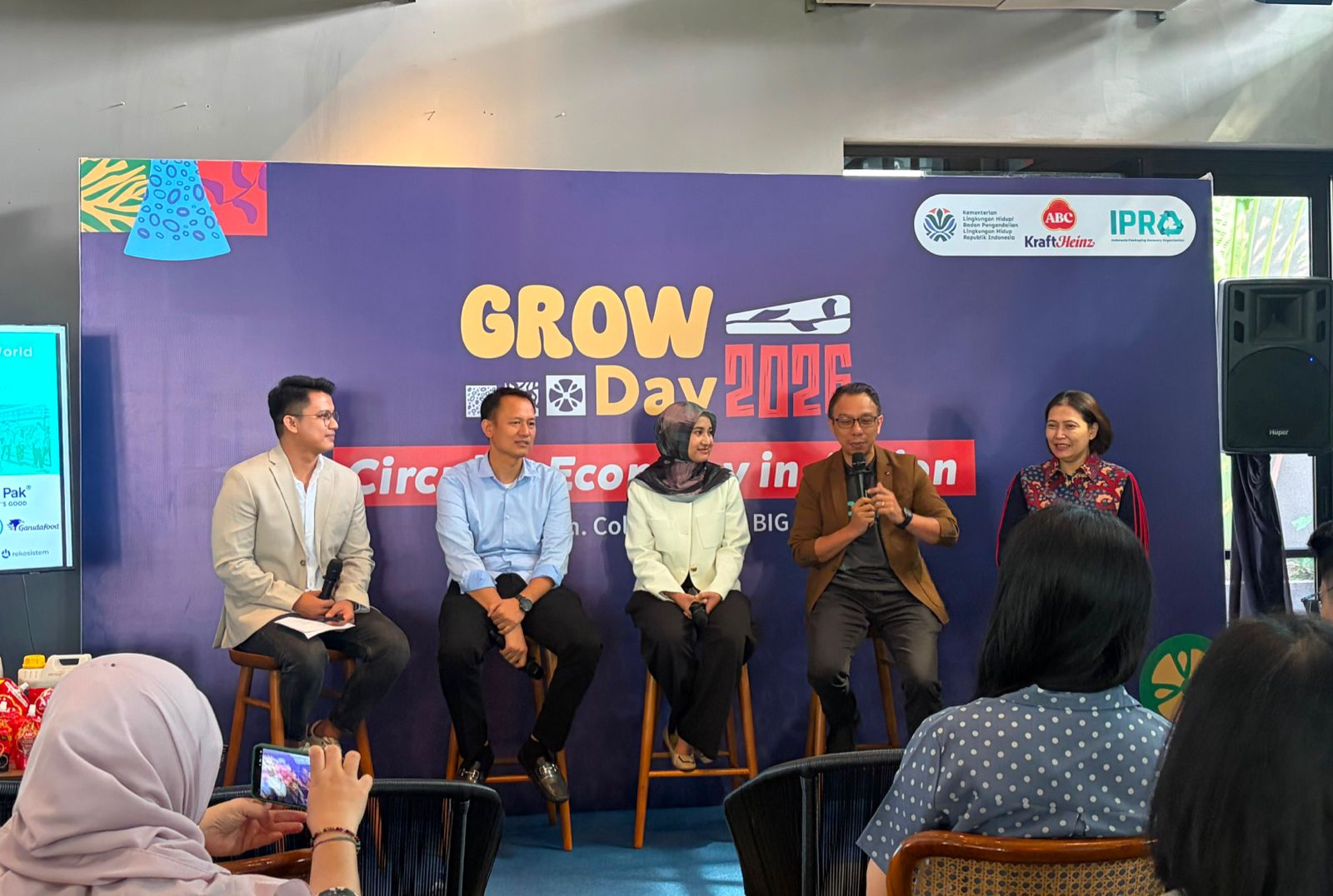
Waste reduction in Indonesia is deemed to require closer collaboration between the government, industry, waste management organisations, communities, and the general public. Without cross-sector synergy, the implementation of a circular economy and national waste reduction targets will be difficult to achieve.
These views were raised during a discussion titled ‘Circular Economy in Action: Synergy of Multisectoral Partnerships in Accelerating Sustainable Waste Management’, organised by PT Heinz ABC Indonesia to commemorate World Environment Day 2026 in Jakarta on Tuesday (30/6).
General Counsel and Head of Corporate Affairs of PT Heinz ABC Indonesia, Mira Buanawati, stated that sustainable waste management cannot be resolved by a single party. According to her, collaboration is key to building a system capable of returning more post-consumer packaging into the recycling chain.
“ABC Indonesia supports the national agenda in implementing Extended Producer Network Responsibility (EPR) and the circular economy in Indonesia. One way is through partnership with the Indonesia Packaging Recovery Organisation (IPRO) as a collaborative platform for producers in managing post-consumer packaging. We believe that sustainable waste management cannot be done by one party alone. Cross-sector synergy is needed to build a system that can drive more materials back into the recycling chain and provide greater benefits for the environment,” said Mira.
According to Mira, the circular economy is an approach that encourages materials to remain in the cycle of use for as long as possible through reduction, reuse, and recycling. In practice, this concept can begin with simple activities, such as sorting waste at home and directing used packaging to waste banks or appropriate collection channels so it can be reprocessed into raw materials or new products.
This commitment, she continued, is in line with the Minister of Environment and Forestry Regulation Number 75 of 2019 concerning the Roadmap for Waste Reduction by Producers, which encourages businesses to apply the 3R principles (reduce, reuse, and recycle) through the Extended Producer Responsibility (EPR) scheme.
Director of Circular Economy and Waste Management at the Ministry of Environment, Agus Rusly, stated that the government continues to encourage the transformation of waste management from a linear system to a circular economy, which views waste as a resource that still possesses economic value.
“The implementation of EPR is an important instrument to ensure that producers are also responsible for the post-consumer packaging they produce. The success of this agenda requires strong collaboration between the government, industry, waste management actors, and the community so that national waste reduction targets can be achieved effectively and sustainably,” he said.
In its implementation, the Indonesia Packaging Recovery Organisation (IPRO) acts as a non-profit organisation formed by producers to support the management of post-consumer packaging through sorted collection systems and packaging recovery so that it can re-enter the recycling chain.
General Manager of IPRO, Reza Andreanto, said that packaging does not end its journey after being used by consumers. Through collaboration between various parties, more packaging can be recovered, thereby reducing waste leakage into the environment and landfills.
“The more packaging that is successfully recovered, the less the burden of waste leakage into the environment and landfills,” he noted.
Meanwhile, the Founder of Kita Olah Indonesia, Andriansyah, assessed that effective waste management can also create economic benefits for the community.
According to him, ‘collection for recycling’ activities aim not only to collect recyclable materials but also to open business opportunities for waste management communities, collectors, and recycling partners.
The discussion also highlighted the importance of community participation in supporting the circular economy. Simple steps such as sorting waste at home, reducing the use of unnecessary materials, and ensuring that recyclable packaging enters the correct collection channels are considered capable of having a significant impact if performed consistently.
Through collaboration between the government, industry, waste management organisations, communities, and the public, ABC Indonesia hopes that more post-consumer packaging can return to being part of the economic cycle. These efforts are expected to not only support a cleaner environment but also build a more efficient and sustainable resource management system.