
Cross-Sector Collaboration Deemed Key to Enhancing Quality of Urban Living Spaces
REPUBLIKA.CO.ID, JAKARTA — The quality of living spaces in Indonesia is increasingly under the spotlight as urban areas develop rapidly. Beyond mere aesthetics, architectural design is now required to address challenges related to environmental health, resource efficiency, and long-term sustainability.
In this context, cross-sector collaboration is considered a crucial factor to ensure that development is not only physically oriented but also impacts the quality of life for society.
Marketing Director of LIXIL Water Technology Indonesia, Arfindi Batubara, believes that a collaborative approach is necessary to tackle the complexities of current urban challenges, from water management and sanitation to adaptive space design. “Improving the quality of living spaces cannot stand alone. Synergy is needed between design, technology, and understanding of social needs,” said Arfindi in his statement on Wednesday (15/4/2026).
According to him, the gotong royong approach, which has long been a characteristic of Indonesian society, is also relevant in the context of modern development, particularly in building a more inclusive and sustainable architectural ecosystem.
Several collaboration-based initiatives have begun to emerge in recent years, including through discussion forums, design competitions, and architecture exhibitions that bring together various stakeholders.
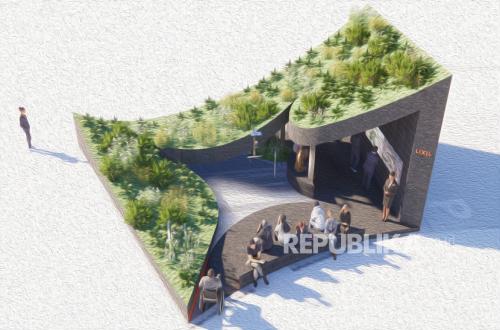
One such platform for exchanging ideas is ARCH:ID 2026, which brings together architects, interior designers, developers, and material industry players. In this event, sustainability approaches are also gaining attention, including in the design of exhibition installations. One concept highlighted is the repurposing of materials to reduce waste from temporary exhibition activities.
Architect Adi Purnomo believes that a research-based and cross-disciplinary collaborative approach is important to enrich perspectives in space planning. “Architecture is not just about form, but also about its relationship with the environment, including water, sanitation, and urban dynamics,” he said.
He added that the integration of environmental data into the design process is also becoming an increasingly developed trend, in line with the need for more adaptive solutions to climate change and urbanisation pressures.
Several discussions in architecture forums are now focusing on the use of environmental data as a basis for design decision-making, including in creating spaces that are more responsive to surrounding conditions.
On the other hand, sustainability issues are also driving industry players to set long-term targets, such as water usage efficiency and carbon emission reductions in operations and products. These efforts are seen as aligned with the needs of urban development that not only grows physically but also maintains environmental balance and comprehensively improves the quality of life for society.
Source: jawawa.id (https://jawawa.id/newsitem/cross-sector-collaboration-deemed-key-to-enhancing-quality-of-urban-living-spaces-1776261053)
Originally published by Republika (https://esgnow.republika.co.id/berita/tdjdhu522/kolaborasi-lintas-sektor-dinilai-kunci-tingkatkan-kualitas-ruang-hidup-di-perkotaan), translated from Indonesian