
Cross-Border Healthcare in ASEAN Needs Common Standards for Handling Disputes
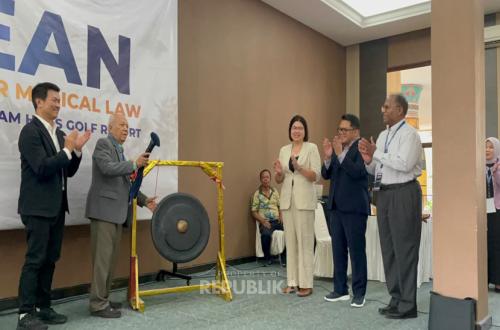
BATAM — Rising cross-border healthcare activity in Southeast Asia has highlighted the need to strengthen medical law across ASEAN. Differences in national regulations and approaches to resolving medical disputes require attention to ensure better protection for patients and healthcare professionals.
Dr M. Nasser, Indonesia’s Governor of the World Association for Medical Law, said the movement of patients, medical referrals and cooperation between healthcare facilities in ASEAN countries increasingly called for a stronger medical-law framework.
He said this should be matched by cooperation between countries to develop medical-law education, teaching and regulation. “It is time for us in ASEAN to unite in the field of medical law, given the many referrals, interactions and even shared treatment involving healthcare facilities and doctors across ASEAN countries,” Nasser said in a press statement on Sunday (8 November 2026).
With ASEAN’s population at about 650 million, Nasser said, protecting patients and healthcare professionals was an important issue. The development of medical law needed to balance the rights and obligations of both parties, particularly when disputes arose over healthcare services.
He said medical disputes were not always appropriately resolved through general legal approaches. The relationship between patients, doctors and healthcare facilities had particular characteristics requiring a more specialised understanding of the law.
“Cases involving medical disputes should not be handled using a general legal approach,” he said.
Professor A. Kumaralingam, a lecturer at the National University of Singapore’s Faculty of Law, stressed the importance of putting patients’ interests at the centre of medical-law development. He said efforts to strengthen the field should be directed towards ensuring that patients’ rights were adequately protected.
Professor Nguyen Thi Bao Anh of the College of Law at Nam Can Tho University in Vietnam said ASEAN countries needed to catch up in developing health law. She highlighted the need for a specialised approach to legal scholarship and enforcement in the medical field.
“In particular, this concerns how legal scholarship and enforcement in medical law are developed, as they differ from enforcement in general law,” Nguyen said.
These issues were among the agenda items at the establishment of the ASEAN Society for Medical Law in Batam on Saturday (7 November 2026). The organisation is intended to strengthen cooperation in medical-law education and teaching across law programmes in ASEAN countries.
At the meeting, Dr Fajri Israq, MH, was unanimously elected as the organisation’s first chair. Indonesia was also named host of its first congress, planned for April or May 2027 in Yogyakarta or another Indonesian city.
The inaugural congress is expected to provide a forum for further discussion of medical-law development and the challenges of resolving healthcare-service disputes in Southeast Asia.
Source: jawawa.id (https://jawawa.id/newsitem/cross-border-healthcare-in-asean-needs-common-standards-for-handling-disputes-1794138628)
Originally published by Republika (https://news.republika.co.id/berita/to6866522/layanan-kesehatan-lintas-negara-asean-butuh-standar-penanganan), translated from Indonesian