
Criticised over Human Rights, EU Still Expands Migration Cooperation with Eastern Libya
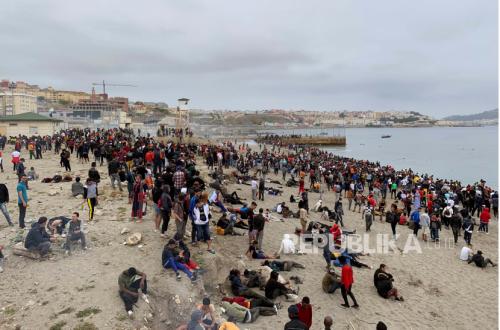
The European Union is again facing sharp criticism over its migration-control policies after expanding cooperation with authorities in eastern Libya, a region under the influence of military commander Khalifa Haftar. The move has drawn scrutiny because human rights organisations have documented abuses against migrants and refugees by Libyan authorities and armed groups.
Reuters reported on Tuesday (13 October 2026) that the EU had signed off on an additional €25 million in funding to expand migration-control cooperation in eastern Libya.
The funding is intended to support border management, maritime search and rescue operations, and efforts to combat human trafficking.
The decision marks an expansion of the EU’s relationship with eastern Libyan authorities, even though the bloc diplomatically supports the internationally recognised government based in Tripoli, in western Libya.
However, the policy has raised questions about the consequences of security cooperation with authorities operating amid Libya’s political and military fragmentation.
Several human rights organisations have warned that migration-control cooperation with Libyan authorities could strengthen security structures with records of abuses against refugees and migrants.
In July 2026, 31 civil society organisations, including Human Rights Watch, called for migration-control cooperation to be halted with Libyan authorities involved in human rights violations.
Their appeal was based on documentation of arbitrary arrests, detention, violence and expulsions of refugees and migrants by various authorities and armed groups in Libya.
The controversy has become more salient after Human Rights Watch reported the alleged execution of at least 31 people by forces under Khalifa Haftar’s command since late August 2026.
The findings were not directly related to migration-control operations, but have heightened scrutiny of the record of the security forces controlling eastern Libya.
As Europe seeks to reduce the number of migrants arriving across the Mediterranean, the question is how the EU can ensure its border-control policies remain consistent with its human rights obligations.
Additional €25 million for eastern Libya
Reuters reported that the additional €25 million in funding was announced in a letter from European Commission President Ursula von der Leyen to EU leaders.
The funds are intended to expand migration cooperation in eastern Libya, including border management, search and rescue, and efforts to combat human trafficking.
The move illustrates a shift in the EU’s approach to Libya.
Until now, Brussels’ official relations with Libya have largely been conducted through the internationally recognised government in Tripoli.
But an increase in migrant departures from eastern Libya has prompted the EU to broaden its cooperation with the authorities controlling that territory.
Eastern Libya is under the influence of Khalifa Haftar and forces known as the Libyan Arab Armed Forces (LAAF).
Haftar has been one of Libya’s most influential military figures since the country entered a protracted conflict following the fall of Muammar Gaddafi’s government in 2011.
His forces control much of eastern and southern Libya, while political authorities allied with him compete with the government in Tripoli.
In July 2026, the EU also announced plans to establish a Maritime Rescue Coordination Centre in Benghazi.
The facility is intended to strengthen the coordination of maritime operations in eastern Libya.
The expansion of cooperation highlights the importance of Haftar-controlled territory to the EU’s strategy for curbing migration to Europe.
However, Libya’s fragmented political landscape makes relations between civilian authorities, security institutions and armed groups a key consideration in implementing international cooperation.
Why is the EU working with Haftar’s forces?
Libya occupies a strategic position in European migration policy because its coastline faces directly on to the Mediterranean.
The country has long been one of the main departure routes for migrants and asylum seekers attempting to reach Italy or Malta.
Many migrants come from sub-Saharan African countries and use Libya as a transit point before continuing their journey to Europe.
Journeys to the Libyan coast often cross desert areas and territories influenced by various human-smuggling networks.
Since Gaddafi’s fall, the fragmentation of power in Libya has created numerous challenges for border monitoring and law enforcement.
Armed groups, smuggling networks and security institutions aligned with different authorities operate in an unstable political environment.
For the EU, reducing irregular crossings via Libya is part of efforts to manage migration and reduce the risk of deaths at sea.
In the letter cited by Reuters, Ursula von der Leyen said Libya remained a major country of departure for irregular crossings to the EU.
She also highlighted cooperation with the International Organization for Migration (IOM) to support migrants’ voluntary return from Libya to their countries of origin.
The policy shows that migration control is carried out not only at Europe’s borders, but also through cooperation with transit countries.
However, human rights organisations say that the implementation of such policies must take into account the safety of people intercepted at sea and those held under the supervision of Libyan authorities.