
Critical Minerals Can Become Instruments of Digital Diplomacy: Nezar
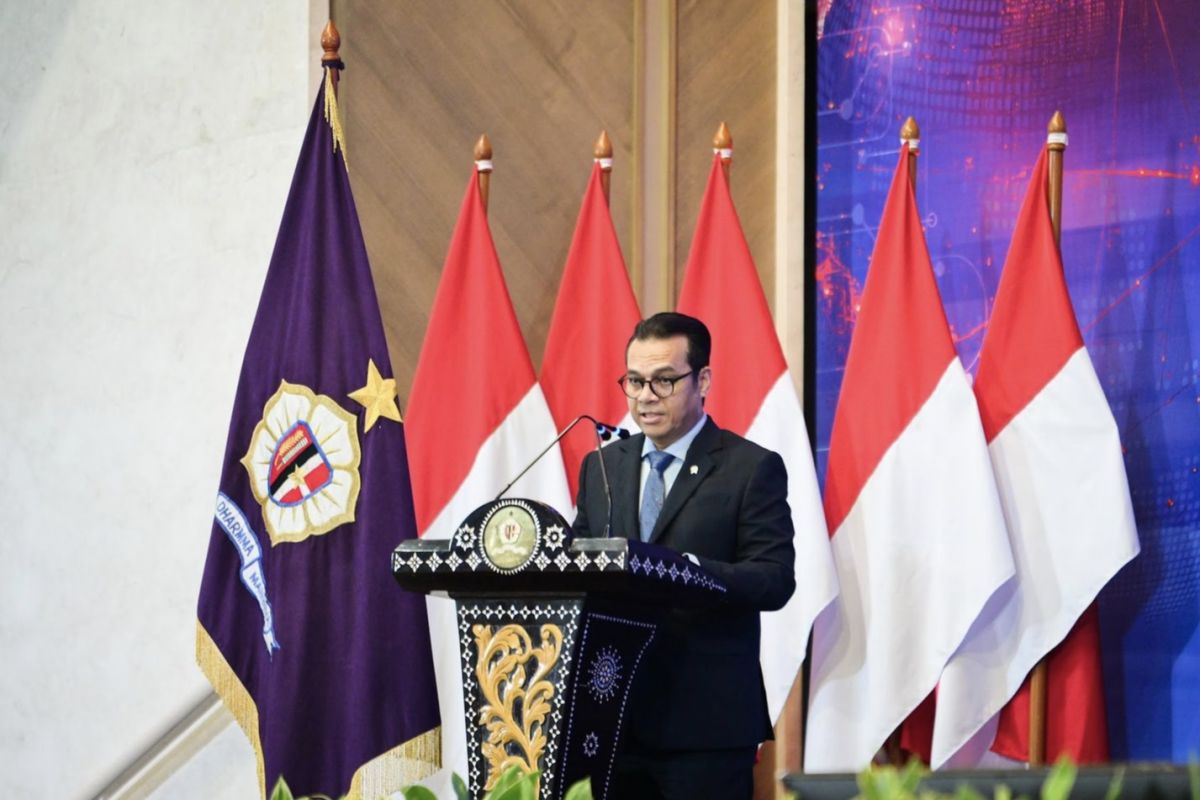
Jakarta (ANTARA) - Deputy Minister of Communication and Digital Affairs Nezar Patria stated that Indonesia’s wealth of critical mineral resources could become an instrument of digital diplomacy that benefits the country amid competition in the development of artificial intelligence.
Speaking at the Jakarta Geopolitical Forum in South Jakarta on Thursday (9/7), he said Indonesia holds a strategic advantage because it possesses critical mineral resources needed for technological development.
“Indonesia needs to use its critical minerals to negotiate better access to computing, technology transfer, and manufacturing partnerships,” he said, as quoted in a ministry press statement confirmed on Friday.
He noted that Indonesia has the world’s largest nickel reserves, and this ownership can strengthen Indonesia’s position in the global battery production supply chain.
“We are the world’s second-largest cobalt producer, a key material for high-performance batteries and advanced semiconductors,” he said.
“In addition, we are the third-largest exporter of copper ore, an essential mineral for cabling systems and the cooling of data centres that house AI infrastructure,” he added.
This mineral wealth, he said, enables Indonesia to become a key player in the global artificial intelligence (AI) ecosystem rather than merely a consumer.
Amid the rivalry between the United States and China, Nezar said Indonesia must chart its own strategic path through digital diplomacy.
With its wealth of critical mineral resources, a large digital market, demographic bonus, computing capacity, digital talent, and industrial capability, he argued Indonesia should not be merely a market or a supplier of raw materials.
Nezar stressed that Indonesia’s success in becoming a strategic technology power towards Golden Indonesia 2045 depends on consistency in building digital infrastructure, data centres, talent, and strong institutions.
To that end, the government is prioritising chip diplomacy, improving energy provision for data centres, developing AI and semiconductor talent, strengthening data sovereignty, and developing AI that fits the Indonesian context.
“Digital power is ultimately not just about technology alone. It is about political will, the will to sustain a strategy across successive administrations, to build institutions step by step, and to decide Indonesia’s new geopolitical future,” Nezar Patria concluded.