
Critical Minerals Become BRICS Agenda: Which Indonesian Mining Stocks Will Benefit?
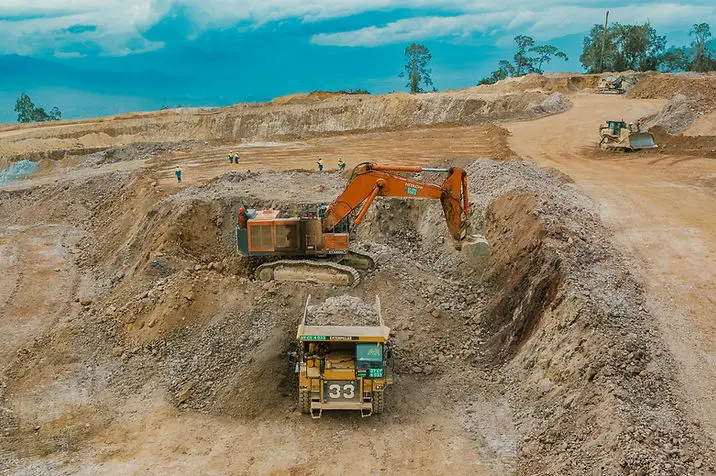
The world is racing to secure critical minerals to support clean energy technologies. Indonesia has positioned itself at the forefront with its abundant nickel reserves and ambitious downstreaming industry goals.
However, behind the jargon of the green economy and sustainable supply chains, significant questions remain unanswered: who truly profits from these mineral riches, while local communities in producing regions face environmental destruction?
This issue has resurfaced following the 18th BRICS Summit, which produced the New Delhi Declaration. The document emphasises the importance of building critical mineral supply chains that are reliable, responsible, diversified, resilient, fair, sustainable, and equitable. The declaration also encourages benefit-sharing, value-added enhancement, and economic diversification in resource-rich nations. These principles are highly relevant to Indonesia, which is strengthening its position as a key player in the global critical mineral supply chain through its nickel industry and downstreaming programmes.
At the 2026 BRICS Summit, President Prabowo Subianto emphasised the importance of resilience, innovation, cooperation, and sustainability to build a stronger economy that provides tangible benefits to the people. Prabowo identified critical minerals, rare earths, renewable resources, and forests as essential foundations for the green century. However, such ideas may ring hollow if not accompanied by improvements in on-the-ground governance.
Naomi Devi Larasati, Policy Strategist Coordinator at Cerah, believes that the BRICS commitment must be translated into concrete policies. She argues that critical mineral development should not merely pursue economic growth but must also adhere to sustainability principles and ensure that communities in producing regions receive fair benefits.
The issue of benefit-sharing from the nickel and downstreaming industries remains a significant challenge. Naomi cited Central Sulawesi as an example; the region is projected to be the largest contributor to national mining revenue in 2025, with a value of approximately Rp570 trillion. Yet, the revenue-sharing funds received by the region amount to only about Rp200 billion per year. This figure reveals a wide gap between the economic value generated by the region and the fiscal benefits returned to the local community.
Environmental concerns are equally pressing. A Greenpeace analysis found that nickel mining activities have triggered deforestation across 26,837 hectares, with mining activities reportedly surging by up to 600 per cent between 2016 and 2023. Under such conditions, the term ‘green economy’ risks becoming mere window dressing—sounding environmentally friendly on the surface while forests continue to be cleared and communities bear the consequences.
“We welcome the BRICS commitment to move beyond mere mining towards fair downstreaming. However, without guarantees of green and participatory governance, downstreaming will only become another name for exploitation that destroys the environment and marginalises indigenous communities and farmers,” Naomi stated in a written release on Wednesday, 16 September 2026.
According to her, Indonesia should serve as a model for building fair and sustainable critical mineral supply chains, from upstream to downstream. “As the country with the world’s largest nickel reserves, Indonesia should be a role model. We should not promote critical minerals as part of an environmentally friendly future while the underlying processes remain far from eco-friendly,” she added.
Naomi continued that a green supply chain should be established from the initial mining stage. Environmental impacts must be minimised during land clearing, followed by efficient, low-pollution processing. The next stage involves responsible waste management and recycling. This means a ‘green’ label is insufficient for the final product; the entire production process must be accountable.
Furthermore, the economic benefits of downstreaming must be ensured to flow to the communities surrounding the projects. These benefits should include job creation, increased regional income, the strengthening of local businesses, and technology transfer. It is vital that local populations do not merely receive mining dust, damaged roads, pollution, and land conflicts, while the largest profits flow to corporations and foreign investors.
Archana Chaudhary, Associate Director of Climate Trends, noted that a key element of the New Delhi Declaration is how it frames climate resilience. According to Archana, climate resilience is not treated merely as a standalone environmental issue, but is placed within a broader framework encompassing economic resilience, industrial capacity, trade, finance, and national policy space.
“This relates directly to the larger multilateral argument. In an increasingly multipolar world, developing nations are not only demanding a larger share of global growth but also a greater role in formulating the rules that shape that growth,” said Archana.
The New Delhi Declaration reaffirms the commitment of BRICS leaders to promote reliable, responsible, diversified, resilient, fair, sustainable, and equitable critical mineral supply chains. These supply chains are expected to ensure benefit-sharing, value addition, and economic diversification in resource-rich countries, while BRICS members simultaneously reaffirm their respective sovereign rights over their mineral resources.